Are Sharks Going Ashore? Scientists Discover 9 Shark Species Evolving and Walking on Shallow Reefs
Where did humans come from? According to evolution, we came from ape-like creatures that descended from trees.
Where did apes come from? They came from early mammals that rose after the extinction of dinosaurs.
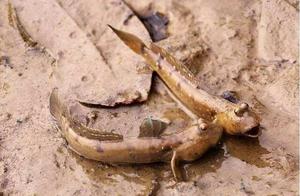
Where did mammals come from? They came from early marine fish that crawled onto land and evolved.
So, you’ve roughly figured out that all life on land today came from the sea. Of course, some of them later thought land was too difficult and went back into the sea, like dolphins and whales, who are now living comfortably and wonderfully in the ocean.
Now, are there any fish that come ashore to live? I know that seafood frequently comes ashore, but humans use them to live, and the seafood themselves haven’t seen them coming ashore. However, recently, an international team of scientists from the University of Queensland, Australia, and the United States and Indonesia, conducted a 12-year study and discovered that some sharks near Australia and New Guinea have learned to use their fins as flippers and crawl onto land during low tide, wandering and foraging for food.
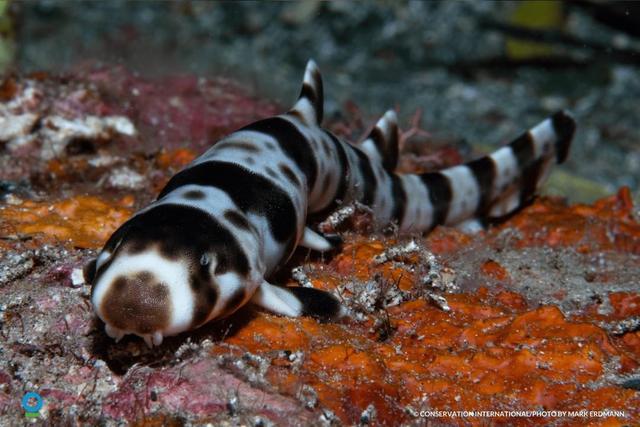
Sharks are a primitive and ancient species, perhaps because they had lived too comfortably in the ocean. According to fossil records, of the 1200 species of sharks that appeared in the past 400 million years, they didn’t make much progress and seemed to be lagging behind the entire Earth’s passage of time, living in the memory of the ancient ocean.
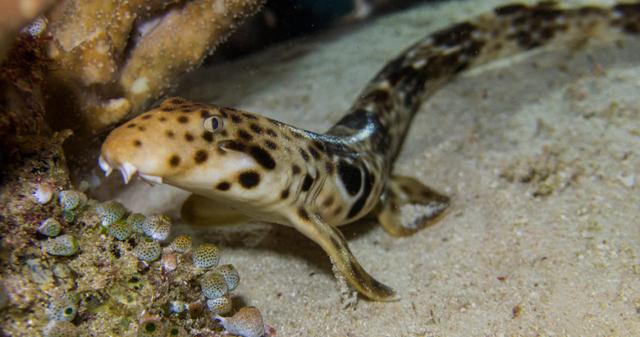
However, this research surprisingly discovered that in the coastal waters of northern Australia and New Guinea Island, there are nine species of wobbegong sharks that, when the tide recedes, use their chest fins and belly fins to ‘walk’ along the coral reefs to search for crabs, shrimp and small fish, becoming top predators in the shallows between reef rocks during low tide.
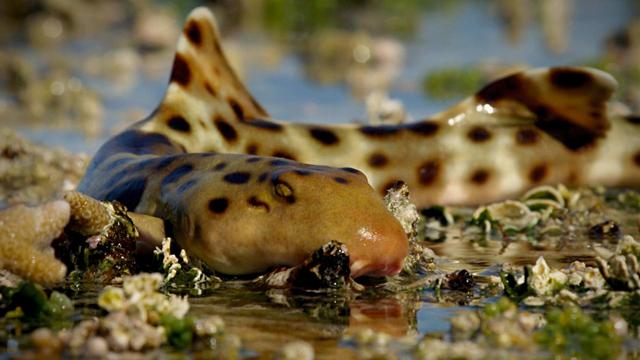
Researchers believe that these sharks were able to walk on land in low-oxygen environments because they remained in an isolated area millions of years ago, due to extensive inbreeding, the speed of mutations increased, and they evolved into a new species; another reason is that with the changes in the ocean, including sea level changes, currents and temperature changes, wobbegong sharks had to quickly adapt to this dynamic environment, and evolved this ‘heavenly’ ability, becoming nightmares for small crustaceans and mollusks – believing they could escape from sharks by going ashore, they found that they were constantly evolving, chasing them to the shore.
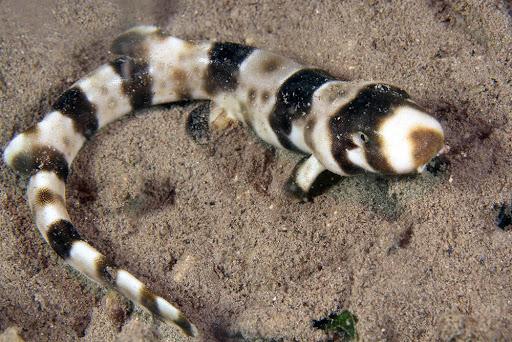
Of course, as the top predators of the Earth’s food chain, we humans don’t need to be stunned and panicked just hearing sharks going ashore, worrying about our ecological niche. These sharks have an average length of less than one meter and pose no threat to humans. If they are delicious to eat, they would easily be caught by humans on the shore and become a delicious meal in their bellies. A species that doesn’t use tools and doesn’t stand upright will not pose any threat to humans; even if they do, humans will ‘invite’ them to zoos and laboratories, such as chimpanzees and monkeys.
Human evolution has reached a point where no species poses a threat to us, except ourselves. This study was published on January 21st in 'Ocean & Freshwater Research'.
Xu Dewen Science Channel WeChat account: xudewen028, spreading the latest, most cutting-edge and most interesting science!