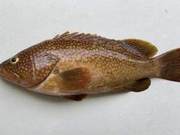
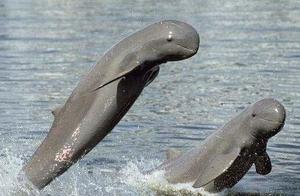
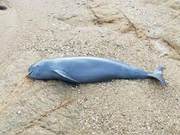
I Existed for 150 Million Years, Yet I Am Now Extinct! This Is a Warning for Humanity...
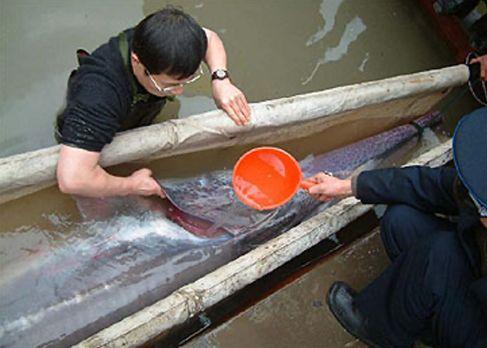
Source: CCTV Finance Starting March 15th, CCTV Finance's new media launches a ten-episode series interview titled 'Don't Hurt Me Again: Ten Confessions of Wild Animals,' broadcast every evening at 7:30 PM on the CCTV Finance client, taking you into a wild animal and listening to their confessions. This episode, we invited Dr. Gui Qiwu, researcher at the Yangtze River Aquaculture Research Institute of the Chinese Academy of Aquatic Product Sciences, to talk about the Yangtze sturgeon. The Yangtze sturgeon has existed for 150 million years, once alongside the land-based dinosaur overlords, and survived the fourth ice age, known as the 'King of Freshwater Fish in the Yangtze River.' The Yangtze sturgeon is already extinct. Researcher Gui Qiwu of the Yangtze River Aquaculture Research Institute of the Chinese Academy of Aquatic Product Sciences introduced: 'The last sturgeon appearing in the Yangtze River was in 2003. He and his team treated and released sturgeon into the Yangtze River, and then tracked them. Unfortunately, no sturgeon was found.' Yangtze aquatic biodiversity has long been affected by dam construction, water pollution, overfishing, channel dredging, and sand excavation, leading to the deterioration of the survival environment of Yangtze aquatic life and the comprehensive decline of rare and endemic species. The sturgeon is already extinct. Besides the Yangtze sturgeon, Yangtze aquatic life is worrisome. Data shows that from 2017-2018, 314 fish species were collected from the Yangtze River, with 134 species that were historically distributed but not collected, accounting for nearly 1/3 of the total fish species in the Yangtze River. Flagship species such as the Yangtze sturgeon and the Yangtze river dolphin are critically endangered. In particular, the Yangtze sturgeon has not been found for three consecutive years. As the backbone of freshwater aquaculture, the 'four big fish' of green, grass,, and were once the most abundant fish in the Yangtze River, but now their egg production has dropped to less than 10% of the level in the 1960s. Protect Yangtze aquatic life by implementing a 10-year ban on fishing. To protect fish from spawning during the breeding season, China implemented a 3-month Yangtze Spring fishing ban starting in 2003, and extended it to 4 months and expanded the scope in 2015. However, it was proven that 4 months of fishing ban was not enough to meet the needs of resource protection. Fish were caught empty shortly after being released. The trend of resource decline was not curbed. Under this circumstance, the state issued a stricter fishing ban. In December 2019, the Ministry of Agriculture and Rural Affairs issued a notice announcing that from January 1, 2020, the aquatic biological nature reserve and the aquaculture genetic resource protection area will be fully prohibited from fishing.
315

2003
2017—20183141341/33“”6010

10
200332015442019122020110202111010