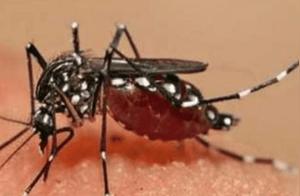
This moth is a 'unique form' in the insect world, often mistaken for other insects.
In the Jiang-Zhe area, whenever spring blossoms or autumn chrysanthemums bloom, you might encounter them flitting through the flowers, resembling bees, butterflies, or hummingbirds. It's the long-beaked hummingbird, also known as the hummingbird moth.
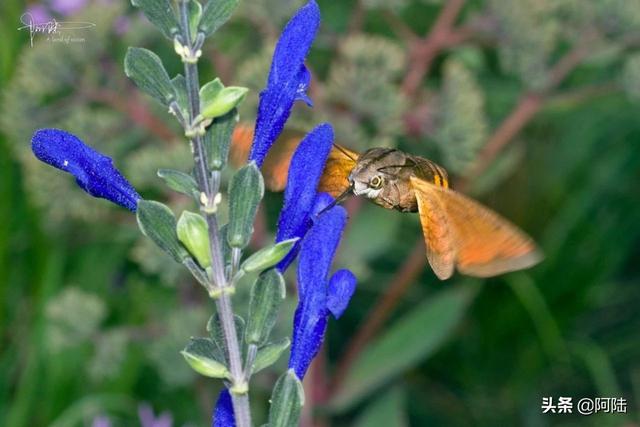
Long-beaked hummingbirds prefer to be active during the day, especially in sunny weather, when they are particularly diligent, constantly changing flowers. Their long proboscis is used to feed on nectar, with a bulbous tip and colorful, dazzling wings, resembling butterflies.
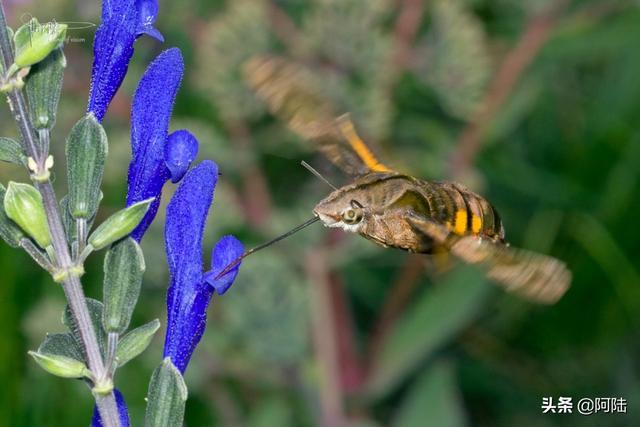
While feeding on nectar, their wings emit a clear, audible buzzing sound, much like that of bees, but several times larger in size.
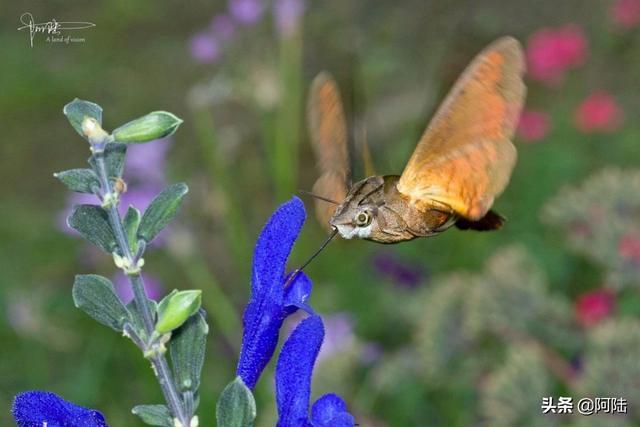
Because of their feeding posture, which is similar to that of hummingbirds, they sometimes circle in the flowers and sometimes speed through them, often leading to misunderstandings. However, hummingbirds are unlikely to appear in Chinese nature, and they are probably only found in South America.
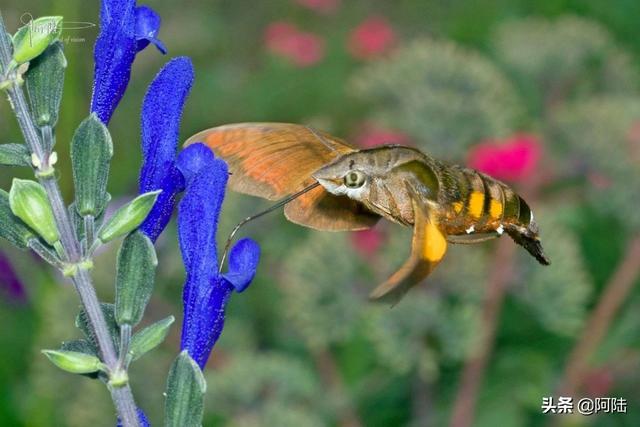
If further categorized, there is also a species very similar to it, the transparent-winged moth, which I photographed in Hangzhou. As the name suggests, its wings are transparent, like those of a cicada. Personally, I find it much more beautiful than the common long-beaked hummingbird.
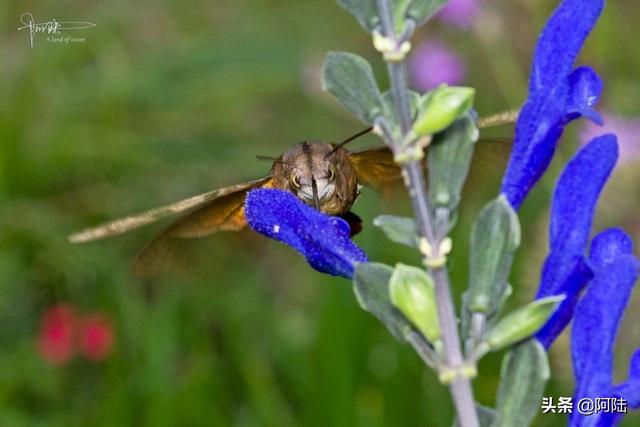
Interestingly, the transparent-winged moth, although it damages various plants in its larval stage, later transforms into a mature adult that pollinates and transmits pollen to various flowers, enabling plants to flourish. The long-beaked hummingbird, on the other hand, is entirely destructive; although it feeds on flowers, it does not produce honey like bees. Although it collects pollen, it never pollinates.
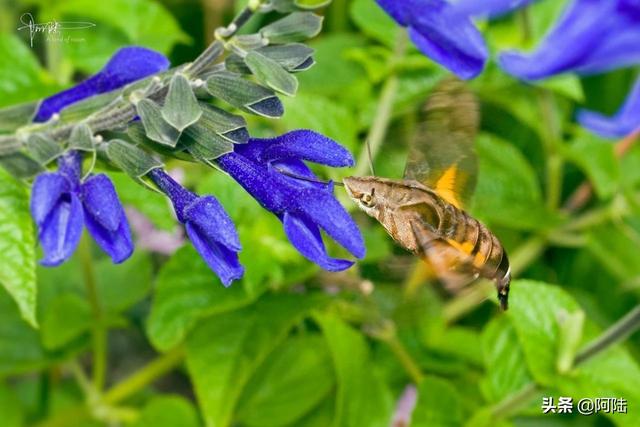
Of course, the existence of the long-beaked hummingbird is reasonable. Ultimately, it's just a small part of the ecological circle.