How to Identify Venomous Snakes? It's a Saying by Laymen!
How to identify venomous snakes? It's a saying by laymen! When talking about venomous snakes, careful snake enthusiasts search online, check books, and browse materials, and they say that triangular heads are venomous snakes! This is all one-sided, said by outsiders. There are many species of venomous snakes, some with triangular heads, and some without. It cannot be defined by triangular heads whether it is venomous or not. This is an unscientific and irresponsible statement.
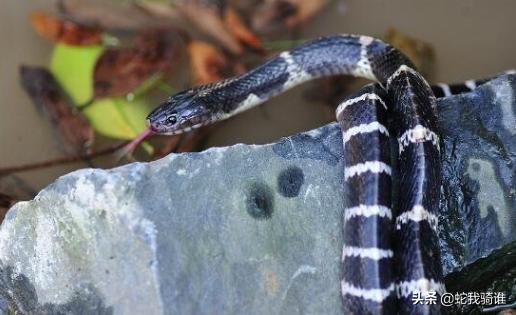
This is the most venomous snake in China, the ring-necked snake, its head is not triangular.
That's right, many venomous snakes have triangular heads, such as the five-step snake, the green vine snake, but some venomous snakes do not have triangular heads. For example, the cobra, the ring-headed snake, the ring-necked snake, have triangular heads? Obviously not, so from the above statements, if you see a ring-necked snake and think it is non-venomous, and you try to catch it, that could be fatal! Therefore, the Poisonous Snake Network has always criticized those 'experts' who don't understand and recklessly make statements, and it's really annoying and frustrating to see them appearing in many news websites' 'experts' recommendations!
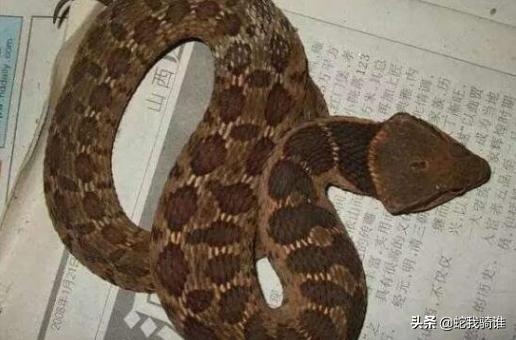
This is a non-venomous snake, the false viper, its head is obviously triangular, but it's not poisonous.
Then how to scientifically determine whether it is a venomous snake? The most scientific and effective method is to look at venomous fangs. If there are venomous fangs, it's a venomous snake. If there are no venomous fangs, it's a non-venomous snake, which is beyond doubt. Even if some micro-venomous snakes don't have fangs, their toxicity is not very large and the mortality rate is not high, and it can be effectively treated.
Then some snake enthusiasts will object, isn't the editor talking nonsense? I get scared to see snakes, so I dare to look at their mouths for venomous fangs? Nonsense! You're right, it's not useful to outsiders, it's better to identify by the shape of the head.
The Poisonous Snake Network editor is a professional snake editor, so let's look at the problem from a professional perspective. Why do we say it's meaningless to distinguish between distinguishing and not distinguishing? Because in the wild, if you encounter a non-venomous snake, even if you are bitten by a non-venomous snake, you should immediately wash the wound, because non-venomous snake bites although not poisonous, but cannot rule out a large number of bacteria and viruses, which is also deadly. Don't be careless.
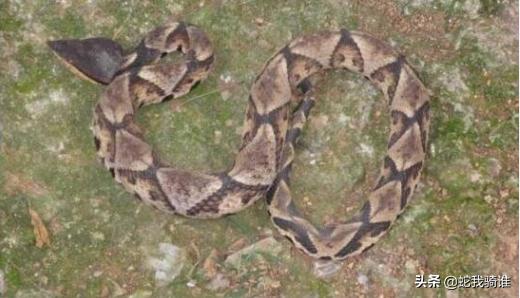
This is a five-step snake, also known as the pointed snout belly snake, a highly venomous snake with a typical triangular head.
Common venomous snakes in China include the cobra, ring-headed snakes, vipers, five-step snakes, iron head snakes, and white-headed snakes. Many of these venomous snakes can be identified at a glance, and after being bitten, there are two obvious venomous fang marks. Venomous bites will quickly swell, and it is easy to identify after being bitten. Ring-headed snakes and ring-necked snakes, although the feeling is not obvious and not swollen, are still relatively easy to identify. They are slow-moving and won't quickly escape after being bitten, making them easy to find and identify. Therefore, for non-snake enthusiasts or professional personnel, it's really pointless to identify whether it's venomous or not. Of course, if you're interested, you can still take a look, and learn more at the Poisonous Snake Network.