Why Did Other Animals Die After the Toxic Gas Attack, While Pigs Lived Well?
The story of the 'Razor Blade/Across-the-Line Opinion',the 'pig-like mouth' design of gas masks has a surprisingly long history, and many people are familiar with it. It's generally believed to originate from World War I, when the Germans used chlorine gas in massive attacks against the Allied forces, creating billowing clouds of yellow-green smoke that incapacitated everyone and everything on the battlefield. However, wild boars were the only animals that survived. The reason for this was that the boars instinctively dug their snouts into the mud, utilizing the moisture and the elongated shape of their noses to protect themselves from the gas.
Regardless of the truth of this story, people widely believed that pig noses possessed a special structure or function that could reduce the effects of toxic gases. This belief led to the adoption of the 'pig-like mouth' design in gas masks.

In fact, pig noses don't actually have a special filtering function. The story of the World War I boars surviving the gas is likely embellished, and the connection to their nose structure is questionable. Chlorine gas is indeed highly toxic, but it's also a relatively easy gas to avoid. Its weakness is its reaction with water, forming hypochlorous acid, a very rapid reaction.
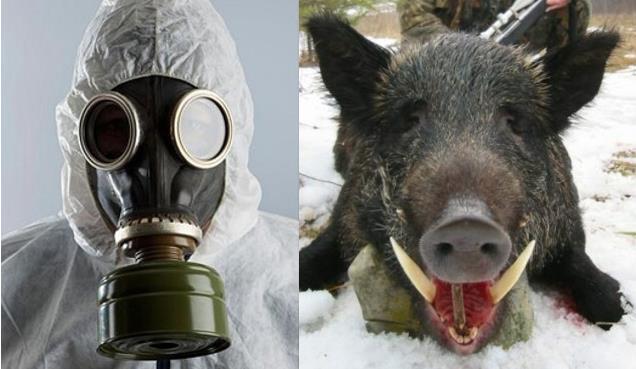
Therefore, on the battlefield, encountering chlorine gas could be neutralized simply by wetting a cloth over one's mouth and nose. Wild boars instinctively dig their snouts into the mud when exposed to unbearable stimuli. The moisture and the reaction between the chlorine gas and the mud effectively dissipated the toxic components, allowing the boars to escape.
Indeed, some soldiers were saved by falling into mud pits and pressing their noses against the wet ground. If they had been in a dry area, encountering chlorine gas would have been a death sentence – one in a thousand would have perished. The fact that some German soldiers survived the chlorine gas attacks during World War I is due to this very reason.
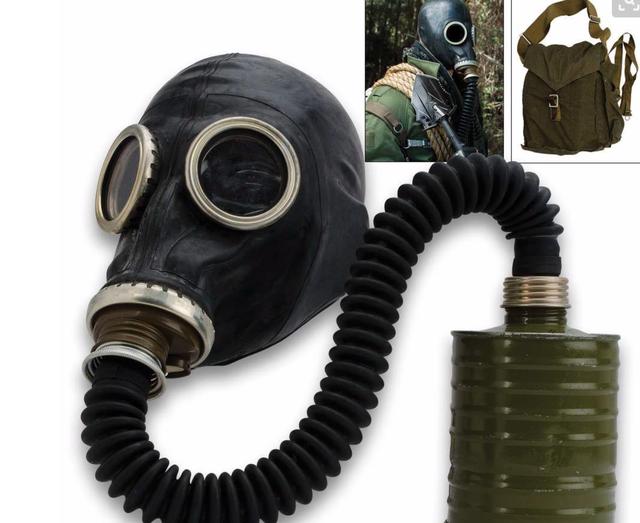
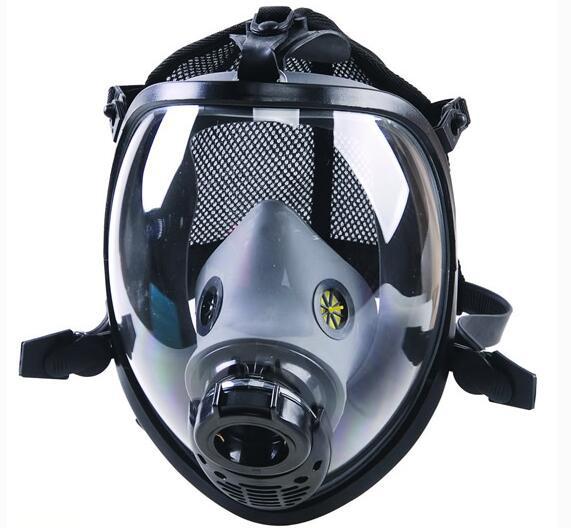
The 'pig-like mouth' design in gas masks was adopted simply because the long shape of the snout was suitable for incorporating various filtering materials. Early gas masks were filled with porous materials to absorb toxic gases. With the development of materials, activated carbon, metal particles, and impregnated brick grains were commonly used in gas masks, providing a better absorption effect. As better adsorbents emerged, the 'pig-like mouth' gas mask was gradually replaced by modern filter canisters, which can effectively purify various chemical toxins without the cumbersome 'pig-like mouth' design.
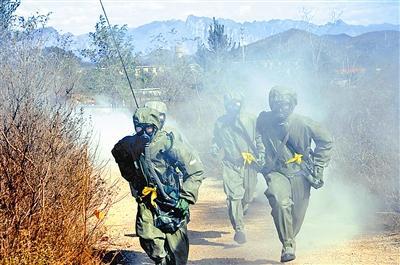
Modern gas masks have made huge strides compared to the old 'pig-like mouth' design. For example, some of the gas masks newly equipped by the Chinese army completely abandoned the 'pig-like mouth' design, instead consisting of a filter canister, a head-mounted face shield, a guide tube, and a mask bag. The mask is connected to a guide tube that is linked to a cylindrical green filter canister.