Long-beaked Hawk Moths are Nature's 'Bad Guys', Though They Look Like Stars
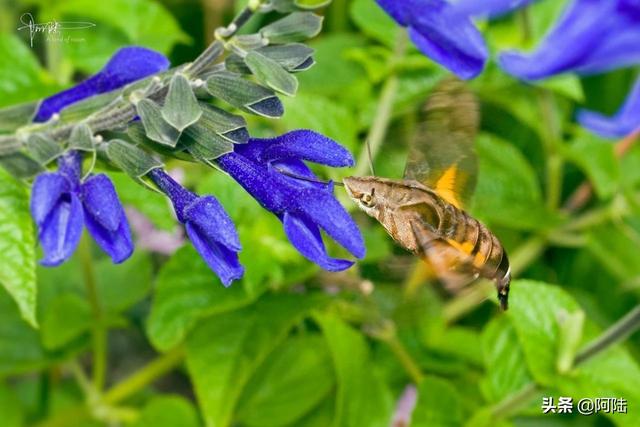
In the Jiang Zhejiang area, as long as spring blossoms and autumn chrysanthemums bloom, you might encounter them flitting among the flowers, resembling bees, butterflies, or hummingbirds. It is the lanceolata moth, also known as the hummingbird moth.
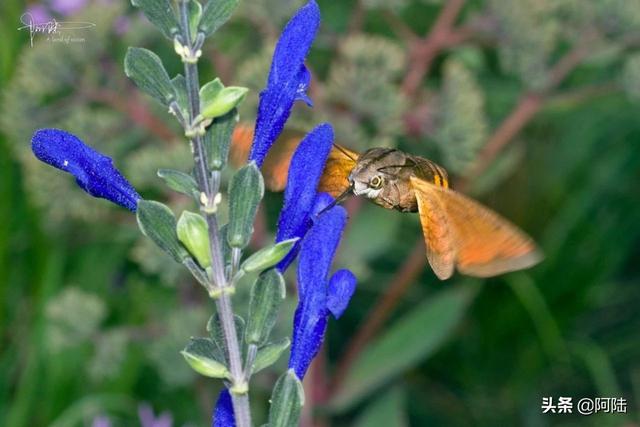
Lanceolata moths prefer to be active during the day, especially in sunny weather, and are particularly diligent, constantly switching between flowers. Their long proboscises are used to drink nectar, and their bulbous tips and colorful, dazzling wings resemble those of butterflies.
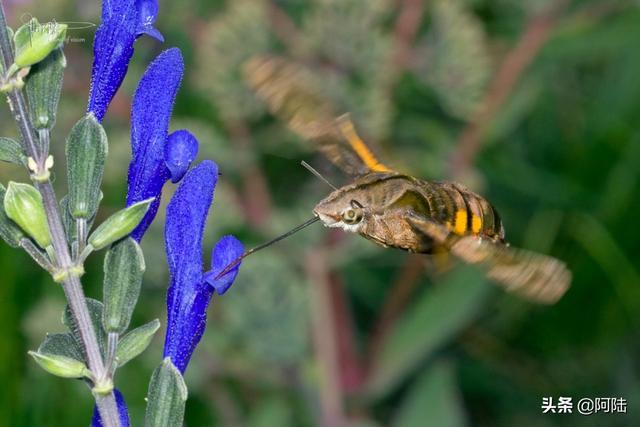
During nectar feeding, their wings emit a clear buzzing sound, much like bees, but with a much larger size.
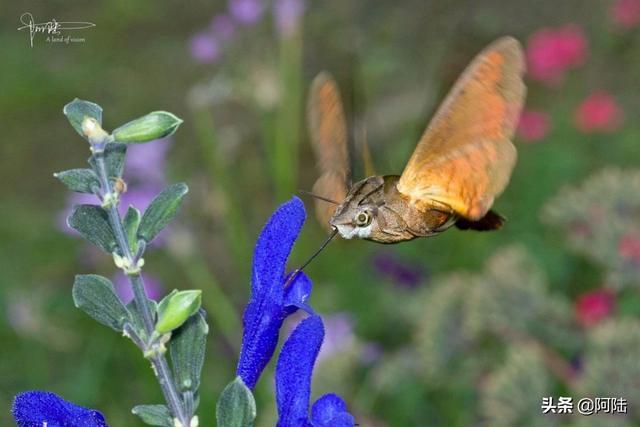
Because of their flight posture while feeding and resembling hummingbirds, they are sometimes seen circling among flowers and sometimes sprinting before them, which often leads to misunderstandings. However, hummingbirds are unlikely to appear in China's natural environment; they are probably only found in South America.
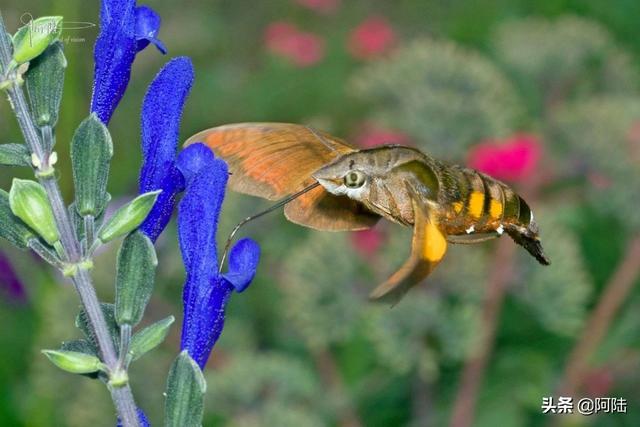
If further classified, there is also the very similar translucent wing moth, which I photographed in Hangzhou. As the name suggests, its wings are as transparent as those of cicadas. Personally, I find it much more beautiful than the ordinary lanceolata moth.
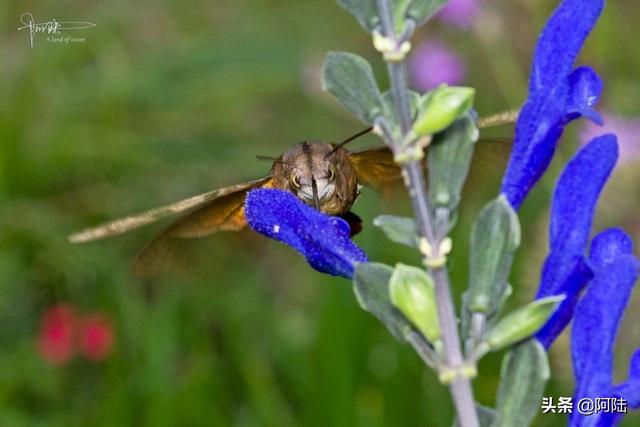
Interestingly, the translucent wing moth, although it will damage various plants during its larval stage, will also pollinate and transmit pollen to various flowers after it becomes an adult, enabling plants to flourish. In contrast, the lanceolata moth is completely detrimental; although it feeds on nectar, it does not produce honey like bees. Although it also collects pollen, it never pollinates.
Of course, the existence of the lanceolata moth is reasonable. Ultimately, it is just a tiny member of the ecosystem.