Research Reveals the Origin and Wilding Mechanisms of Australian Wild Dogs
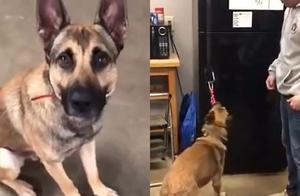
The Australian Dingo (Canis lupus dingo), commonly known as dingo, belongs to the genus Canis, the wolf species, and the Australian subspecies. It is a unique wild animal native to Australia. Moreover, it is a very interesting animal. First, it lives in Australia, which is isolated from the outside world, but it is not an indigenous species of Australia. Due to Australia's special geographical location, the dingo is only brought by humans to Australia. Therefore, studying the population history of dingoes can also reflect the migration of ancient human populations in Australia. Originally, it was domesticated by humans, but after arriving in Australia, it lost human control and returned to the wild. It has undergone at least five thousand years of feralization. Furthermore, Australia has not had other canine species for a long time, so the feralization of dingoes is not affected by the hybridization of wolves or domestic dogs. This makes it a model for studying feralization. However, the full genome research of dingoes is still a blank. To address this, Academician Zhang Yaping of the Chinese Academy of Sciences, Researcher Mao Bingyu and Professor Peter Savolainen of the Royal Institute of Technology jointly conducted in-depth research on the origin and feralization process of dingoes.
Under the leadership of Academician Zhang Yaping, the international collaboration team sequenced 10 wild dingoes and 2 New Guinea Singing Dogs, and collected 97 downloads of domestic dogs and wolves. This formed a dataset of 109 complete genome sequences. Based on genomic evidence, the research team revealed that the ancestors of dingoes were domesticated dogs from East Asia, originating approximately 9900 years ago from southern China and arriving in Australia approximately 8300 years ago. It then quickly feralized in Australia. This time period is not consistent with the timing of the Maori migration, possibly indicating an unknown ancient human migration to Australia. Researchers also used the dingo model to study feralization and discovered many interesting feralization genes, most of which are related to neurodevelopment, immunity, reproduction and digestive metabolism, all of which are closely related to domestic dogs adapting to survival in the wild. Analyzing the feralization pattern of dingoes revealed that some gene regions of dingoes are more similar to wolves than domestic dogs, which may be due to dingoes originating from early domesticated dogs that had not been fully domesticated. Researchers believe that these gene regions are important for feralization and domestication, so a functional validation was designed for a neuro-related gene ARHGEF7 in dingoes, and it was found that the mutation in the dingoes indeed affected the expression of the ARHGEF7 gene.
This work, titled 'Genomic regions under selection in the feralization of the dingoes', was published in the journal *Nature Communications*. Zhang Shaojie, Researcher Wang Dong and Researcher Mao Bingyu of Zhang Yaping's team are the co-first authors of the article, and Zhang Yaping, Mao Bingyu and Peter Savolainen are the corresponding authors of the article.
The research was supported by the National Natural Science Foundation of China, the Chinese Academy of Sciences B-level Strategic Pioneer Technology Special Project, the Chinese Academy of Sciences ‘13th Five-Year Plan’ Information Special Project and the Chinese Academy of Sciences Youth Innovation Promotion Association.
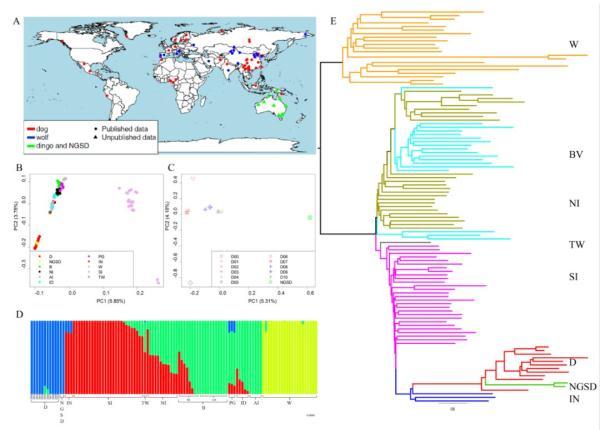
Figure 1: Dingo Population Structure
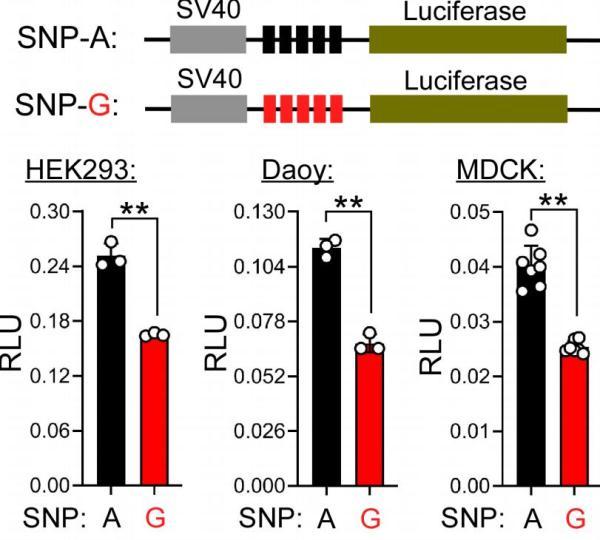
Figure 2: ARHGEF7 Gene Mutation Site Functional Validation