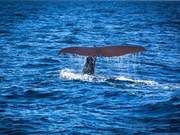
Deep-Sea Elf - Humpback Whale
Stonehenge-like formations of humpback whales…
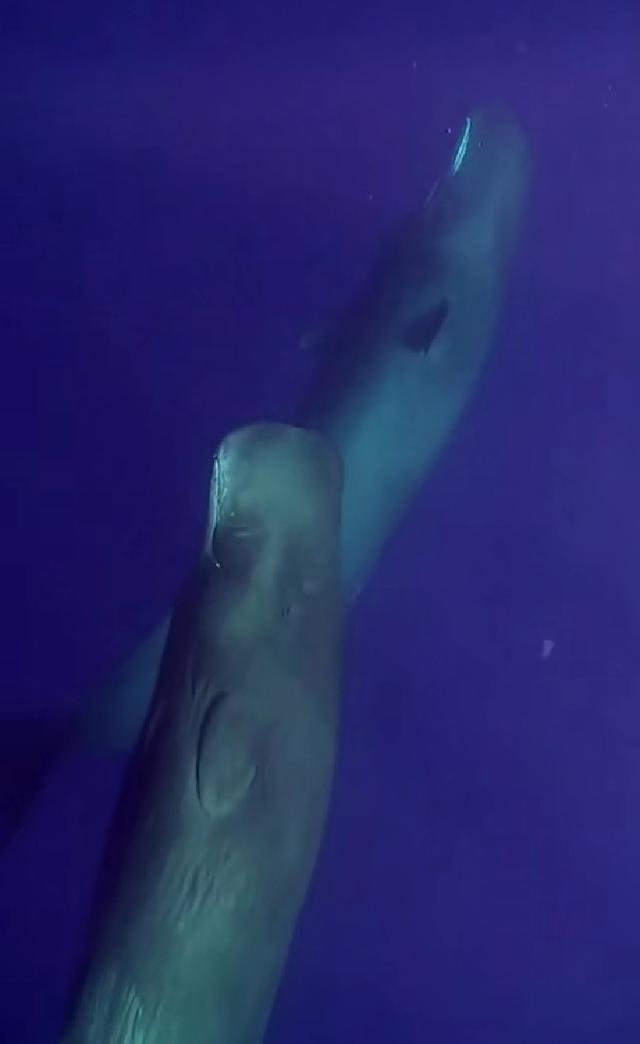
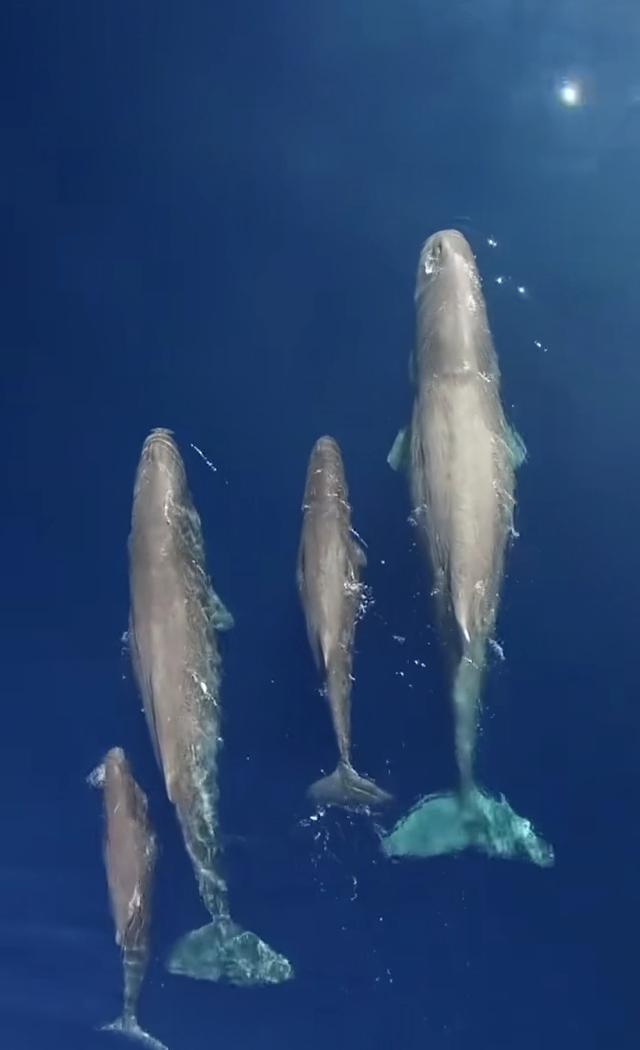
Vertical sleeping humpback whales…
Why do humpback whales gather to rest?
First, humpback whales are social animals. A complete whale group usually consists of a few males and large groups of females and calves. They migrate north and south annually for reproduction and feeding, with swimming speeds of up to 10 nautical miles per hour; in addition, humpback whales have excellent diving abilities, able to dive up to 2200 meters deep and stay underwater for two hours. Therefore, the 'stone-like formations' in the sea can be explained. Collective rest can also provide some protection for the whale group.
A sleeping whale group (Image source: Visual China)
Generally, researchers find it difficult to study the specific living habits of whales and dolphins. Even this 'strange phenomenon' was accidentally discovered by divers during their dives – but this is understandable. Many whales and dolphins live in waters far from humans, and they either rest underwater or are very wary of human approach, even when sleeping, they will be awakened by the sound of ship engines or oars.
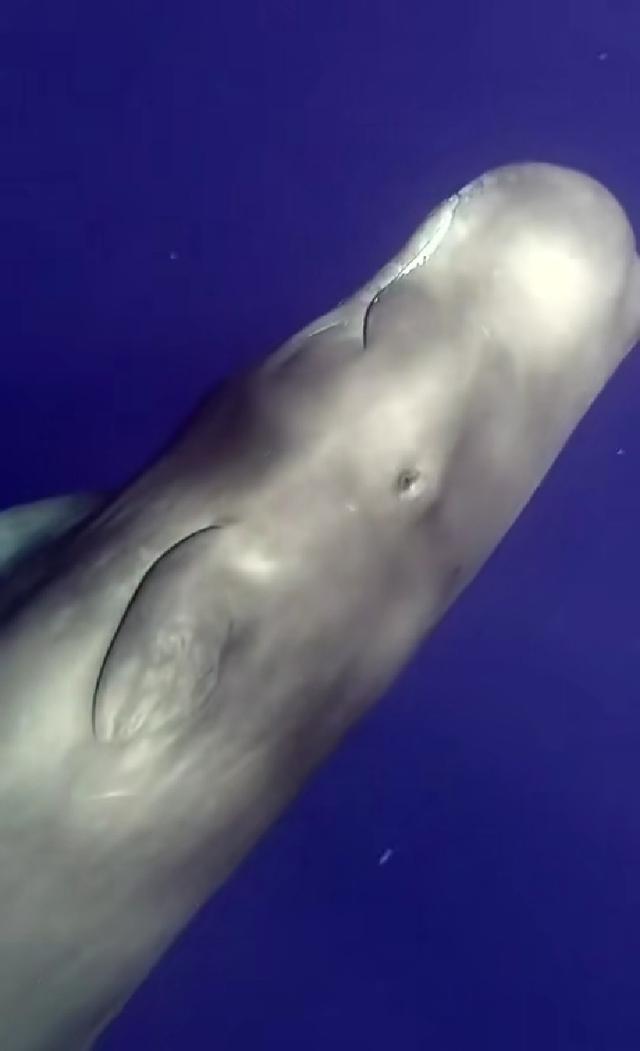
Why do humpback whales like to sleep vertically?
Scientists speculate that the primary reason humpback whales like to sleep vertically may be related to their whale brain oil. Whale brain oil is a white waxy substance; a humpback whale's head may contain 1000 liters or more of whale brain oil, its density is affected by temperature and pressure; when the temperature is close to the body temperature, the whale brain oil is in a liquid state; when it cools to the temperature of the oil chamber, it can solidify into a wax-like state. Whale brain oil is the key to regulating the whale's buoyancy, so when sleeping, it automatically adjusts the whale brain oil to a liquid state.
Another reason isHumpback whales' large heads, lungs and other important parts are concentrated in the upper body, so their buoyancy is greater than the tail.It is also necessary to explain that whales and dolphins' breathing methods are no different from humans; they can breathe unconsciously or consciously hold their breath. This characteristic directly determines that the sleeping time of these whales will not be as long as humans, but a nap of ten to fifteen minutes is enough for a whale, if it's not enough, a deep breath and a nap are fine.
When it needs to surface to breathe, they knowBetween two points, a straight line is the shortestVertical sleeping is the fastest and most comfortable way to breathe.
Humpback Whale OS: Sleeping should have a pose, right?
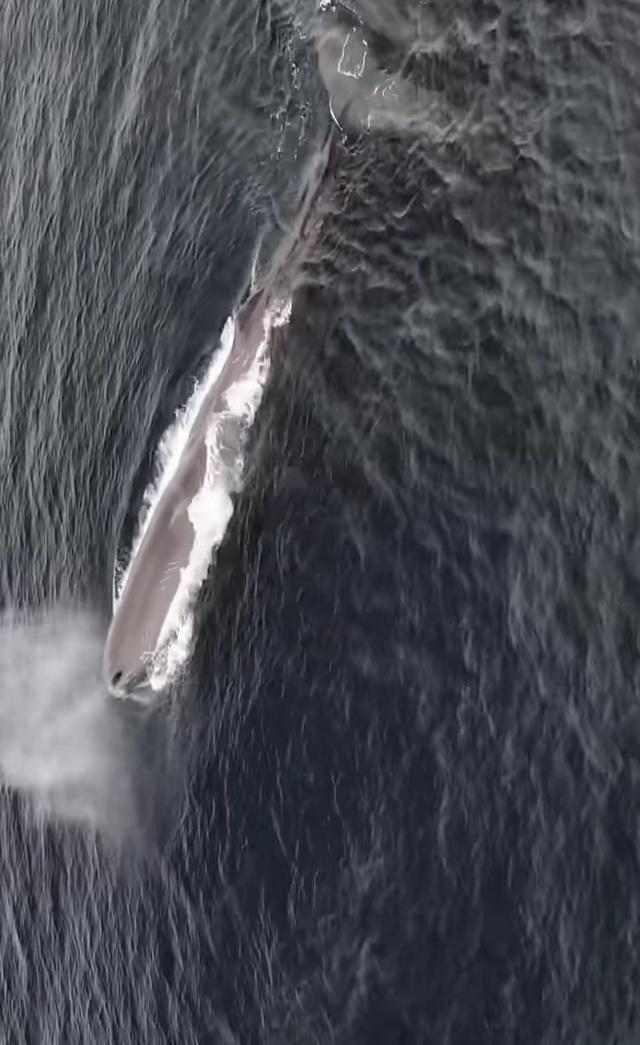
Do the sleep habits of animals and humans differ?
For many animals,They don't need to have as long a sleep as humansFor example, humpback whales will enter a vertical state at a depth of about 15 meters below the surface of the water, just like a floating log, and their sleeping time is much shorter than that of humans, between 6 and 24 minutes, which is equivalent to humans' short naps. After the humpback whale takes a breath on the water surface, it will enter sleep at a depth below the water surface, accounting for only 7% of its lifetime.
Some animals have fragmented sleepFor example, the tern often inserts a short nap of one or two minutes to meet its sleep needs; some animals sleep continuously, but the time is not long: horses sleep only 2 hours a day, while giraffes only need 15 minutes; some animals are the opposite, such as many animals during hibernation can sleep for 2-6 months.
Thank you for appreciating!