First Whale Fall Discovery in the South China Sea: A Romantic and Tragic Death
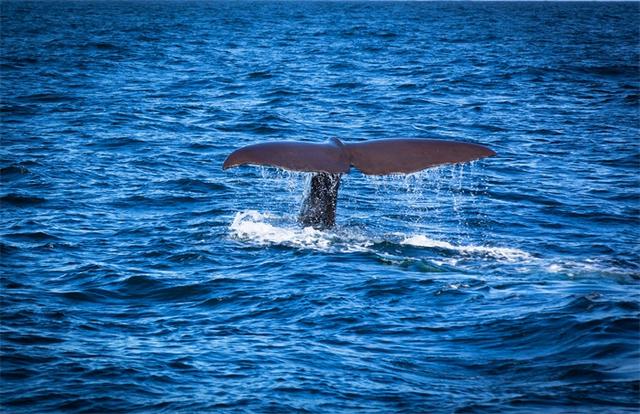
It is the whale's last gentle gift to the sea—whale fall. As the carcass of a whale, it will sustain a food web dominated by decomposers as it slowly sinks to the bottom of the sea for decades. In the South China Sea, scientists have for the first time discovered this poetic and tragic existence.
On April 3rd, according to CCTV reports, the Chinese Academy of Sciences' 'Exploration One' ship arrived in Sanya. One of the important research results of this expedition is the first discovery of a 3-meter whale fall in the South China Sea.
As the largest extant animal in the world, whales are an important component of the marine ecosystem when they are alive, and when they die, they transform into whale fall, providing sustenance to the ocean. Together with hydrothermal vents and cold seeps, they are known as the three oases of deep-sea life.
It is precisely because the massive bodies of whales such as whales cannot be quickly broken down by scavengers, so they will fall to the bottom of the sea. The process of the carcass falling to the bottom of the sea can last for months to years, providing food for various types of consumers in the food chain, including deep-sea fish, crustaceans, polychaetes, and various small organisms. At least 43 species of 12,490 organisms in the deep North Pacific rely on whale fall for survival.
Whale fall can achieve chemoautotrophy. That is, they can produce food through chemical reactions. Besides not needing to obtain sunlight (because sunlight cannot penetrate the deep water), chemoautotrophy is similar to plant photosynthesis.
Scientists' in-depth study of this novel ecosystem revealed that bacteria eat whale bones. These bones contain 60% fat, which the bacteria then use to produce hydrogen sulfide to provide chemoautotrophic organisms with energy synthesis and reproduction. In addition, some anaerobic organisms can also eat whale bones and decompose lipids.
Currently, there are less than 50 modern whale falls discovered worldwide, so this discovery in the South China Sea is of great significance and has long-term observation value.