Giant Coconut Crab
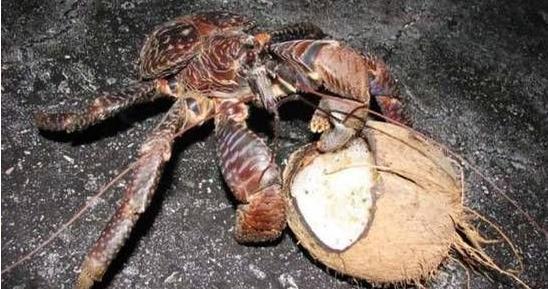
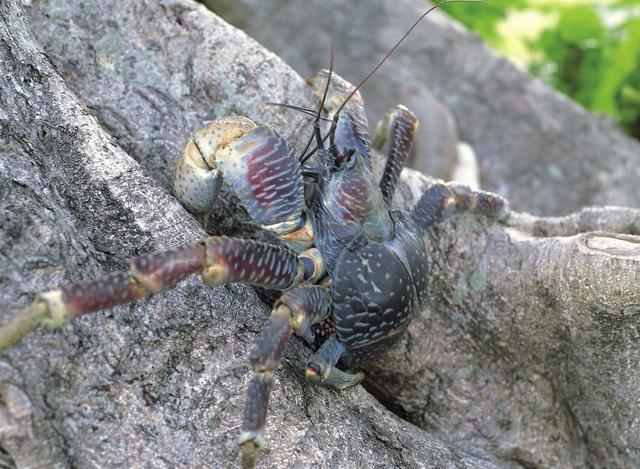
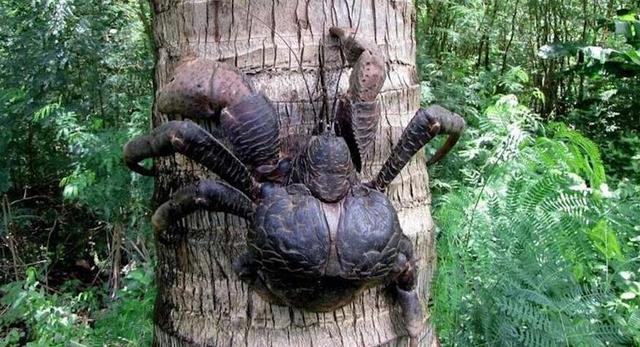
Birgus latro, also known as the coconut crab, is a terrestrial hermit crab that can grow up to 1 meter long. It is the largest terrestrial crab and one of the largest terrestrial crustaceans. Its body can weigh up to 6 kilograms. The crab's exoskeleton is hard, with two powerful claws, and it is a skilled climber, particularly adept at climbing coconut trees, where it feeds on coconut fruit.
Coconut crabs live in tropical forests near the sea and return to the sea during the breeding season to lay eggs. Their young develop in the sea. Coconut crabs inhabit the Indian Ocean and the Pacific Ocean.
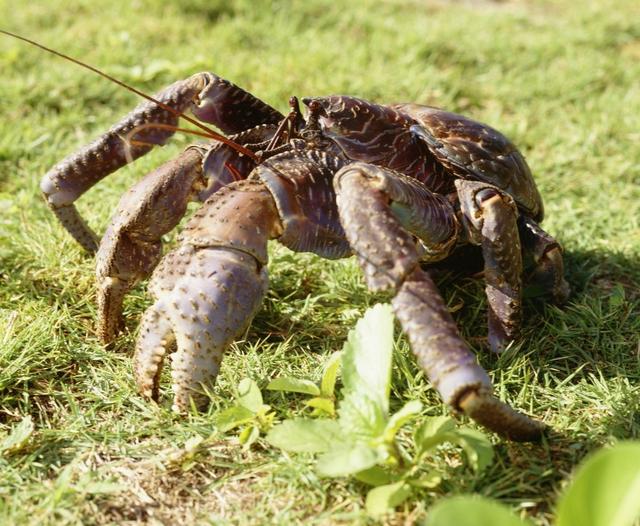
The total length of a coconut crab (from head to leg tip) is 1 meter, and its weight is 3 kilograms. The crab's body and appendages have a thick, calcified exoskeleton. The carapace, especially the thoracic plate and the foot surface, has wave-like wrinkles. The thoracic plate's gill area is particularly enlarged. The forehead angle is triangular, and the eye scales are small. The left claw is larger than the right claw. The abdomen's carapace and lateral carapace are all calcified and partially folded beneath the thoracic plate. Only one side retains a degenerated abdominal limb. The capture claws are asymmetrical, with the larger claw being on one side and the smaller one on the other. The rest of the body is symmetrical. It is a hermit crab, so it originally lived in a spiral shell provided by other animals, but coconut crabs have abandoned this habit. It can dig or excavate holes in sand or roots. The crab is afraid of bright light, so it usually rests in caves during the day and goes out to forage at night. A coconut crab lives alone in a cave. When it grows up, it will dig a larger cave to adapt to its growth.
Coconut crabs have a long lifespan of 60 years and feed on coconuts, fruits, and nuts. Although it is a crab, it has adapted to life on land. It can survive in the sea for a short time, but it will drown if it stays in the sea for too long. It mainly lives in the coral islands of the Pacific and Indian Oceans. In some islands, rats are a big problem. When there are no plants on the islands, rats will prey on coconut crabs. But sometimes the situation is reversed, and scientists have observed coconut crabs preying on rats.
Coconut crabs are originally marine animals, but because their gill area has many blood vessels that can help them breathe, they can live on land for a long time, and they don't often live in the sea, but they return to the sea to lay eggs during the breeding season. The young crabs emerge from the eggs and then crawl onto land to grow. Coconut crabs are widely distributed in the tropical regions of the Pacific and Indian Oceans. It is recorded that there are distributions in Christmas Island in the Indian Ocean, the Malay Archipelago, Indonesia, the Philippines, Australia and the South China Sea and Taiwan Province.
The growth of coconut crabs is very slow, and they grow only a little after each molt. The crab molts 2-3 times a year when it's autumn and winter, and the more it grows, the less it molts. Adult crabs molt only once a year.
The courtship of coconut crabs is a long process, but the mating is quick and simple. The mating happens on land, and after mating, the female carries the fertilized eggs under her abdomen and releases them at the edge of the sea. The young crabs float on the eggshell for 28 days, then undergo a two-week transition period, during which the young crabs take over the shells of other animals and move to land. This early shell and life are very fragile, but they can protect the young crabs from dryness and predation. After 2-3 years of life, the body length is still less than 2 cm. At this time, they abandon the shell, strengthen their skin, and transform into a miniature adult coconut crab. The exoskeleton allows it to continue growing and molt regularly. Molting takes about 30 days in a cave, and after that, the coconut crab has a strong skeleton. After that, the growth of the coconut crab will be very slow, and evidence shows that they can live for 40-50 years. In adulthood, they no longer increase in length.
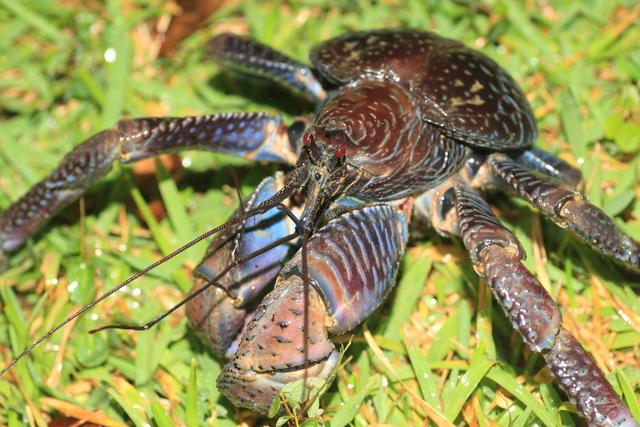
Coconut crab meat is sweet and flavorful, with a lot of fat in its abdomen, which is nutritious. Its eight legs are like lobster tails, and it has a coconut fragrance. The crab meat is delicious whether steamed, stewed or made into soup. The crab paste steamed with eggs is especially delicious. If you use ginger, dates, and meat to make soup, it is considered a nourishing dish. In Taiwan's southern region, coconut crabs are considered a rare wild delicacy. For example, you can add the crab paste to rice wine to drink, which is considered a good remedy for strengthening the body. Besides being studied by biologists, coconut crabs are also favored by people and are valued as a gourmet seafood dish.
“”
60
23
2821282325103040