Have They Stung You? Learn to Distinguish Bees and Wasps, and You'll Never Be Mistakenly Stung Again
Many of us may not realize the differences between bees and wasps, because they are so similar. Isn't it true that anyone who has grown up in the countryside has been stung by a wasp? Today, I will talk to you about the differences between them from physical characteristics, dietary habits, and nest-building habits.
Differences in the physical characteristics of bees and wasps
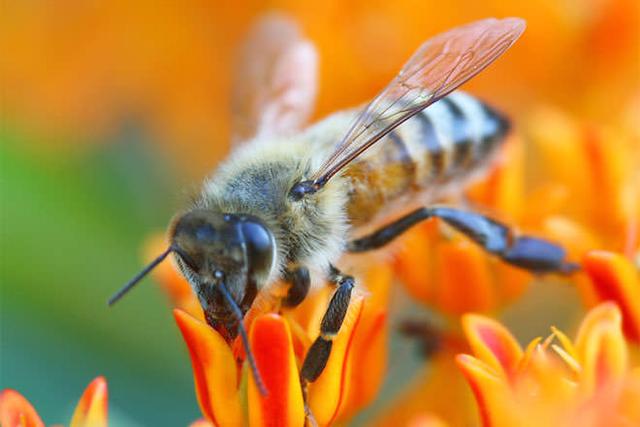
Bees and wasps have different bodies and leg structures, the main differences are:
- Bees have furry bodies, while wasps have smooth bodies.
- Bees' abdomens and chests are round, while wasps are columnar.
- Bees' legs are flat and wide, while wasps' legs are round.
Dietary Differences
Bees are pollinators, and you can easily find them in places where there are flowers. Besides honey, bees also drink water and clean their hives. It's interesting that royal jelly, a special honey, can turn ordinary bees into queens.
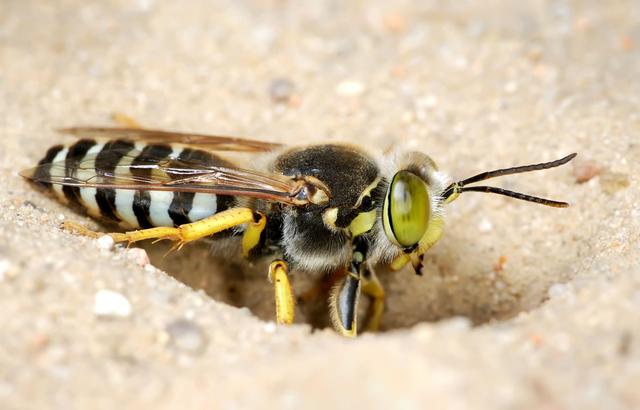
Wasps are typically carnivorous, they eat other insects such as caterpillars and flies. However, wasps sometimes eat honey. They are also attracted to the smell of human food, especially sugary drinks and beer.
Behavioral Characteristics of Bees and Wasps
When bees need to protect their hives or themselves, they attack anyone trying to disturb their hives with a sting. Bee stings are sharp and long, and they will remain in the skin after being stung. The bee's own bones will also be torn out from its chest, which will ultimately lead to its death.
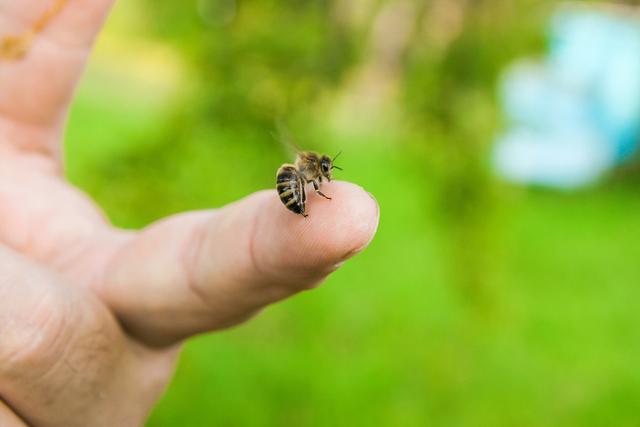
Wasps are more aggressive because they are often predators. Unlike bees, wasps are easily angered. In special circumstances, it may maliciously attack you. Wasps' stings are smooth and easy to detach from the skin. When a wasp sees its nest in danger, it will release pheromones to warn other wasps, and they will come out collectively to attack the enemy.In general, bees and wasps are not very aggressive. They will only try to sting you boldly when they are trampled or when they defend their nests. The intensity of the sting of bees ranges from very mild to attacking, but some male bees cannot sting. Bee stings can only sting once, but they are annoying because they have venom sacs attached. We should really pay attention to wasps, because they can sting repeatedly, and its stings will not detach from the skin.
Nest-building Habits of Bees and Wasps
Nest-building habits of bees
Bees are highly social, and each hive has a queen and many members. The hive can accommodate up to 40,000 bees at its peak. The internal structure of the hive is a honeycomb made of beeswax, which is a dense and irregular honeycomb. Bees use these structures to store food (honey and pollen) and house eggs and larvae.
Wild bees typically use rock caves and hollow trees as natural nesting sites. The nests consist of multiple nests in parallel, the space of the nest is relatively uniform. The nest usually has only one entrance, the volume of the nest is about 45 liters, and it will not be less than 10 liters or more than 100 liters. The ground height of the nest is usually between 1 meter and 5 meters, and the entrance is preferably facing south (in the northern hemisphere), and it is preferred to be within 300 meters of the queen's nest. Bees often make the bark around the hive entrance smooth and apply a thin layer of hardened plant resin (beeswax) to the walls.
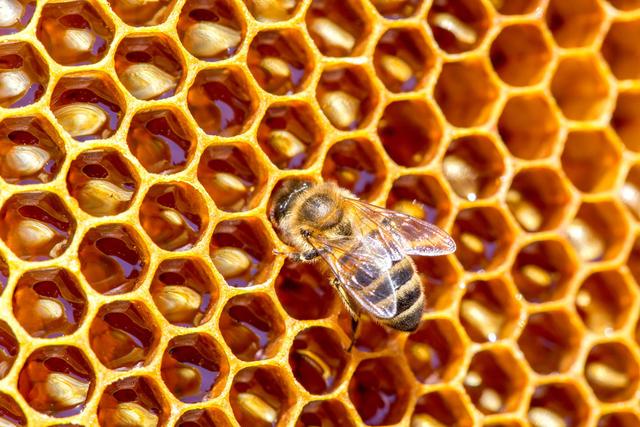
Bees' honeycomb extends along the walls and sides of the cavity, and leaves small channels at the edges. All bees have a similar basic nest structure: honey is stored in the upper part of the six-sided structure, and larvae and pupae are below. Bees use the honeycomb to store honey and pollen, and to raise young bees.
Nest-building habits of wasps
Unlike bees, wasps do not produce beeswax, but mainly obtain nest material from wood pulp. Wood fibers are collected from weathered wood, and are softened by chewing and mixing with saliva, and then used to build nests.
Commonly, wasps' nests are dug into holes in the ground or plant stems, or built with mud.The type of nest built by wasps depends on the species and location. Some social wasps build nests in trees, attics, or holes on the ground. It is worth noting that
Some social wasp nests are first built by the queen, which is about the size of a walnut, and then taken over by the non-fertile female bees (the queen's offspring). The size of the nest generally reflects the number of individuals in the wasp colony. Social wasps have more than 1000 individuals, and there must be at least one queen.
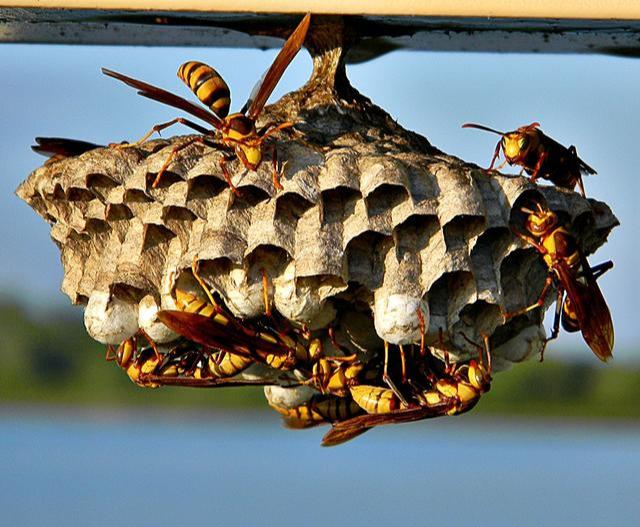
The nesting habits of solitary wasps are more diverse. Flower wasps often build mud pools on the side of the wall, and pot wasps are similar, using mud to build vase-shaped nests, often with multiple units attached to branches or walls. Most other predatory wasps dig into soil or stems, and some wasps don't build nests at all, but rather use natural holes, such as holes in wood.
So, after reading this article, can you clearly distinguish between bees and wasps? Thank you for reading, and look forward to your attention!