New Native Animal Species Emerges in Chongming Island Wetlands
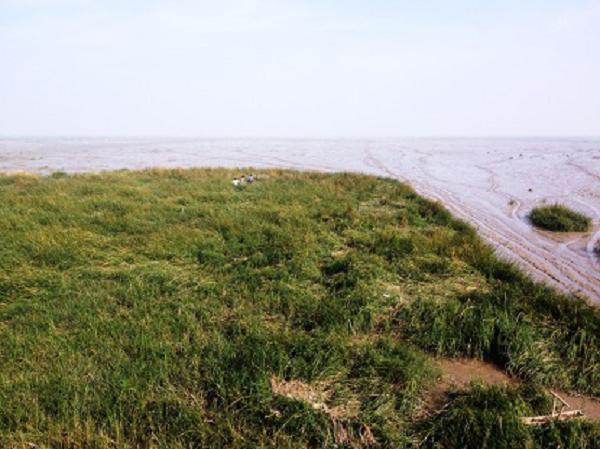
Illustration: The origin of Gu's Ramtostyla specimen – North Beach Wetland, Chongming Island. Photo provided by respondents (same below).
The diverse and peculiar creatures in the family of life in Shanghai are fascinating. Recently, scientists have discovered a new species of ciliate protozoa in this family. The discovery location is in Chongming Island wetlands, and the discoverers are the research group of Professor Fan Xinpeng from East China Normal University's College of Life Science. They named this species Lamtostyla gui, in honor of the outstanding contribution of Professor Gu Fukang, a renowned protozoologist and emeritus professor of East China Normal University, to the development of protozoology in China.
The eastern wetlands of Chongming Island are located at the junction of saltwater and freshwater, which is an ecological transition zone. The abundant biodiversity within it has fostered the growth of many species. The area has always attracted the attention of researchers from many fields. However, research on protozoology classification and diversity has been quite lacking. In recent years, the East China Normal University's protozoology research group has conducted systematic surveys in Chongming wetlands, gradually revealing the rich resources of ciliate protozoa and unique taxonomic characteristics in this wetland. In 2017, the group reported a new genus named 'Chongming' – Arcansutura chongmingensis.
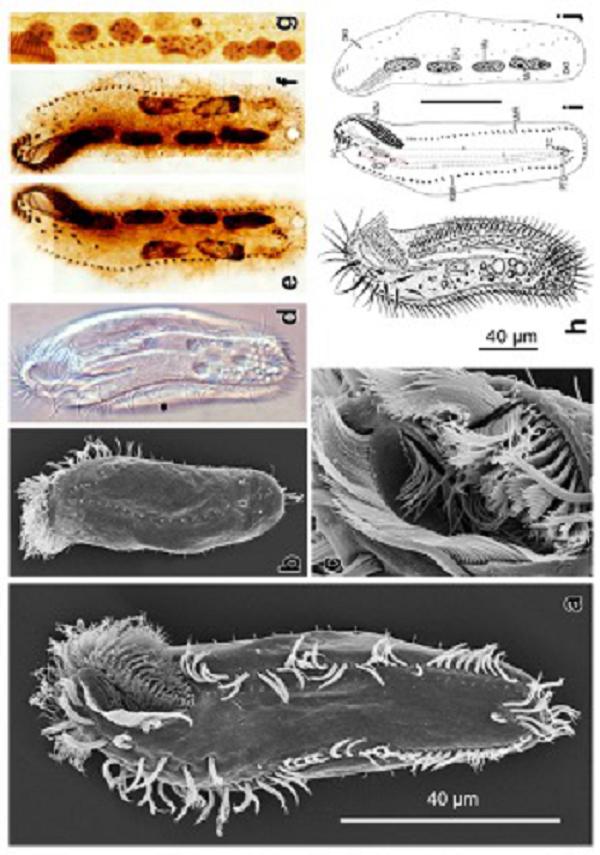
Illustration: Non-dividing phase morphology of Lamtostyla gui
Ciliate protozoa are a small group of highly differentiated eukaryotic single-celled organisms. Ciliates are the most complex division within this class. Lamtostyla gui belongs to the higher order of ciliate – Clypeal Band Suborder, and these organisms have obvious division of dorsal and ventral structures, and taxonomic scholars often use live body general morphology, ciliate diagrams and other microscopic features to distinguish different species and genera. Professor Fan Xinpeng introduced that, for Lamtostyla gui, this research is based on the observation and statistics of a large number of individuals, which portrays the microscopic taxonomic features of the species. The establishment of this species increases the number of Lamtostyla genera to 15. In addition, through scanning electron microscopy and transmission electron microscopy techniques, the vivid body surface morphology and detailed cellular organ morphology of the new species were displayed. More importantly, the discovery of the cellular organelles' ultra-structural features of the new species is the first evidence for the recognition of the Clypeal Band Suborder, Small Double-worm Family species, which provides first-hand evidence for future taxonomic inference of this family from the cellular level.
This research result was recently published in 'Scientific Reports' . 'Ciliate protozoa's cell development and higher animals' individual development are both simple and rapid re-evolution of the same systematic system. Studying the cell development process can not only understand how the specific structures of the species are formed, but also understand the systematic evolution of the species' belonging to the order. Professor Fan Peng said that, from an animal perspective, the detailed description of Lamtostyla gui provides a new source of information for resolving the taxonomic and systematic uncertainties of ciliate protozoa. The discovery of this new species suggests that the Chongming Island wetlands – this biodiversity hotspot area, has the potential for high diversity of protozoa. This also highlights the importance of protecting wetlands in the construction of Chongming Ecological Island from the perspective of these tiny lives.
New Min Evening News reporter Wang Wei