During the invasion by the Eight-Nation Alliance, the ‘Four Not Liked’ (Si Li) species disappeared from China, and later why did they flourish again?
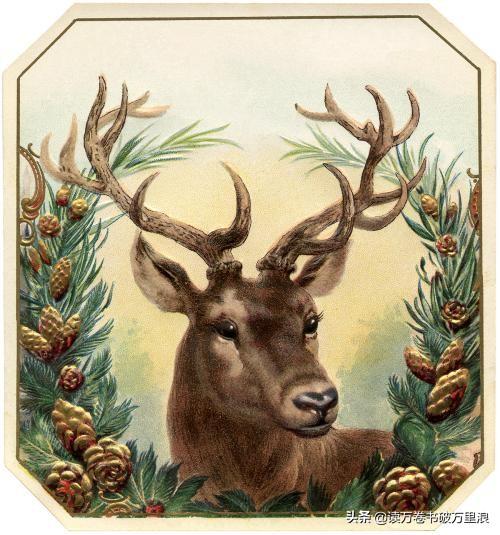
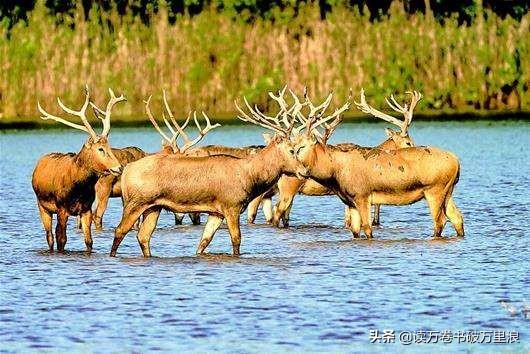
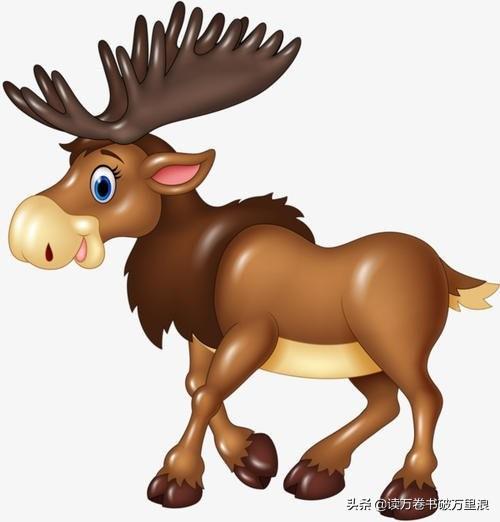
The moose is an endemic animal in China, known as ‘Si Li’ (Four Not Liked) due to its head and face resembling a horse, its antlers resembling deer, its neck resembling a camel, and its tail resembling a donkey. It flourished in China around 10,000 to 3,000 years ago, with a population of over 100 million, and humans were its primary hunting targets. After the Han Dynasty, the wild moose population gradually decreased.
The moose disappeared with the demise of the Qing Dynasty.
After the establishment of the Yuan Dynasty by Kublai Khan, the Mongolian royal family, who were skilled riders and shooters, transported the wild moose from the Yellow Sea beaches to the capital Beijing, exclusively for the royal children to ride and shoot. This led to a rapid decline in the moose population, gradually leading to its extinction in the wild. In the early years of the Qing Dynasty, the moose that was once widespread in the middle and lower reaches of the Yangtze River was reduced to less than 300 individuals, all of which were kept in captivity in the Beijing Nanhai Royal Hunting Enclosure, maintained by the royal family's meticulous feeding, barely sustaining their survival.
In 1865, the naturalist and missionary David discovered the moose in a hunting enclosure in the south of Beijing, spent 20 taels of silver to bribe the hunting enclosure guards, obtained two moose, made them into specimens and brought them to Europe, allowing Europeans to first witness this animal, which was still undocumented in the animal classification.
In the following decades, the impoverished and weakened Qing Dynasty faced constant natural disasters and hardships, and the moose suffered greatly. In 1894, the flooding of the Yongding River in Beijing destroyed the enclosure walls, and a large number of moose scattered and were hunted by local residents.
The moose continued to exist in Britain.
In 1900, the Eight-Nation Alliance occupied Beijing, and the remaining moose herds were slaughtered, and only a small number were looted back to Europe. Soon after, the moose completely disappeared from China. However, the 18 moose in Europe were quickly collected and raised by the 11th Duke of Beaufort in the Upton Court Estate, which ensured that the moose’s vitality could be sustained and they flourished there, forming a complete small population.
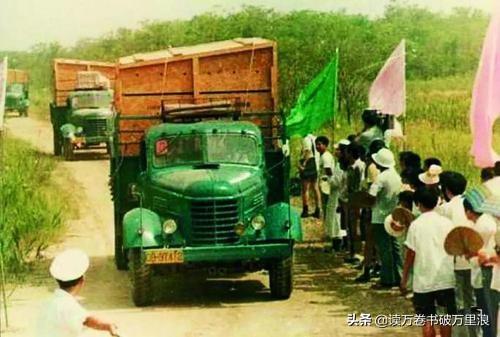
In 1985, the governments of China and the United Kingdom jointly launched a moose reintroduction project, 20 young moose were sent from Upton Court Estate in Britain to Nanhai Moose Park in Beijing, where a dedicated Beijing Moose Ecological Experiment Center was established, which spent decades researching moose conservation biology, behavior, organizational anatomy, and disease prevention, guaranteeing the continuous regeneration and multiplication of the moose population.
In the 1980s, moose were introduced and developed in China.
On August 14, 1986, under the joint efforts of the World Wildlife Fund and the Chinese Forestry Bureau, 39 moose from seven British zoos were released into the large-scale wild moose population protection zone in Dafeng, which covers a total area of 117,000 acres. Due to favorable climate and a good wetland ecological environment system, the moose’s breeding rate, survival rate, and annual increase rate were among the highest in the world, currently exceeding 1,300.
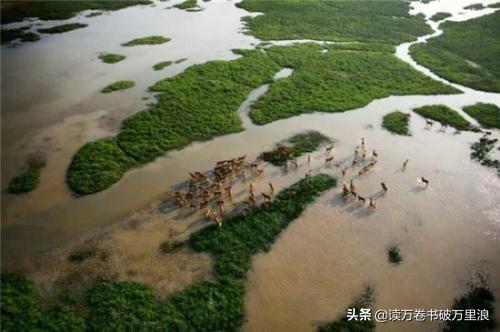
In 1991, the Shitouxi Moose Natural Reserve was established in Hubei and upgraded to a national-level nature reserve. In 1993 and 1994, two batches of 64 moose were transported from the Beijing Nanhai Moose Park to the protection zone, and in 2003, another 30 moose were reintroduced. These moose relied entirely on wild plants for food and thrived in a wild state, and now exceed 1,000.