70cm Long! Xuzhou Citizen Catches Wild Mudpuppy by the Grand Canal
Regarding the ecological environment of Xuzhou, it's truly remarkable. There are frequently visits from rare animals to this beautiful place. Recently, Mr. Zhang, a citizen, was fishing by the Grand Canal and caught a fish with a peculiar appearance, which is likely a rare animal.
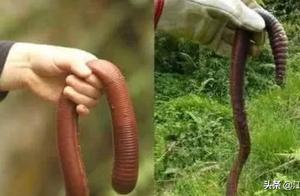
Mr. Zhang introduced that on March 17th, he was fishing under the Grand Canal Bridge and accidentally found a strange animal crawling nearby. He thought it was interesting and brought it home for comparison with pictures online, suspecting it was a salamander (). This attracted nearby residents to gather and watch.
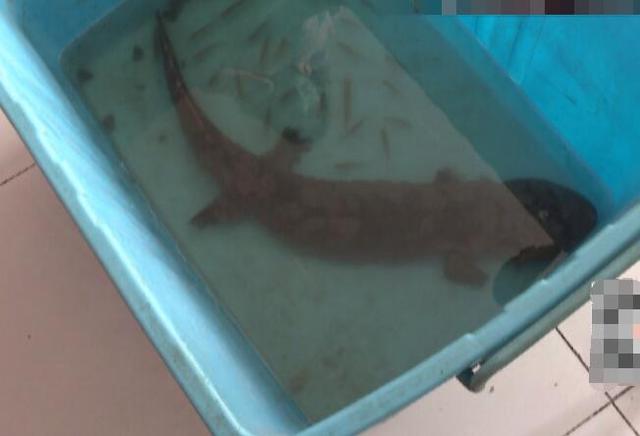
This salamander has a black body with patterns, about 70cm long and 10cm wide, weighing about 4 kilograms. It has four thick legs and a flattened head. Surprisingly, when Mr. Zhang held the fish, it made a sound like a child. Subsequently, the reporter contacted Xuzhou Animal Park, and two staff members arrived on the scene soon after.
After confirmation by two staff members, it was indeed a wild salamander, which is rare in our local area.
Xuzhou City Animal Park Veterinarian Tong Wenran said: 'It is a nationally key secondary protected animal. It has high requirements for water quality, and it needs flowing live water. Generally, it needs to reach level two or above.'
Subsequently, Mr. Zhang filled out a transfer form, and the wild salamander was handed over to the staff for custody and observation at the animal park.
The reporter learned that this fish often grows in southwestern China, with the scientific name of *Chinese giant salamander* (), which belongs to the Amphibia order and the Plethodontidae family. It lives in freshwater. It is a precious wild animal characteristic of China, commonly known as 'salamander' (). However, it is not a fish, but the largest amphibian, with an average length of 1 meter, the longest up to 2 meters, and the largest up to 50 kilograms. Its color will vary with the color of its habitat. It has irregular dark spots on its back, and its belly is pale brown or white. Regarding what citizens should do when they capture wild animals, the animal park staff also made several suggestions.
Xuzhou City Animal Park Veterinarian Tong Wenran said: 'First, ensure a quiet environment, then call the relevant departments. It is not recommended for citizens to directly contact them because it is for animal protection and also for human protection, as many wild animals are somewhat aggressive.'
We also suggest that citizens, when they see wild animals in the wild, if they are not obviously injured or diseased, do not capture them.