Do Pandas Eat Sugar Cane? Do They Vomit Pulp?
We know that pandas love to eat bamboo, but in reality, pandas also eat snacks, and occasionally they will switch flavors under the supervision of keepers, sugarcane is one of them.
Although sugarcane is rich in water and sugar, sugarcane also contains a lot of fiber. So, when pandas eat sugarcane, will they, like humans, vomit the pulp?
Do pandas vomit pulp when eating sugarcane?
A tourist once really observed pandas eating sugarcane, and pandas eating sugarcane is similar to chewing bamboo, first using their mouths to bite off a piece of sugarcane, then using their hands to fix the containing a lot of fiber outer shell, then eating the soft core in one bite. This shows that pandas do not vomit pulp when eating sugarcane.
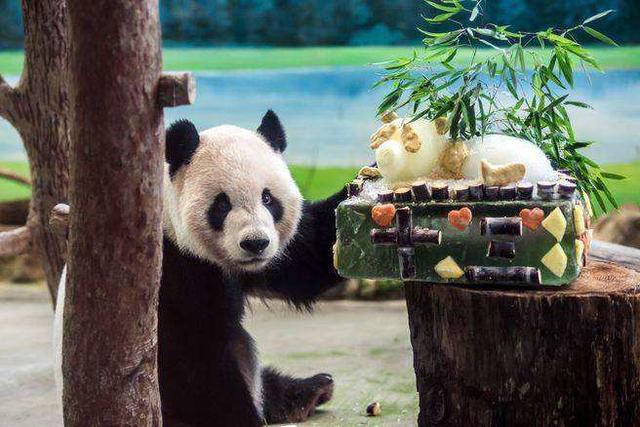
For humans, it's not vomit pulp when eating sugarcane, not only is it not palatable, but it is also very difficult to digest, but for pandas, they eat bamboo and sugarcane, which also contain a lot of fiber, even more fiber, so it's about the same difficulty for them to eat sugarcane.
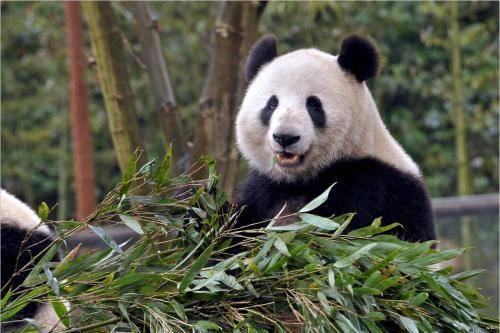
However, for pandas, eating sugarcane and eating bamboo are both not easy to digest. All this has to start from the panda's digestive system.
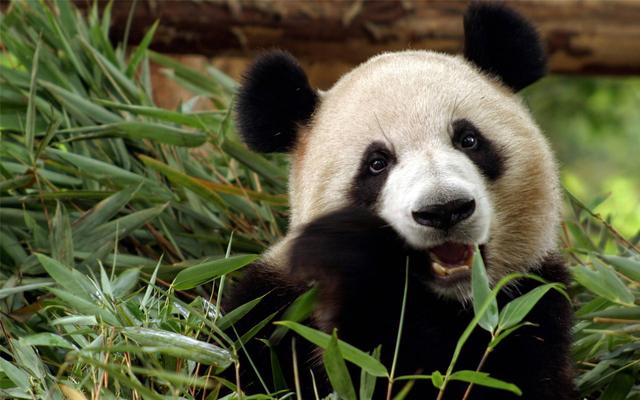
Pandas are actually very strange creatures.
Their teeth and stomachs all show meat-eating characteristics.That is, sharp and pointed teeth and shorter intestines.These characteristics are not suitable for eating plants, because sharp and pointed teeth are not as good as flat and large teeth for grinding plants, such as the grinding teeth we usually use when grinding food.
Shorter intestines mean that plants haven't fermented, and they will be excreted by the body, which is not conducive to the individual obtaining nutrients from plants.
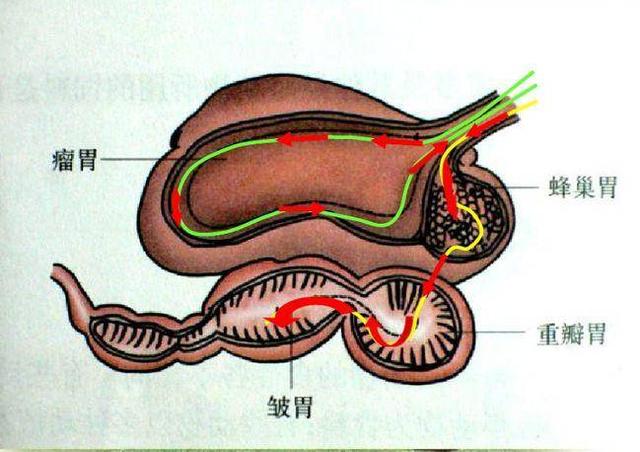
Herbivores generally have multiple stomachs, such as cows have 4 stomachs, these stomachs contain little gastric acid, which allows microorganisms to survive in them, and the microorganisms can help herbivores break down plants, and the remnants of the broken down plants can be absorbed by the herbivores.
So, the food eaten by herbivores is mainly for the microorganisms in their bodies, and the nutrients they absorb are the residue after the microorganisms break down the plants.
However, pandas only have one stomach, and the stomach contains gastric acid, which means that a large number of microorganisms cannot survive in the stomach, they can only help pandas break down plants in the intestines.
According to research:
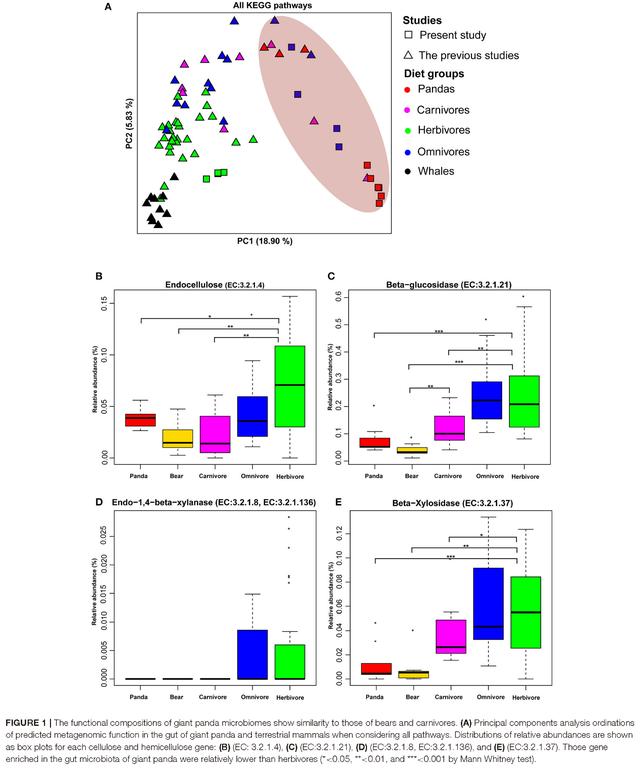
Pandas have a very low utilization rate of plants, mainly because the time they spend digesting is simply too short, food from eating to excreting, only used for 4 hours.According to the paper 'Microbial Genomics Reveals Panda Gut Microbiota May Not Be Specialized in Fiber-Digesting' shows:
The microbial flora in the panda's intestines did not produce specialized fiber and hemi-cellulose, and the panda's fiber and hemi-cellulose is not specialized in fiber and hemi-cellulose, and the time the bamboo stays in its digestive system is relatively short, which is not conducive to the fermentation of polysaccharides. The energy obtained by the panda from eating bamboo is very limited. Research shows that pandas eat 15 kilograms of bamboo every day, but they will also defecate about the same weight of feces, so pandas are also known as
Fecal machines.
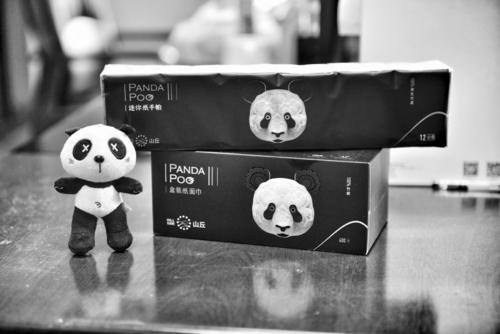
Secretly say that because panda feces are rich in fiber, someone has already started to make paper from these feces, and this paper is not cheap.)Since pandas have a very low utilization rate of food, why are pandas so fat?If a creature eats food that is not high in nutritional elements but is still fat, it means they eat a lot and don't move much. This is also true for pandas.
Pandas are large in size, and pandas live in areas where there are no large meat-eating animals, so pandas have no enemies in the local ecosystem, so they don't need agility.
Plus, pandas live in areas where bamboo is abundant, they don't need to migrate for a long time to find food, this causes pandas to have a relatively low daily metabolism, just like humans, they are easy to gain weight if they don't move.
Pandas eat food with low nutritional value, but they spend a lot of time eating, someone describes it as: if you see a panda not eating, it must be sleeping.

Long-term eating, plus not moving, so pandas can maintain such a fat figure.
Summary
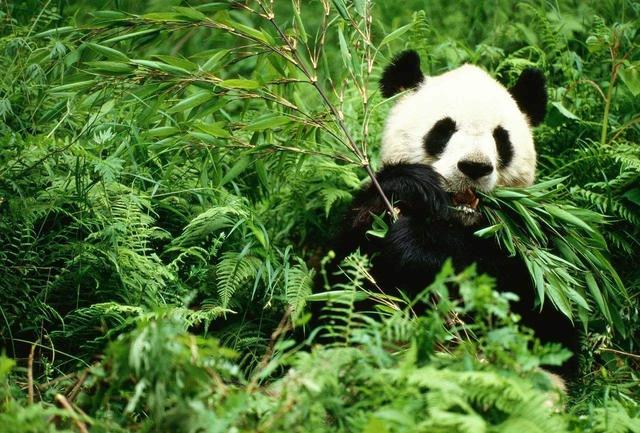
Pandas not only eat bamboo, because bamboo has low nutritional content, so at the panda base, the keepers will prepare apples, milk powder, and specially formulated nutrient balls for them, but for pandas, bamboo is their favorite.