Black Tigers Emerge in India, Challenging Mythical Claims; Facing Extinction Risk
The tiger is a mysterious and large feline animal. The mystery of the tiger refers not only to its secretive movements and difficulty in being discovered, but also to its existence in various mythological legends in the form of White Tigers, Golden Tigers, Black Tigers, Winged Tigers, or Man-bodied Beastly Spirits. Obviously, in these mythical animals, Winged Tigers and Man-bodied Beastly Spirits are imagined by ancient people, and do not exist in reality. However, White Tigers and Golden Tigers actually exist in reality, they are the result of gene mutations in Bengal tigers. We can see them in some zoos.
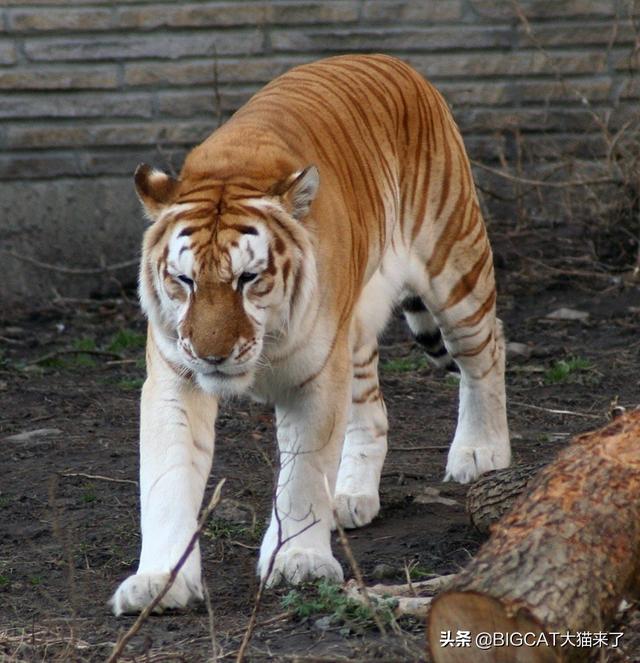
Figure: Golden Tiger in a Zoo
So, do Black Tigers exist in the real world?
Black Tiger, a mysterious animal
Besides, there are records about Black Tigers in ancient books, and in the early 20th century to the mid-20th century, there were rumors of Black Tigers appearing in Hebei Province, China. People hunted and captured Black Tigers twice in 1905 and 1912; in 1924, American missionary Harry Cardew wrote a book describing his discovery of Black Tigers in Fujian Province... However, due to the lack of participation by scientific workers, these records cannot be verified.
In the 1950s,Mr. Tan Bangjie, a famous animal scientist who paid the most attention to tigers and studied tigers in Chinareceived several letters from the public saying that they had seen Black Tigers in Miyun County (now Miyun District, Beijing). Mr. Tan Bangjie also planned to conduct an on-site investigation. If possible, he would take a photo of the Black Tiger, but due to various reasons, he couldn't go. He missed this opportunity to prove the existence of Black Tigers in China, and Mr. Tan Bangjie regretted it for the rest of his life.
With the extinction of South Asian tigers in the wild, the total number of wild Northeast tigers and Bengal tigers in China is less than 100, and the probability of Black Tigers appearing in China is almost zero now.Now, does India, the country with the most wild tigers today, have Black Tigers?
Today's India has nearly 3,000 tigers, mostly Bengal tigers. The probability of gene mutation to become White Tigers in Bengal tigers is much higher than other tiger subspecies. White Tigers, Pure White Tigers, Golden Tigers, etc., only appear in Bengal tigers. Therefore, if you want to find Black Tigers, focusing on Bengal tigers is the right choice.

Figure: From left to right are Pure White Tiger, Bengal Tiger, Golden Tiger, and White Tiger
Surprisingly, Black Tigers actually appeared in India. However, their popularity is far less than that of White Tigers, and many people still think Black Tigers only exist in myths and legends.
Wild Black Tigers only appear in a protection area in Orissa, India
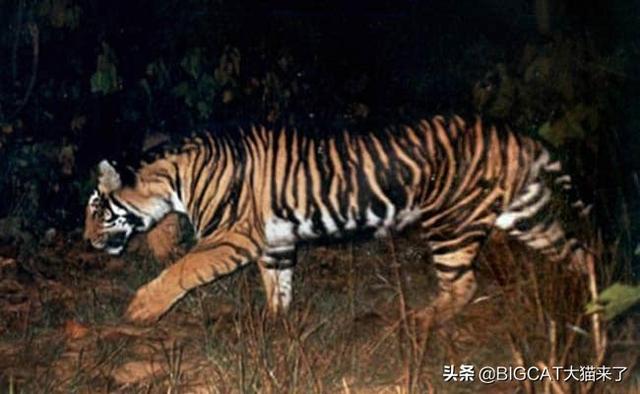
In the 1990s, the media first reported the appearance of Black Tigers in SillipalSillipalTiger Protection Areain Orissa, India. In 2006, a tiger census showed that there were 45 Black Tigers in the area; in 2015, the Black Tiger population in the area was 28. This proves that Black Tigers have their own gene pool. Infrared cameras set in the jungles of Sillipal Protection Area have repeatedly photographed the shadows of Black Tigers, unveiling the mysterious face of this 'mythical animal'.Figure: Infrared camera in the wild captures a Black Tiger
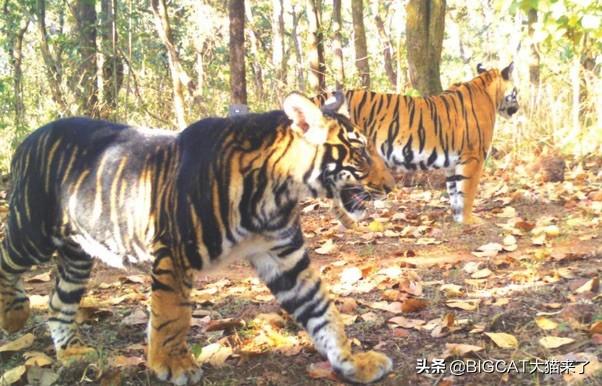
We usually see tigers, no matter which subspecies, their fur color is similar: the abdomen is gray-white, the back and body sides are brown-yellow, with black stripes on top. If you only look at the color of the fur, most people can hardly distinguish different tiger subspecies. Black Tigers have obvious differences in fur color compared to ordinary tigers:
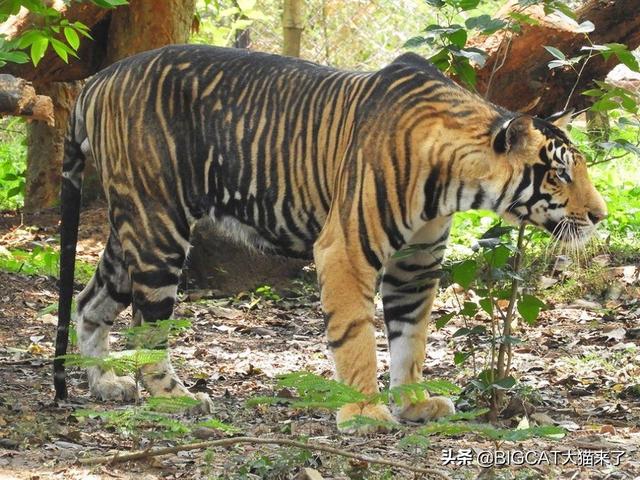
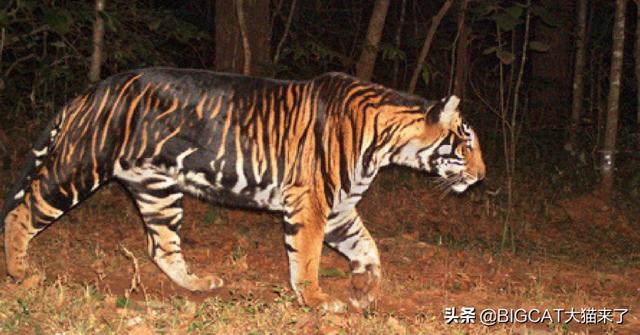
Their black stripes are darker, like dyed with ink; they are larger, even far exceeding the area of yellow fur; they are more dense, sometimes several black stripes form a large block. Some Black Tigers have completely black tails.We cannot confidently say that Black Tigers did not exist before they were reported in the wild, because in the wild,
Lack of evidence does not mean lack of existence. Now, besides Sillipal Tiger Protection Area, Black Tigers have not been found anywhere else in the wild, so Sillipal Tiger Protection Area has become the only natural habitat for Black Tigers.How did Black Tigers form?Black Tigers, also known as Black-skinned Tigers, do not belong to a species or a subspecies of tigers, but are variants of tigers resulting from gene mutations. They belong to a variant of tigers.
The Sillipal Protection Area Tigers are Bengal tigers, so Black Tigers belong to the variant of Bengal tigers.
Figure: A Black Tiger in a ZooNatural populations of black-skinned animals appear in many wild cat species, most commonly black panthers - they are black individuals of leopards or American leopards. In addition, besides domestic cats, wild cats, slender cats, jungle cats, short-tailed cats, bush cats, Asian golden cats and other wild cat species also have black individuals. Scientific research proves that
Black-skinned cats are due to gene mutations controlling fur color, leading to an excessive production of melanin; black American leopards are due to hormone receptors of black pigment cells (ASIP gene) experiencing a hidden mutation; black panthers are due to the MC1R gene experiencing a dominant mutation.
Both gene mutations can lead to excessive melanin production and deposition, which significantly changes the color of the individual's fur.Correspondingly to blackening, whiteing phenomenon (different from white disease) also occurs frequently in cat species, and the White Tiger is a white variant of Bengal tigers. In addition,
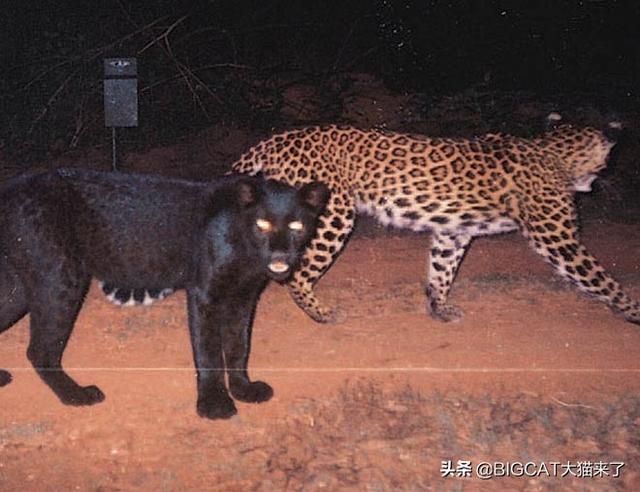
Figure: Black Panther and Ordinary Leopard appear together in the wild
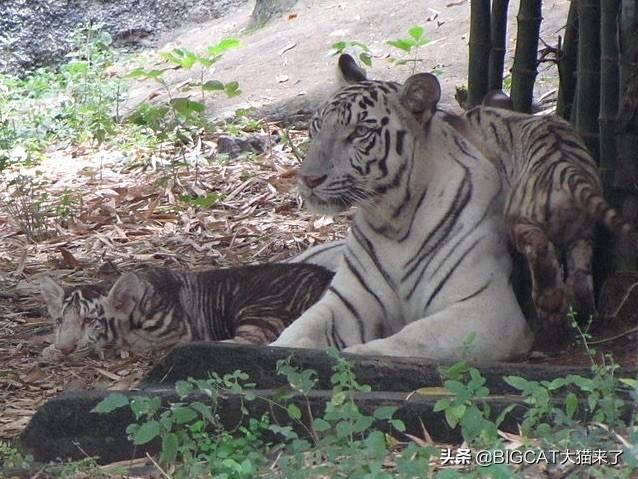
For example, scientists found that the black leopard is caused by the gene of the pig snout rat (ASIP gene) experiencing a hidden mutation; black American leopards are caused by the black pigment cell hormone receptor gene (MC1R gene) experiencing a dominant mutation.Both gene mutations can lead to excessive melanin production and deposition, which significantly changes the individual's color of the fur.Correspondingly to blackening, whiteing phenomenon (different from white disease) also occurs frequently in cat species, and the White Tiger is a white variant of Bengal tigers.Figure: An Indian zoo shows a White Tiger giving birth to a rare Black TigerCurrently, the status and threats of Black TigersIn the past two years, there is a lack of statistics, but it can be said that now the Black Tigers in Sillipal Protection Area are in a state of danger of extinction, the situation is worrying.
1. The influence of inbreedingApproximately one in a million Bengal tigers will become White Tigers, meaning that only one out of every million Bengal Tigers will become Black Tigers due to gene mutation. The probability of Black Tigers appearing in Bengal tigers is also very low.
Why do Black Tigers still exist in Sillipal Protection Area?Initially,
Perhaps only one Black Tiger appeared, and through natural conditions, it was through near-breeding and back-breeding that Black Tiger genes were passed down and spread.Although the number of Black Tigers has increased, they also face a prominent problem: inbreeding. Animal scientists have found thatDue to inbreeding, the body shape of Black Tigers is generally smaller than that of ordinary Bengal tigers. In addition, inbreeding also brings other problems, such as reduced resistance, and the offspring are prone to acute and short life expectancy.Figure: A wild Black Tiger
There are also a certain number of Black Tigers kept in captivity, they are the descendants of the five wild Black Tigers. To reduce the impact of inbreeding, animal keepers give them gene maps, and allow individuals with less kinship to mate.
2. Declining prey numbers
A rare animal is often the first to attract the attention of poachers. A few years ago, to investigate Black Tigers, animal scientists installed some infrared cameras in Sillipal Protection Area, but they did not photograph Black Tigers, but photographed poachers. In 2012, the protection area discovered a total of 7 poachers. However, in recent years, with the strengthening of protection, the poachers in the area have basically disappeared.
However, the declining number of prey has become the main factor affecting the survival of Black Tigers and other tigers.
In the wild, tigers mainly feed on large hoofed animals, but animal scientists found that
The increasing human population and the continuous expansion of human living and activity space are eroding the habitat of Black Tigers.Therefore, the protection of Black Tigers must receive wider attention. If Black Tigers go extinct, it is very far in the future, and people may also think that Black Tigers are just 'mythical animals' invented by us 'ancient people'.
5
2.
20127
“”“”