Wandering Tibetan Mastiffs Rise to Prominence, Secure ‘Second Tiger’ Status, Potentially Threatening Snow Leopard Survival

Tibetan Mastiffs are a unique breed of dogs in China, and also a very ancient breed. In the history of pastoralism, Tibetan Mastiffs have occupied a very important position, especially for people in the Qinghai-Tibet Plateau. Tibetan Mastiffs are their most loyal companions.
However, due to the influence of the 'Tibetan Mastiff craze,' many farms bred large, shaggy Tibetan Mastiffs to meet consumer distorted aesthetics, leading to the tarnishing of the reputation of Tibetan Mastiffs. Nowadays, whenever you mention this breed, many people scoff at it.
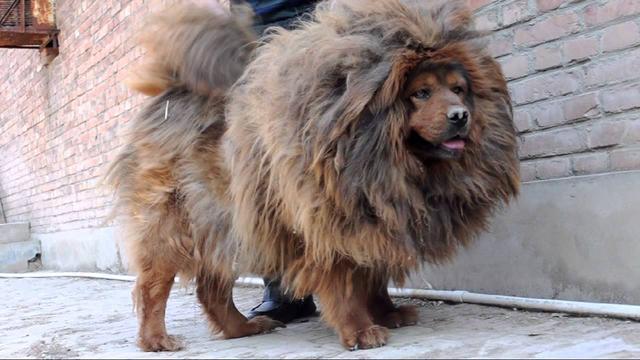
However, the true purebred Tibetan Mastiff is completely different from these unattractive and useless mastiffs. If we ask what is the strongest dog breed in China, Tibetan Mastiffs would definitely be in the first-place.
Tibetan Mastiffs are world-class fierce dogs, especially in the era when science and technology were underdeveloped, pastoralists relied mainly on herding for their livelihood, and the importance of cattle and sheep was self-evident. Wild animals were the biggest threat to cattle and sheep. At that time, raising Tibetan Mastiffs was the primary means of protection. These ferocious Tibetan Mastiffs not only could intimidate wild animals but also could directly confront wild animals.
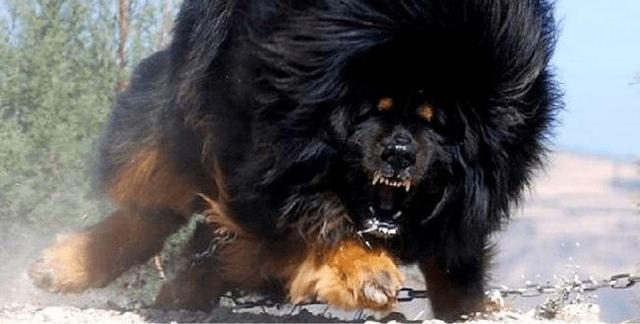
However, with the collapse of the 'Tibetan Mastiff' economy, many farms went bankrupt due to the inability to afford the daily high feed costs, so they abandoned Tibetan Mastiffs in the wild. Because dogs have a natural tendency to live in groups, these stray Tibetan Mastiffs quickly gathered together and gradually formed a large team, rising to become the 'second tiger' of the mountains.
On average, a Tibetan Mastiff weighs 60-70 kilograms, and some even reach 90 kilograms, which is more than twice the size of a Chinese wolf. When they gather together, they become a new fierce group, and their combat power is even higher than that of a wolf pack.
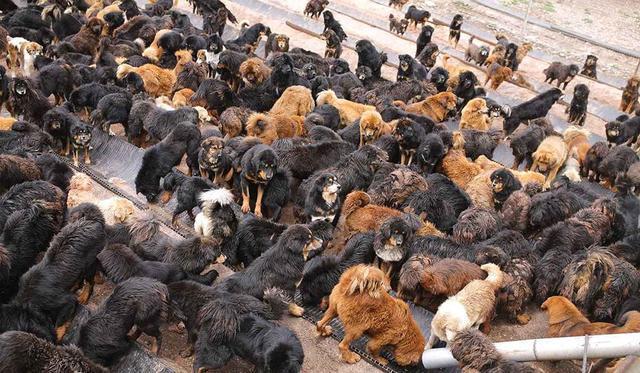
Stray Tibetan Mastiffs have lived in the wild for a long time, and their wildness has gradually recovered. They gather in groups to compete for land and food with wild animals. On the snowy mountains, there are no tigers or leopards, so Tibetan Mastiff groups have no natural enemies. This reminds me of Australian Kelpies. They were also a type of domesticated dog that had fallen out of control. In the course of thousands of years of development and evolution, they had become top-level predators in the food chain. The appearance of Tibetan Mastiffs will bring what impact to the animals in the plateau ecosystem?
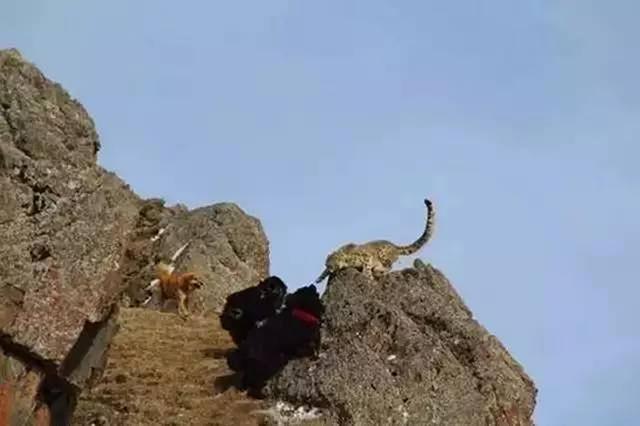
In the plateau ecosystem, snow leopards are the most famous, and they are the largest predators in the system. They are known as the 'king of the snowy mountains.' A mature snow leopard weighs about 50-80 kilograms, which is similar to Tibetan Mastiffs. If they fight one-on-one, Tibetan Mastiffs are no match for snow leopards, but Tibetan Mastiffs are highly social animals, and they have a natural social attribute, and now Tibetan Mastiffs have firmly established themselves as the 'second king of the snowy mountains.' As they spend more time living in the wild, they are gradually spreading to more remote areas.
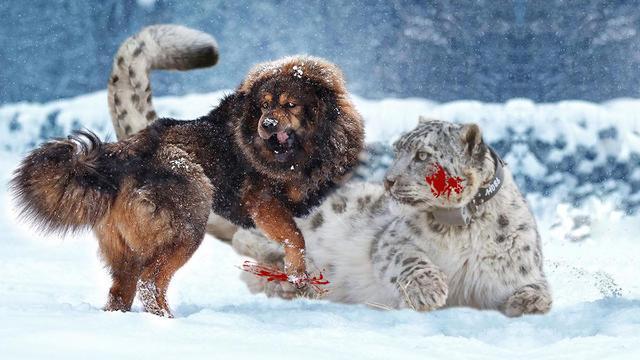
In the long run, if the Tibetan Mastiff group continues to move to deeper wilderness areas, it will undoubtedly threaten the survival of snow leopards. Although snow leopards are more ferocious and have better survival ability in the wild than Tibetan Mastiffs, it doesn't matter how strong the adaptability of Tibetan Mastiffs is, and the strength of the group. Once there is a conflict between snow leopards and Tibetan Mastiff groups, snow leopards will definitely suffer.