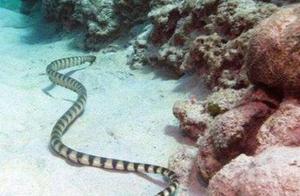
How Does the Caterpillar Become a Snake-Headed Creature? Oscar-Level Performance, Movements Perfectly Replicated
In nature, every species has its own survival rule, mimicry is one of the common means.
Mimicry, simply put, is a way for a creature to imitate the appearance of another creature or object to fool predators, such as the leaf-tailed gecko, which is a master of mimicry.
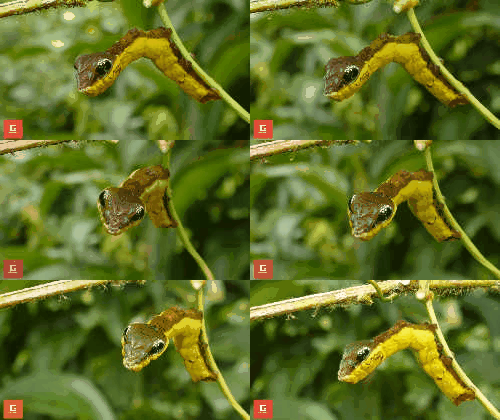
Today I'd like to introduce a more excellent mimicry creature than the leaf-tailed gecko, the Hemeroplanes maximus caterpillar. It pretends to be a venomous snake, small as it is.
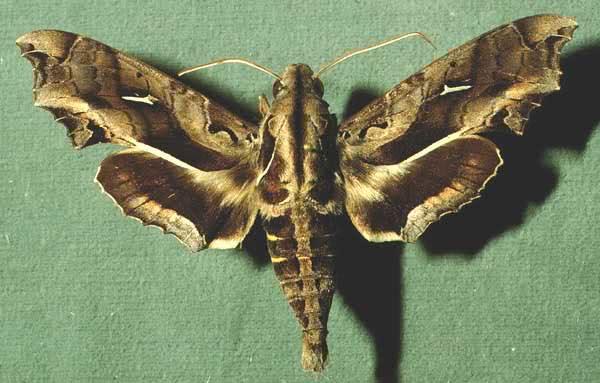
The Hemeroplanes maximus caterpillar is a type of caterpillar in the moth family and has been found in many places in South America, Africa, and Central America.
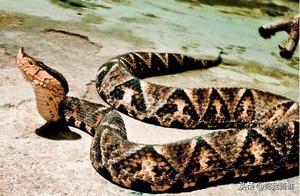
During a chance encounter, scientists took a picture of this magical creature. At first glance, a venomous-looking snake lurks in the leaf, but upon closer inspection, you'll find that the 'snake' is abnormally short in length.
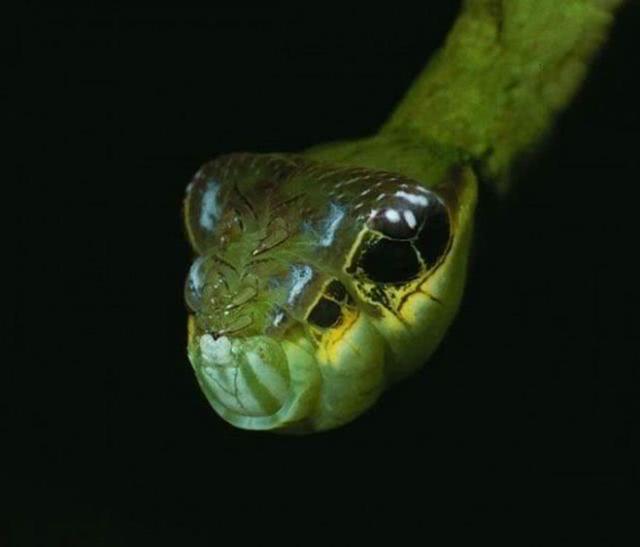
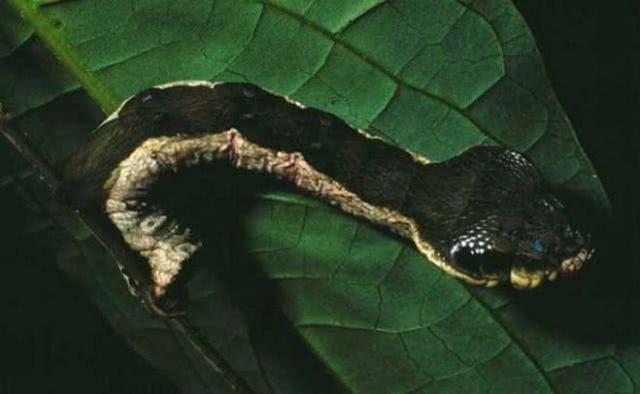
As we all know, caterpillars are soft-bodied and have no good defense system, and their protein content is high. It is no wonder that many predators want to eat them. Therefore, caterpillars choose to disguise themselves as venomous snakes to scare off predators.
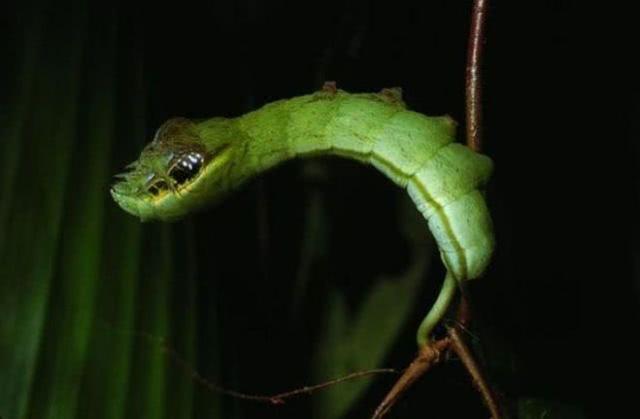
Perfect Replication: I not only imitate your face, but also your eyes and luster.
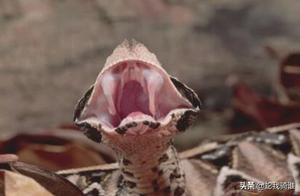
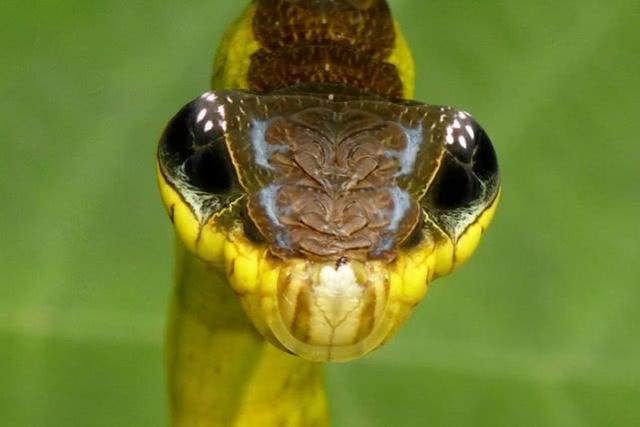
When disturbed, this larva will unfold the first part of its body in front, like a snake's head with black eyes, even producing a reptile-like scale effect.
The caterpillar's transformation is not an easy thing, because the 'snake face' is located on its abdomen.
First, the caterpillar must flip itself backwards, twist its body, and expose its abdomen, revealing a snake-like color.
Secondly, after the posture is correct, the caterpillar uses the small holes (called spiracles) on the side of its body to inhale air, pumping it into its body, causing the body to expand and change shape, forming a snake 'face' at the top. The 'eyes' on the 'face' slowly open.
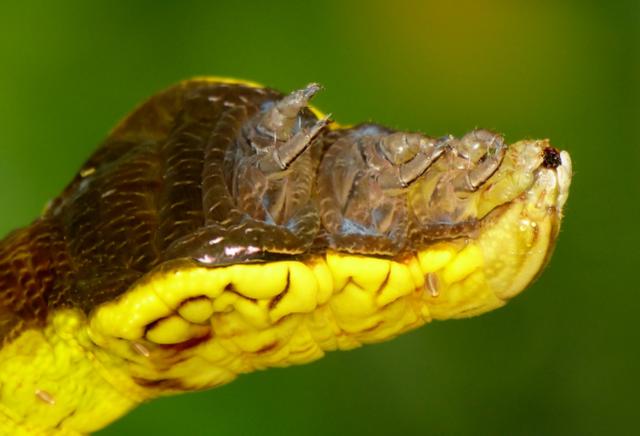
How is the snake's eye imitation achieved?
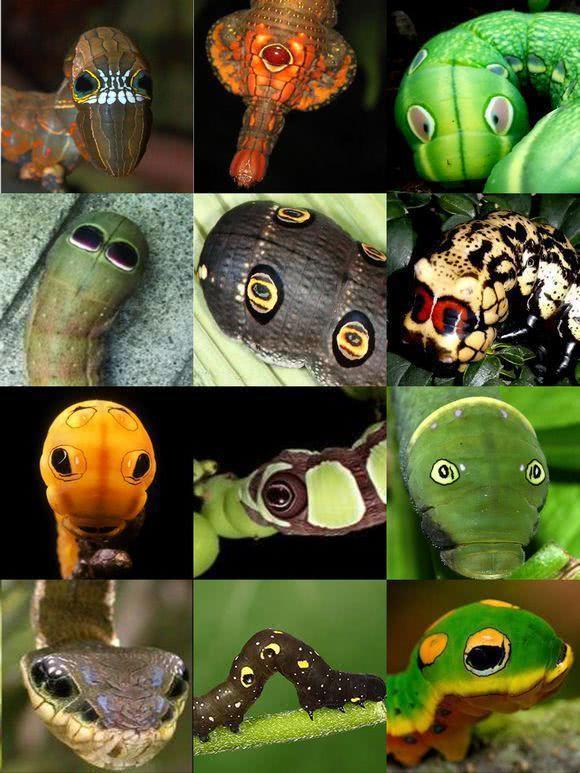
It can be said that the Hemeroplanes maximus caterpillar was born to copy snakes, because it was born with 'eye spots'.
Many animals have obvious eye-like spots, and in most animals, these 'eye spots' are considered to scare away predators, making them less likely to attack or deviate from vulnerable body parts during hunting.
This 'eye spot' can help the prey mimic the eyes of the predator, which is an effective survival strategy for butterflies and moth larvae.
Generally, larvae with eye spots are naturally used to mimic snakes. When birds attack, they often abandon the attack because they mistakenly think it is a dangerous snake.
Finally
In order to quickly scare off predators, this harmless caterpillar not only imitates the snake's face, but also imitates the snake's movement.
It will move its body to imitate the attacking posture of the snake. Other caterpillar species even emit noise through spiracles to scare off predators.
In conclusion, without creativity, it is impossible to survive in nature.