Silver Beltfish
Conglingyu belongs to the phylum Chordata, subphylum Vertebrata, class Pisces, order Perciformes, family Gadidae. It is also known as 'dannyu', 'qindai', 'feidi', 'youdi' and 'yadiu' fish. It is fierce and aggressive. In Qingdao and Rizhao, Yellow Sea coastal cities, 'gingyu' (gadid fish) is used. The body of the gadfly fish is elongated like a belt, resembling a silver color, with light gray dorsal fin and chest fin, and contains very fine spots. The tail is black. The gadfly fish has a sharp head and a large mouth, which gradually narrows to the tail. It is fierce and mainly feeds on shrimp and squid. It is mainly distributed in the Western Pacific and the Indian Ocean. In China, it is distributed in the Yellow Sea, East China Sea, Bohai Sea and the South China Sea. Together with big yellow croaker, small yellow croaker and squid, it is one of the four major marine seafood in China.
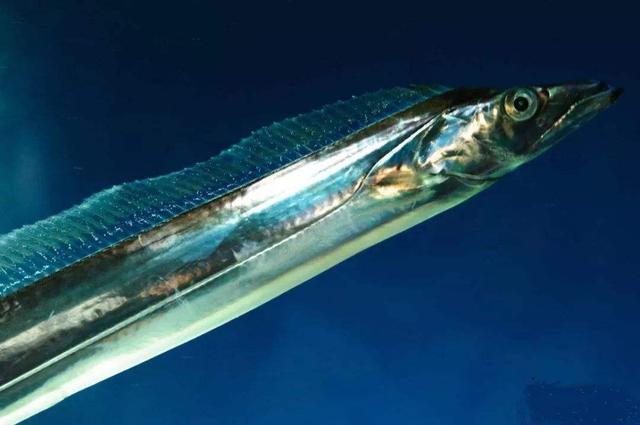
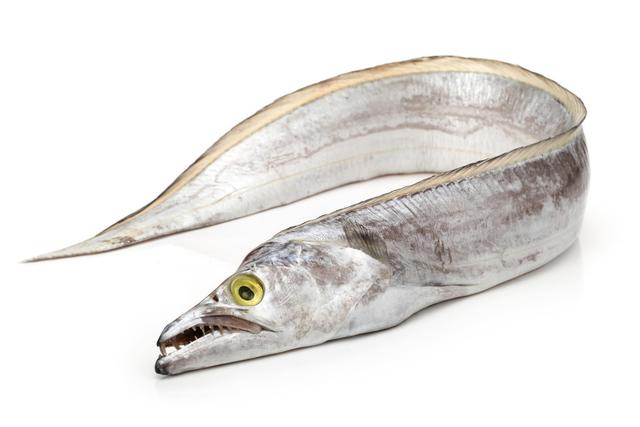
The gadfly fish is belt-shaped and laterally compressed. The front part of its dorsal and ventral sides is parallel, and its length is generally 50-70cm, and up to 120cm. Its head is narrow and elongated, with a sharp muzzle. It has large eyes, high in position, with flat and smooth interocular space, slightly protruding in the center. Its mouth is large and straight, with the edge of the mouth extending to the lower part of the eye.
The lower jaw is longer than the upper jaw, protruding. The teeth are strong, sharp and lateral. Both jaws have two large, hook-shaped canine teeth in front, and the upper jaw has 10-13 lateral teeth; the lower jaw has 12-14 teeth. The gill slit is large and wide, with 8-14 gill rakers and (15-24) gills, short and fine. The body is silver-gray, without scales, but with a layer of silver powder on the surface. The lateral line is significantly curved downwards from above the chest fin and extends along the abdomen to the end of the tail. The dorsal fin has 1285-145 spines, starting from the back of the head and extending to the end of the tail. The anal fin has 88-13-13 spines, which are completely composed of separate small spines, and only the spine tip is exposed, and the first fin spine is very small. The chest fin has 11-12 rays, short and sharp and low. There is no ventral fin. The tail fin is whip-shaped, and the tail fin disappears. The body is silver-white, the upper part of the dorsal fin and the chest fin are light gray, with fine small black spots. The tail is dark black. It contains a lot of fat and is concentrated outside the body. The body is smooth, the scales have degenerated into silver membrane. The lateral line is significantly curved downwards from above the chest fin and extends along the abdomen to the end of the tail.
The gadfly fish has small, free spines on its abdomen, and uses fins to move when swimming. It feeds on shrimp, squid and other small fish. It is a migratory fish. Gadfly fish have a very diverse diet and are very greedy, sometimes eating each other. It has a daily vertical movement habit, during the day it clusters in the middle and lower layers of the sea, and becomes active at night in the bottom layer of the sea. The lifespan of the gadfly fish is about 8 years. The average length of 1-year-old fish is 18-19 cm and weighs 90-110 grams. It breeds and grows in its first year, and 2-year-old fish can weigh about 300 grams.
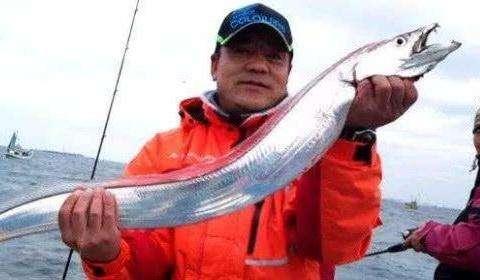
The distribution of gadfly fish is widespread, mainly in the Western Pacific and the Indian Ocean. It can be found all along the coast of China.
Gadfly fish along the coastal areas of China can be divided into two types, northern and southern. The northern gadfly fish is larger than the southern gadfly fish. It winters in the Yellow and Bohai Seas south of 34°N and 124°30'E; it begins to migrate north in April to spawn, with a branch crossing the Shandong Peninsula, and then in June it spawns in the Bohai Sea and Yellow Sea, and grows in its first year. It returns to its wintering grounds in autumn. The southern gadfly fish moves north and south seasonally, migrating to the north for spawning in spring and south for overwintering in winter. The spawning season of the East China Sea gadfly fish is divided into spring and winter. Gadfly fish has a long spawning period, mainly from April to June, followed by September to November. The quantity of eggs produced in one spawning is between 25,000 and 35,000. The suitable water temperature for spawning is 17°C-23°C.
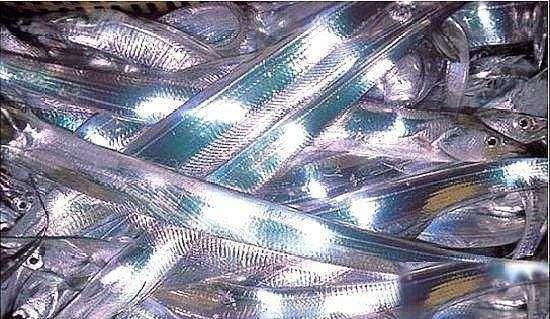
The gadfly fish consumes more than 60 kinds of food throughout the year, and fish and crustaceans are its main food groups. The food composition of the gadfly fish has seasonal differences. In spring, it feeds mainly on small striped sea bream, shrimp and gadfly fish; in summer, it mainly feeds on gadfly fish, shrimp, small shrimp and anchovy; in autumn, it mainly feeds on larvae of polychelate, star lanternfish and bamboo fish; in winter, it mainly feeds on gadfly fish, star lanternfish, small gadfly fish and shrimp. The seasonal changes in the intensity of feeding are not significant (P>0.05), with the highest in autumn and the lowest in summer. The main food group composition in each season shows differences, and the weight percentage of fish food is highest. The food diversity index does not show significant seasonal differences (P>0.05), with the highest in autumn and the lowest in winter and summer. Through comparison with historical data, the food composition of the East China Sea gadfly fish has undergone significant changes, from mainly shrimp to mainly fish, and also shows obvious self-eating phenomenon.
Gadfly fish has poor swimming ability, floats on the surface of the sea during the day, and drops to the bottom at night. When stationary, the head faces up, the body is vertical, and it uses the movement of the dorsal fin and chest fin to move, and the eyes watch the movement on the head. When it finds food, the dorsal fin quickly vibrates, the body bends and rushes towards the food. Gadfly fish have a characteristic of forming groups and queuing together. In spring, when the water temperature rises, gadfly fish form groups and swim towards the coast, migrating north in groups. They are for the fishing season. In winter, when the water temperature drops, gadfly fish swim to the deep sea to avoid the cold.
Gadfly fish is a medium and lower sea-farming economic fish in warm and subtropical seas. Gadfly fish caught in Liaoning coastal areas belong to the Yellow and Bohai Sea stock, also known as northern gadfly fish. From January to March, it winters in the Yellow and Bohai Seas south of 34°N and 124°30'E; it begins to migrate north in April to spawn, with one branch crossing the Shandong Peninsula, and then in June it spawns in the Bohai Sea and Yellow Sea, and grows in its first year. It returns to its wintering grounds in autumn. Gadfly fish grows quickly, and 2-year-old fish generally weigh 350 grams and are sexually mature; a small number of individuals are sexually mature in their first year. Its maximum age is 7 years. The number of eggs in the egg sac is 1.9-12.5 thousand. The eggs are buoyant and spherical, with an egg diameter of 0.5-0.9 mm. The spawning ground depth is 10-25 meters; the suitable temperature is 14-18.5°C; the salinity is 29.5-31.4‰. It is aggressive. It feeds on more than 50 kinds of fish, crustaceans, mollusks and worms.