46 Crocodile Lizard Hatchlings Born in Guangdong Luoshan National Nature Reserve
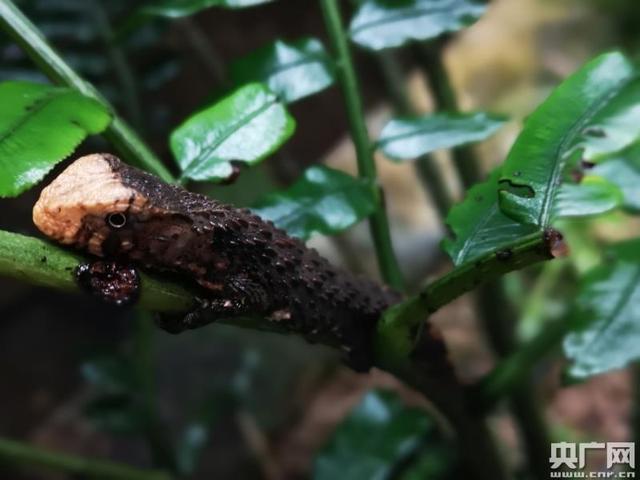
The picture shows crocodile lizard information. (CCTV News provided by the Guangdong Forestry Bureau)
CCTV News Guangzhou, March 27 (reporter Zheng Shu, correspondent Yin Yin) The crocodile lizard national nature reserve in Luoshan, Guangdong, ushered in a peak breeding season for crocodile lizards. On February 25th, the first baby crocodile was born this year, and by March 26th morning, 46 crocodile hatchlings had been born, with a maximum of 8 hatchlings per nest and a minimum of 4 hatchlings. The smallest weight was 2.7g and the largest was 5.2g. Currently, the crocodile hatchlings are in good physical condition.
It is known that crocodile lizards are oviparous, and their breeding season is from May to June every year. Small crocodile lizards grow slowly in eggs inside the crocodile lizard mother's belly. The crocodile lizard mother, carrying crocodile lizard babies, enters hibernation. When the second year's spring flowers bloom and everything awakens, the crocodile lizard mother begins to give birth. At this time, crocodile lizard babies are born. Crocodile lizard hatchlings can move and forage independently after leaving their mother.
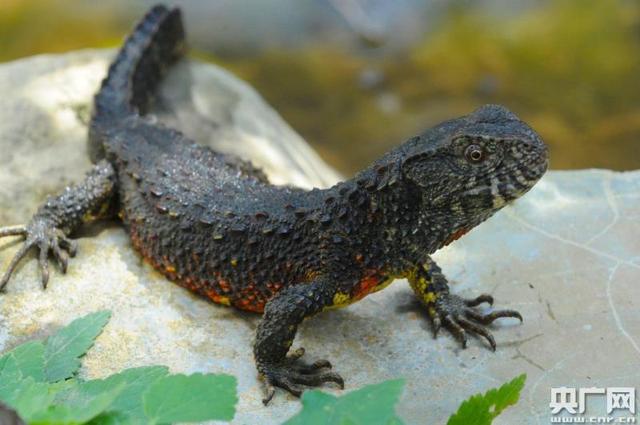
The picture shows crocodile lizard information. (CCTV News provided by the Guangdong Forestry Bureau)
'Because crocodile lizard mothers give birth in an oviparous manner, the birthing process will also encounter difficult births. Without timely rescue, the crocodile lizard mother and child will die.' Guangdong Luoshan Crocodile Lizard National Nature Reserve scientific research personnel said that every year when crocodile lizards give birth is the most tense time for scientific research personnel. They must always guard the crocodile lizard mothers. 'This year, 1 crocodile lizard difficult birth event occurred. Fortunately, staff discovered it in time and helped it give birth. After half an hour of effort, the small crocodile lizard was born. The umbilical cord did not automatically detach, and the staff promptly performed umbilical cord surgery and separately raised and cared for it. Currently, the small crocodile lizard is in good physical condition.'
Crocodile lizards are a national level key protected animal, and they are a rare, ancient reptile that has remained in South China since the end of the fourth ice age. They are known as 'living fossils' and are a single-species, single-genus, single-species, which has important academic value in the research of the origin and evolution of reptiles and the classification of lizards.
Due to deforestation and poaching, the number of crocodile lizard populations has declined sharply, and at one time, the number of wild crocodile lizards in China was less than 1000, and the crocodile lizard wild population in Guangdong Luoshan was less than 500. The crocodile lizard national nature reserve in Luoshan has achieved good results in crocodile lizard protection. Since its establishment, the reserve has built a crocodile lizard artificial breeding center and established a professional team for crocodile lizard wild patrol. It conducts grid-based monitoring and conducts scientific research on crocodile lizards. Since 2005, more than 400 crocodile lizards have been rescued and bred, and experiments have begun to release crocodile lizards into the wild. Currently, 150 crocodile lizards of different age groups have been released, and ongoing monitoring work is being carried out.
According to statistics, there are currently 154 artificially bred crocodile lizards in the Guangdong Luoshan Crocodile Lizard National Nature Reserve, with a sex ratio of 1:1.3, and the oldest crocodile lizard is 12 years old. The wild crocodile lizard population in the reserve is about 629-727, with a density of 6.29-7.27 crocodiles per square kilometer, accounting for 1/2 of the national wild crocodile lizard population.