Why are Giant Pandas Not Afraid of Tigers and Lions? Netizens: First, Clarify What Their Ancestors Did
Nowadays, people all over the world basically know that giant pandas are a native species of China, also known as China's national treasures. They mainly live in the mountains of Sichuan, Shaanxi, and Gansu provinces, and currently, the wild population exceeds 1600 individuals. However, the number of captive populations worldwide has reached more than 600.
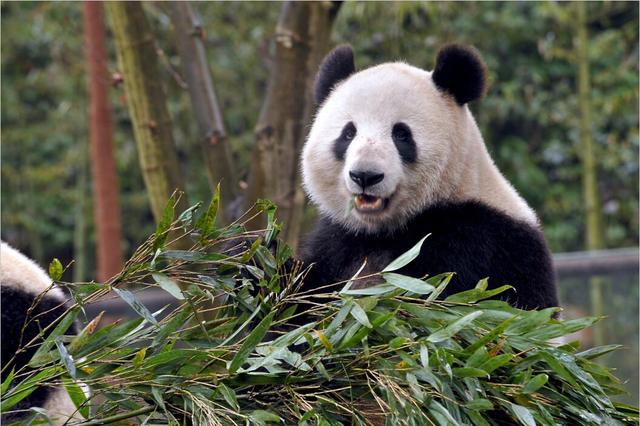
As a rare animal, the giant panda plays a special role in China's exchanges with other countries, one of China’s “messengers” of friendship. As early as 1957-1982, a period of 26 years, China had successively donated 23 giant pandas to the Soviet Union, North Korea, the United States, Japan, France, the United Kingdom, Mexico, Spain, and Germany, and all the ownership of these pandas donated abroad no longer belonged to China, and their offspring were also so.

With the passage of time, the 23 giant pandas that were once sent abroad are no longer there. Currently, only 7 of their descendants remain, namely 3 in Mexico, 2 in Germany, and 2 in Japan. After 1982, based on the fact that the panda population in China’s habitat environment deteriorated and decreased sharply, China stopped donating giant pandas to foreign countries, instead adopting leasing and exhibitions. That is, any country that wants a giant panda must apply to China and promptly pay a deposit and rent. Therefore, the ownership of these pandas and their offspring belonged to China, and the panda cubs had to return to their ‘home’ when they reached three years old. Currently, China has established long-term cooperative research relationships with 17 zoos in 12 countries.

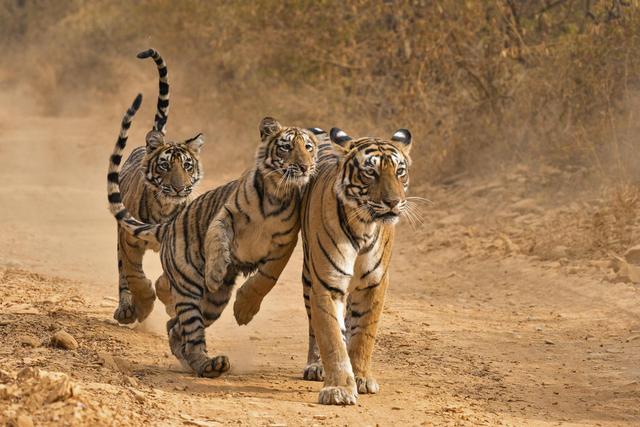
Although giant pandas look cute and charming, many people are often deceived by their ‘sturdy’ appearance. In fact, they are not a good thing, even fierce animals like tigers and lions would not easily provoke them. Why is this?
Giant pandas belong to the order Carnivora, Ursidae family, and have existed on Earth for at least 800,000 years. They are a flagship species for global biodiversity protection and have the reputation of ‘living fossils’. Despite the fact that 99% of the panda’s current food composition comes from 20 bamboo species that grow in the deep mountains, in fact, the ancestors of pandas were truly carnivorous, as evidenced by the sharp and developed canine teeth and relatively short intestines. They have digestive physiology characteristics similar to those of meat-eating animals such as wolves, lions, and tigers.
Furthermore, as pandas transitioned from a meat-based diet to omnivorous and eventually to a ‘special species’ that mainly eats bamboo, it was mainly due to changes in the habitat environment. In order to adapt to the environment, the ancestors of pandas had to make corresponding ‘adjustments’. Over a long period of life, they eventually became what pandas are now, with unique habits and feeding habits. Although their diet has changed, their teeth and intestines have not changed much, which can be described as ‘eating whatever they can eat’.
As we all know, the Ursidae family is characterized by thick bodies, strong limbs, and powerful muscles, as well as highly sensitive sense of smell and hearing. Except for polar bears, which are currently the most carnivorous animals, most other species have deviated from the carnivorous habits and become omnivorous. According to scientific analysis, Ursidae evolved from a similar dog-like ancestor, and is a branch of the evolution of canine animals. Therefore, their teeth and biting force are particularly sharp.

Based on the excellent genes of pandas, they have been able to survive in complex environments for millions of years without being eliminated, which shows that pandas are very powerful. Even when encountering tigers and lions, they will not be afraid. In summary, there are three main points: First, the weight of the panda is about 100 kg, the size is relatively large, and the canine teeth and sharp claws have certain attack power; second, the panda's sense of smell and hearing are very sensitive, they can quickly recognize danger, and hide before being attacked; third, pandas look cute, but they are real ‘smiling tigers’. They often make unexpected attacks on opponents.
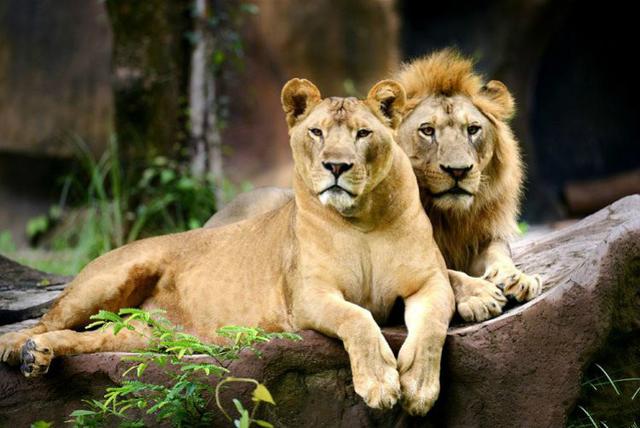
Of course, due to excessive hunting by humans, environmental destruction, and the difference in habitat environments between species, pandas cannot encounter ‘kings’ like tigers and lions in natural conditions. Therefore, there is no talk of attack and being attacked. In addition, pandas have evolved over a long period of history and have become accustomed to living on bamboo. They no longer have the power to hunt millions of years ago, and now they are labeled as ‘national treasures’. Even if they encounter tigers, lions, and other fierce animals, few people will let a tragedy happen, because they are all very precious.