Using Rainbow Colors to Camouflage: How to Hide Yourself?
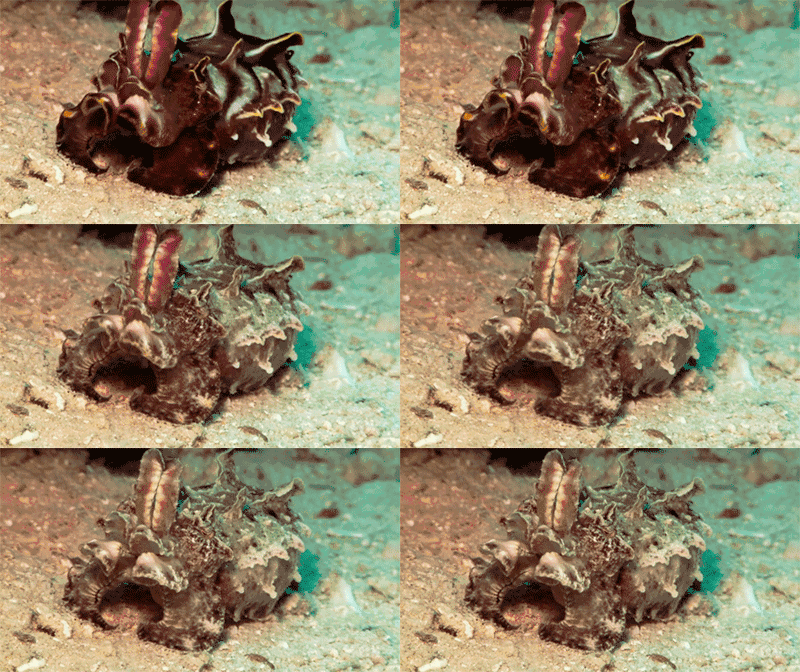
As we all know, animals always have their own little tricks to survive.
Some insects and animals rely on advanced technology to blend in with the environment, the most common practice is to match the background color, which is what we often call camouflage.
Others do the opposite, making themselves full of brilliant colors, on the one hand to attract mates, on the other hand to warn predators: 'Don't get close, I'm poisonous.'
For bright animals, this defense mechanism has a great problem, although it can scare away predators, but conversely, it also increases the probability of being discovered.
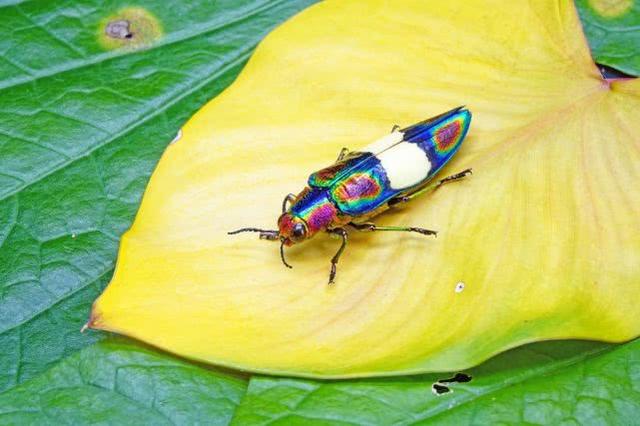
Many animals achieve a balance between being low-key and charming, while some beetles take this balance to the extreme.
Please carefully look at this picture, we obviously see a colorful beetle resting on a leaf, but scientists believe that not all living beings can see this beetle.
This is puzzling, how can such a conspicuous beetle not be seen?
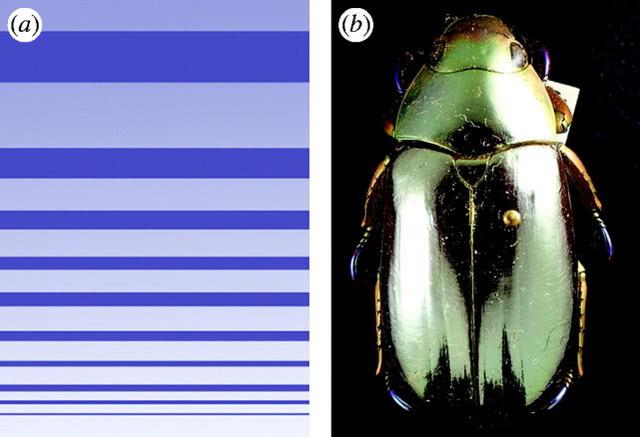
In fact, a new study shows that we should regard rainbow colors as a different kind of camouflage, just like rainbow camouflage.
The idea of 'rainbow camouflage' has been around for over 100 years, but this study is the first to show that changeable metallic colors are one of the factors that animals use to hide themselves. In the natural world, birds and humans find it difficult to spot rainbow-colored objects in complex forest environments.
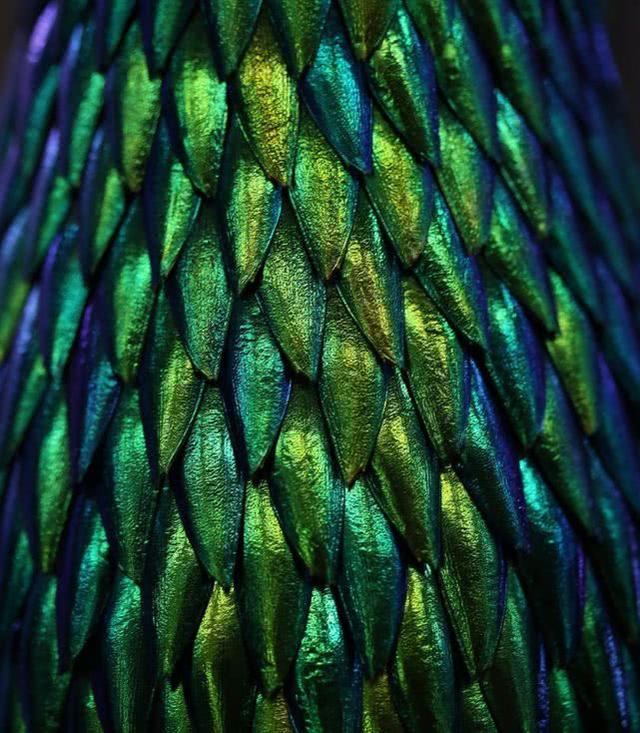
What's the principle?
Because the colors we see are not the beetle's pigments, but diffraction of light.
The beetle's wings form a crystal lattice, which decomposes light waves and pushes them together, through diffraction, making light (i.e., color) visible in certain directions and angles, while easily ignored in others.

It's like the color of a bubble. The bubble itself is colorless, and when sunlight shines on the membrane, light is reflected and interfered with multiple times, so that from a certain angle, the bubble appears blue-green, while another color can be seen from other angles.
Although it is easy to spot rainbow beetles in museums with plenty of light, in complex, dappled light environments, these brilliant colors may not be so dazzling, so a rainbow beetle is also very difficult to be discovered.

Rainbow camouflage strategy may be more effective than traditional camouflage.
In laboratory tests, a research group compared rainbow-colored wings with dull-colored wings.
Surprisingly, they found that these bright wings were less easily detected than the same green wings.
Researchers believe that the combination of gloss and rainbow color created a visual illusion, further confusing predators.