Spring Tour of Chun Pan Kang Pit – Rain-Kissed Pear Blossom Bloom
Source: Lishui Daily-Lishui Net
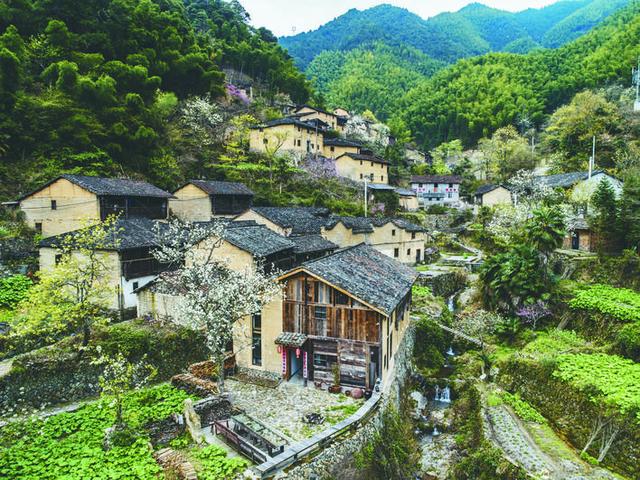
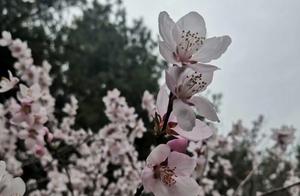
Rainy and delicate, pear blossoms fell like snow. A group of people strolled through the village's alleyways and stone pathways, passing by old mud-brick houses with yellow-tiled roofs, where they could touch centuries-old rural atmosphere. Over 300 ancient pear trees were densely distributed in front of houses, by streams, and near the mountains. During the spring bloom, white pear blossoms were hidden in old houses, stone steps, forests, bamboo groves, and streams, creating a quiet and elegant atmosphere full of poetry, resembling a secluded paradise and a favorite destination for many photographers and tourists.
The accompanying Village Committee Director of Chu Pan Kang Village, Ye Liangyi, introduced that Chu Pan Kang Village has a history of over 480 years. The village's houses are built along the stream and mountains, shaped like 'Chu Pan Kang,' hence the name. The village has 50 households with 160 residents, with a cultivated land area of 276 acres and a forest area of 8794 acres.
In recent years, Chu Pan Kang Village has placed a strong emphasis on ecological protection and tourism development, establishing three 'no-entry' rules: no unauthorized modification of ancient mud-brick walls, no pouring cement roads, and no destruction of pear trees and the original forest. At the same time, combining the protection and development projects of traditional village settlements, according to the requirements of 'raw materials, original craftsmanship, original form,' they restored ancient houses, ancient buildings, and ancient paths, focusing on the relationship between traditional building protection and lifestyle changes, while ensuring that the village's historical layout and architectural style were not altered. They then renovated the village's internal and residential buildings, improving residents' living quality, striving to see people, objects, and life in traditional village settlements.
In 2017, Hangzhou Guang Sheng Inn Management Co., Ltd., which specializes in the management and operation of bed and breakfasts with two registered trademarks, 'Xiao Yin' and 'Xiao Lang Shan Yin,' was attracted by the village's 'exquisite, extremely quiet, rich in literary atmosphere, rural, and Chinese' characteristics, and signed rental agreements with villagers for 10 old houses, gradually transforming dilapidated old houses into boutique guesthouses 'Xiao Yin·Long Yue'.
Currently, there are reading rooms, restaurants, guest rooms, and a self-contained pear blossom courtyard with three rooms (kitchen, restaurant, living room, bedroom) that can hold various forums, salons, and lectures. The guesthouse's positioning is for people seeking peaceful and tranquil rural life and with a strong interest in traditional Chinese culture, providing a rural environment. Since its trial operation in March 2019, it has received approximately 300 visitors from Shanghai, Nanjing, Hangzhou, Xi'an, and other cities, organizing activities for Hanfu enthusiasts, ancient music groups, photography clubs, and self-driving tourists approximately 13 times, totaling about 400 people.
The arrival of the boutique guesthouse has rescued and utilized four dilapidated houses, effectively reversing the trend of the village becoming sparsely populated. In conjunction with local events such as the 'Pear Blossom Festival,' the village's visibility has been expanded, and a new entry lane for vehicles has been opened, further enhancing the village's protection and development potential, forming a virtuous cycle. Ye Liangyi said that the influx of tourists has boosted the development of farmhouses and the sales of local specialties, increasing the income of left-behind villagers.
It is understood that Hangzhou Guang Sheng Inn Management Co., Ltd. will, based on the systematic protection of the village's natural ecological environment and cultural heritage, and based on the consumer group formed by the guests with high consumption and appreciation, gradually develop Chu Pan Kang Village into a comprehensive rural area with excellent ecological environment, rich cultural content, convenient living conditions, and high-end agricultural products. It will also actively explore online and offline cultural activities and sales of high mountain rice, bamboo shoots, vegetables, and tea to promote the balance between protection and development, and the win-win situation between the company and the villagers.
Source: Lishui Daily, Writer/Photographer Sun Xiaomin, Correspondent Yin Xiao Ming Zhang Lu