For the first time at the Hainan Red Mangrove Wetland Park, I saw the magical oviparous plants, truly fascinating!
Most people who travel to Hainan take a plane directly to Sanya, but I came to Hainan by train with a bumpy ride, then crossed the Qiongzhou Sea Strait by ferry. When I arrived in Hainan, my first stop was Haikou.
Compared to Sanya, Haikou has fewer tourist attractions, and the number of tourists is not as much as Sanya. Locals also don't charge as much as in Sanya, so I really like the slow and relaxed pace of Haikou.
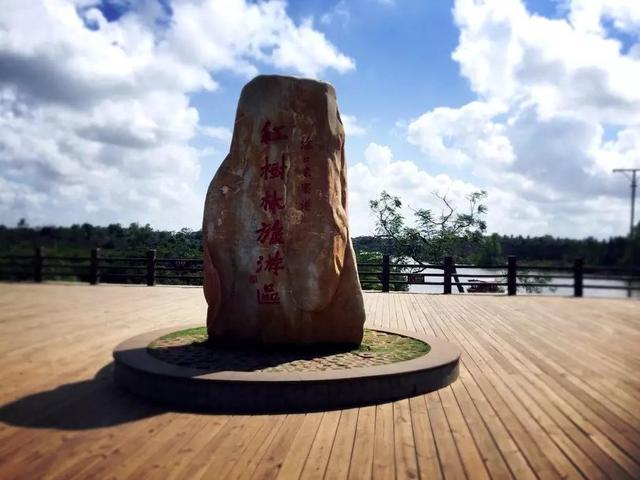
About 30 minutes by car from Haikou City, Hainan Red Mangrove Wetland Protection Park was a tourist attraction I discovered after looking up. Actually, there wasn't much to see in Haikou.
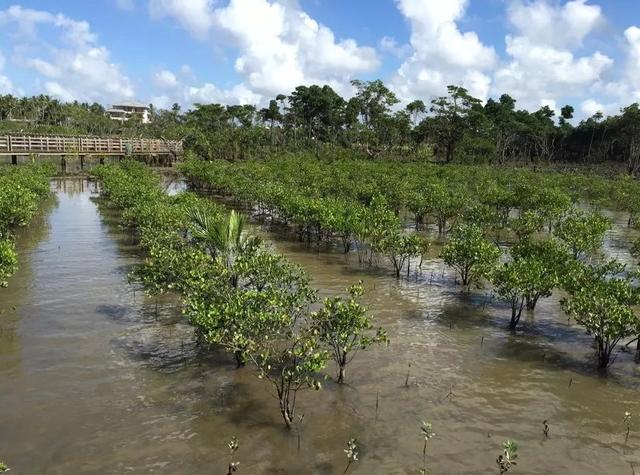
I got there early in the morning by car, and the park wasn't crowded. The air was very good, and I could smell the moist air as soon as I got out of the car.
Before I came to the red mangrove forest, I didn't know that there were oviparous plants. I always thought that when plants matured, they would fall off and then grow roots and shoots. But at the red mangrove forest, I saw the phenomenon of oviparous plants.
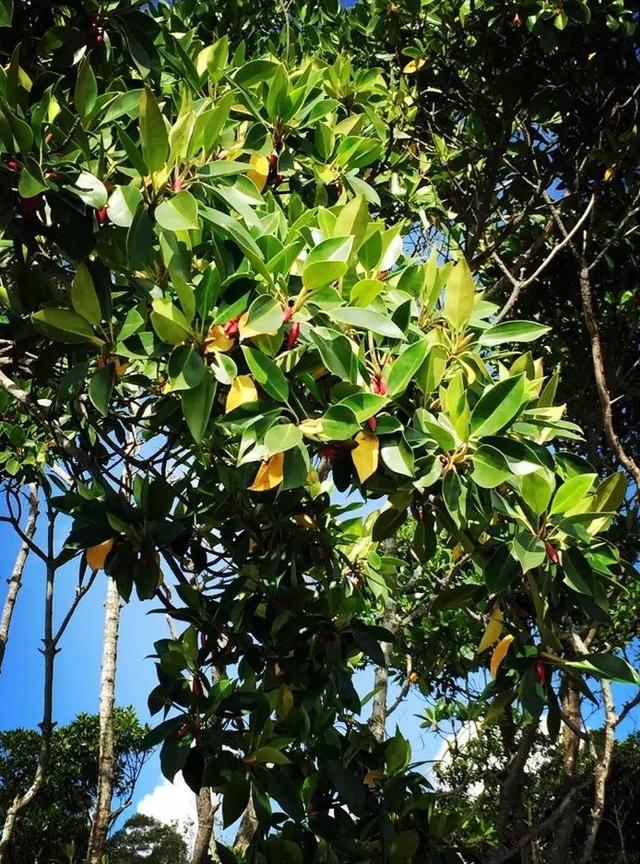
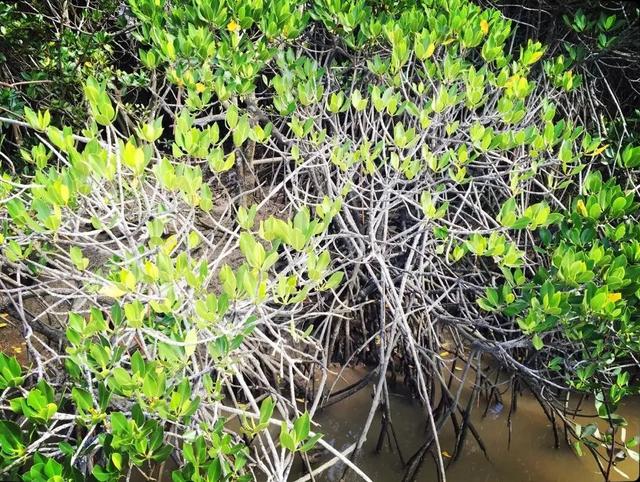
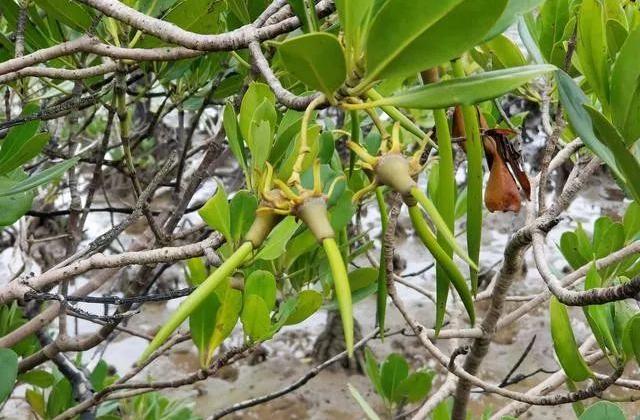
Red mangrove baby buds
After the fruit of red mangroves mature, they don't fall off; instead, they grow roots and shoots directly in their mother's embrace, growing into small seedlings, and when they mature, they drift with the wind to the beach, and within two hours, they quickly take root and thrive on the beach. It's really magical and interesting, especially suitable for bringing children.

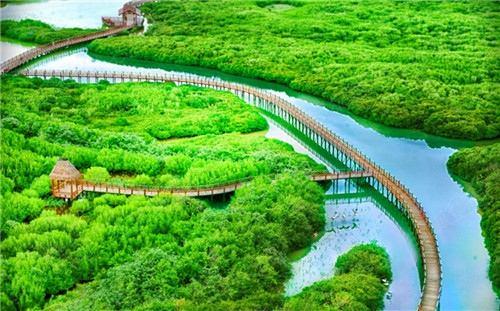
Wooden boardwalk in the park
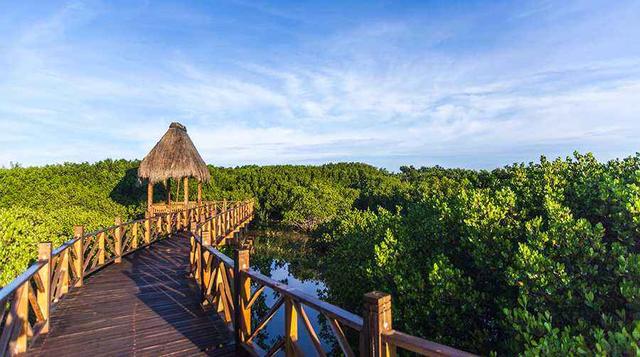
When I entered the park, I walked along the wooden boardwalk for a distance, and I made a choice to explore the park: either to choose to walk and hike or to take a boat to explore the park. Boat trips require additional charges, and walking is free.
As a young person, I chose to walk and hike the park. The red mangrove protection area is very large, covering an area of 2200 acres. Of course, it's impossible to walk through the whole area, but I can explore it along the wooden boardwalk and corridors.
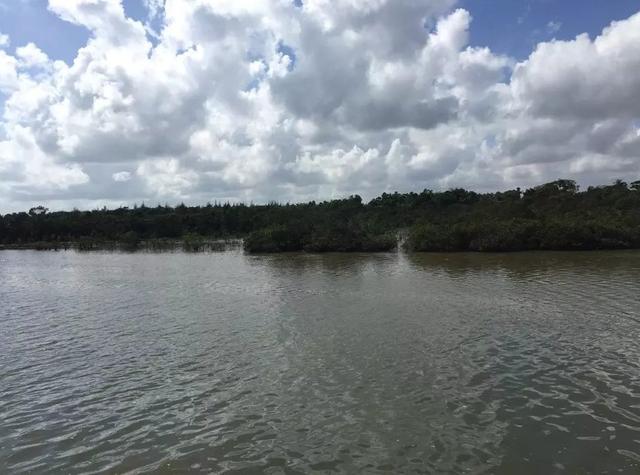
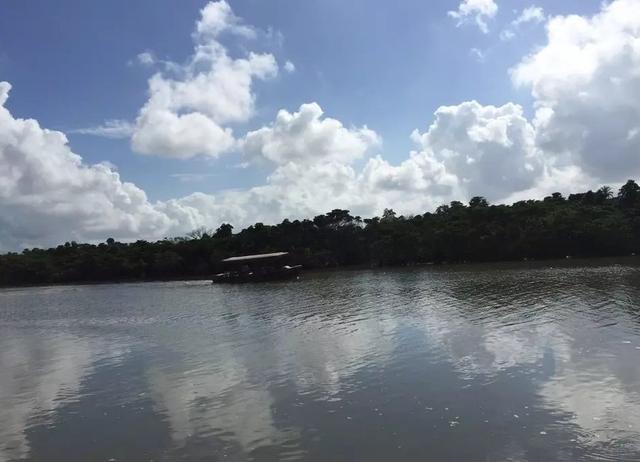
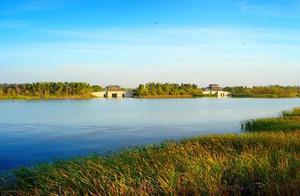
The scenery in the red mangrove forest is quite beautiful. Looking out, there are lush green trees, shimmering seawater, blue sky and white clouds, just like scenes from a Miyazaki animation. Walking on the wooden boardwalk not only has the sound of footsteps on wooden boards, but also the sound of red mangrove baby buds falling into the water.
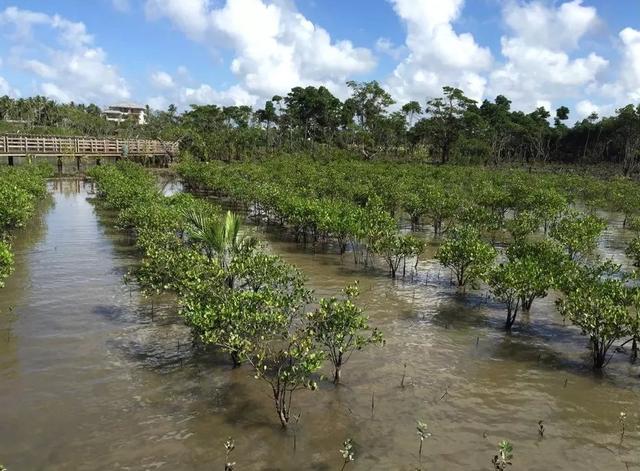
The red mangrove forest is called 'the defender of the sea' because they soak in seawater all year round, working hard to firmly anchor in the seabed and purify the seawater while resisting the erosion of waves or tsunamis. In 2004, the village with red mangrove protection was greatly reduced the impact of the Indian Ocean tsunami.
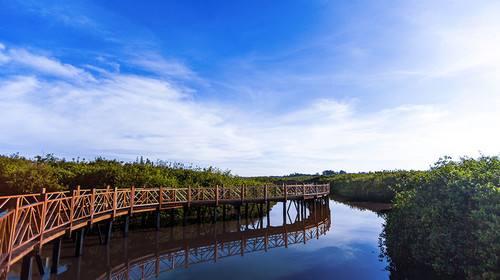
The red mangrove forest is also called 'air vitamin' because they release a large amount of negative ions, and their branches provide excellent habitats for a large number of birds. The small fish and crabs in the water can also eat their fallen leaves.
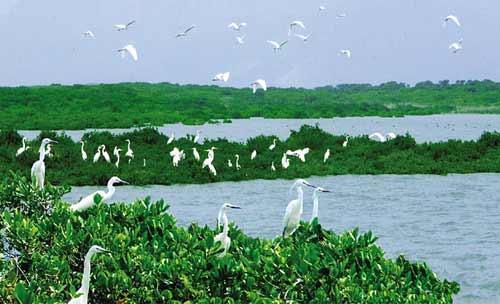
Therefore, the red mangrove forest is a huge ecological system, and protecting the red mangrove forest is worth our immediate action.
Fortunately, the red mangrove forest in Haikou is very well protected, and flocks of seabirds occasionally fly over our heads.
There is only one small shop inside the park selling simple water and food. However, the most unforgettable thing is the seagull eggs sold inside – eggs laid by ducks raised in the sea, which are very delicious and unforgettable even now.
If you find nothing to see in Haikou, you can go to this red mangrove wetland protection park to take a look!