Luding Bridge: Three Chain Falls Throughout its 300-Year History
Panoramic View of History
Today, China is widely praised as a 'construction maniac' and has made considerable achievements in infrastructure construction. In recent years, various landmark buildings have appeared in many first-tier and second-tier cities, including towering skyscrapers and various bridges with unique designs.
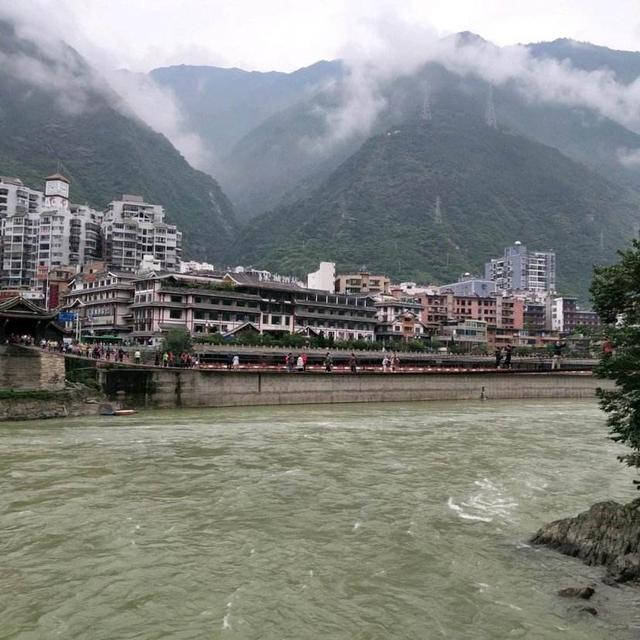
The rapid-flowing Dadu River
300 years ago, when science and technology were underdeveloped, the ancients built a famous bridge across the Dadu River with their ingenuity – the Luding Bridge
The thirteen iron chains on the Luding Bridge, each chain composed of 862 to 997 iron rings linked together, with a total of 12164 iron rings linked, weighing up to 21 tons, and an average weight of more than 1.6 tons per chain.
What is the significance of the Luding Bridge?
The Luding Bridge is a steel cable bridge spanning the Dadu River in Luding County, therefore it is also known as the 'Dadu Bridge'. After the completion of the Luding Bridge, due to its special location, it became a vital bridge.
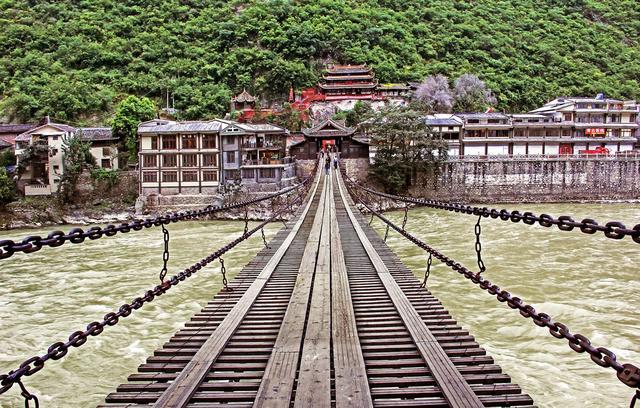
Luding Bridge
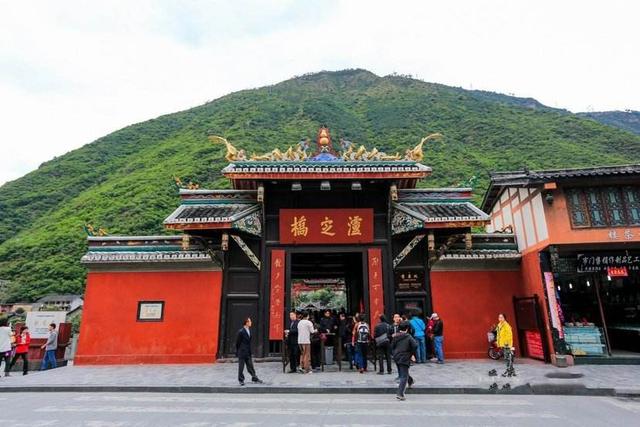
There were inscriptions on the bridge: 'Three thousand miles east of the Luding River, west of the salt light is the first bridge'
Since the construction of the Luding Bridge, it has become the throat of Sichuan's entry into Tibet and a military strategic point. As the Luding Bridge is the transportation artery of the Tea Horse Road connecting Sichuan and Tibet, it is a bridge for maintaining the peaceful relations between ethnic groups in China and national unity.
During the Long March, the Chinese Red Army bravely seized the Luding Bridge, which is renowned both at home and abroad. There is a highly praised comment: 'Thirteen iron chains support a republic'
How was the Luding Bridge built 300 years ago?
The main three challenges in building this steel cable bridge were: iron chain supply, transporting iron chains across the river, and fixing the iron chains.
The iron chains were forged in Anyang's County, as at that time iron production was abundant and the forging of iron chains was highly developed. The thirteen iron chains of the Luding Bridge were forged here.
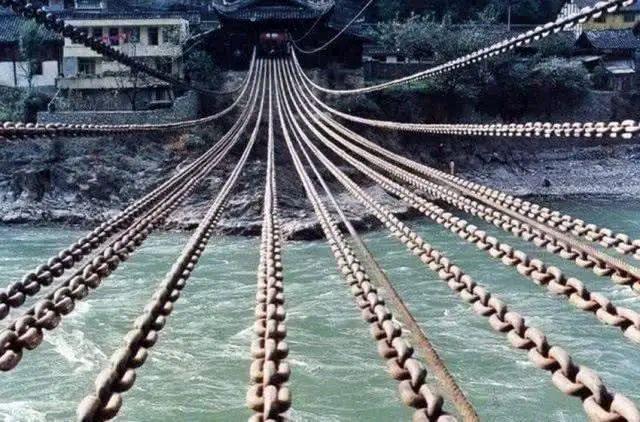
Once the iron chains were made, they needed to be connected across the river. The initial builders tried using wooden boats to transport the iron chains across the river, but repeatedly failed. Finally, they used the 'chain-crossing principle', first tying the bamboo chains to the riverbanks, then threading over ten short bamboo tubes on the chains, and then tying the iron chains on the tubes. They then pulled the iron chains down from top to bottom to complete the transport.
After the iron chains were transported to the other side, the final challenge was to fix them. The builders built solid piers on both sides with large stone blocks and dug deep wells inside the piers, then poured molten iron into the wells to cast horizontal dragon piles and vertical dragon piles. Finally, they used spools to connect all the iron chains to the dragon piles and tightened them.
Once the iron chains were pulled tight, the two chains were linked together with a 5-meter distance, and then wooden planks were laid on top to form the bridge deck. A steel cable bridge spanning 300 years was thus completed.
Has there been a 'chain falling' incident on the Luding Bridge over the 300 years?
According to the 'Three Centuries of Luding Bridge' chronicle, the Luding Bridge has had at least three 'chain falling' incidents over the 300 years, which occurred in 1970, 1974 and 1975.
The Luding Bridge flying over the Dadu River
On June 21, 1970, a detachment of the People's Liberation Army was visiting the Luding Bridge when the seventh chain (counting down from the east) broke about 30 meters from the riverbank. It was then pulled out of the river by a team dispatched by the Engineering Command and connected with a crane.
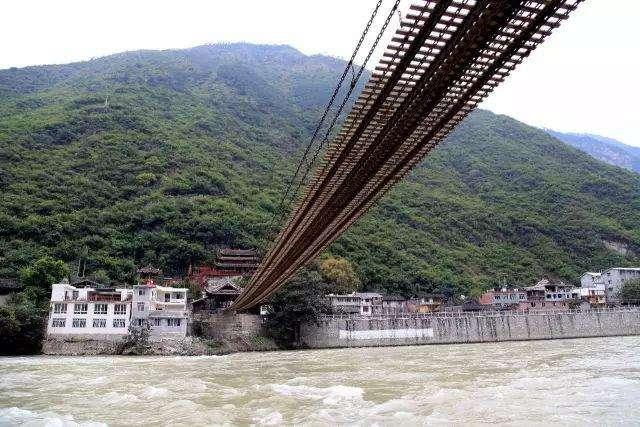
In March 1974, the State Cultural Heritage Bureau allocated funds to renovate the Luding Bridge. When the renovation was about to be completed, a handrail chain on the upstream side suddenly broke, triggering a chain reaction, causing three chains to break, the bridge deck tilted, and the repair tools on the deck fell into the river.
In 1975, a detachment of Tibetan soldiers visited the Luding Bridge, and when dozens of soldiers were on the bridge, nine chains suddenly broke three chains, and the bridge deck tilted 45 degrees.
These three 'chain falling' incidents occurred because of construction damage, and the other two incidents were caused by the tourists walking in an orderly manner, which caused strong vibrations and 'chain falling' at the bridge.
The Luding Bridge
Conclusion:
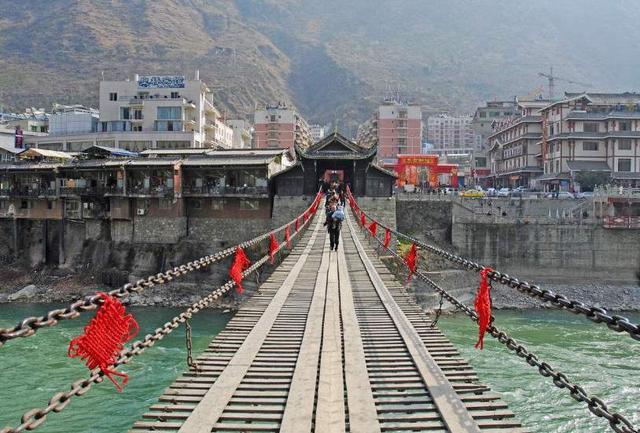
1. The Luding Bridge underwent a repair in 1969 June, during the repair, many new technologies were adopted. By 2020, the history of the Luding Bridge is 314 years. You can clearly see the iron rings of the steel cable bridge cast with the names of the blacksmiths and craftsmen who produced it, this is the supervision mechanism of the bridge maintenance in ancient times.
:
1196962020314