Are Small Swallow Flying Exercises the Right Approach for Waist Pain? (Incorrect, Here's a Suggested Treatment for Acute Waist Pain)
Many friends around me have a lot of waist pain and often encounter such situations: going to the hospital for examination and being told that there is nothing serious, just rest appropriately and do small swallow flying. Both twenties and thirties young people and older people are advised to go home and do small swallow flying.
So the question is—can small swallow flying rehabilitate waist pain?
To find the answer, let's first look at the following four questions:
Question 1: What does small swallow flying mainly exercise?
Question 2: What is the clinical situation?
Question 3: Why is it not suitable?
Question 4: Who is suitable for small swallow flying?
For these questions, we know that small swallow flying belongs to exercises for the back muscle groups, but it is not suitable for everyone. In particular, the following situations are unsuitable:
1 Inflammation pain is not suitable during the inflammation period;
2 Waist instability/unsteadiness is not suitable;
3 If the pain worsens after lying down at night, it may be serious and unstable, and it needs more basic core stability exercises.
There is also a situation where there is inflammation and swelling. This group of people are only suitable for training after the inflammation and swelling have passed, and they have basic core stability. As long as any one of these three situations exists, these people are not suitable for small swallow flying training.
Small swallow flying belongs to higher-level training exercises and is suitable for waist pain after the acute phase.
So, how to improve waist pain? How to deal with waist pain in its development stages? Here's a suggested treatment for acute waist pain
Acute waist pain
For example: waist pain occurs and is diagnosed with a herniated disc, and after seeing a doctor, he was told to rest in bed.
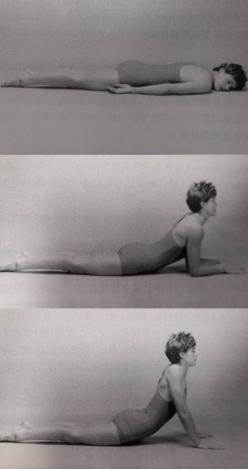
The acute phase of a herniated disc is actually an acute inflammatory and swelling period, the main goal is to relieve pain and gradually recover daily life, most of the time it needs to be rested in bed, you can try prone breathing to see if it alleviates pain, if it alleviates, you can try a ten-person exercise, 2-3 hours once. If elbow support does not relieve pain, return to prone position for breathing exercises. If it improves, after 2-3 days of pain symptoms improving, try to lift the upper body with both hands to breathe, the number of groups is the same.
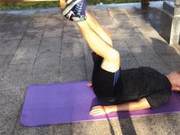
If prone breathing alleviates waist pain, you can try supine knee-bent breathing. Supine, knee-bent 90 degrees, abdominal muscles contraction, spinal column close to bed surface (preferably a hard bed surface or yoga mat), exhale to press the bed slightly, making the spinal column close to the bed surface (fingers cannot extend), the sacrum slightly arched, repeat 8-10 times, 5 times a set. If elbow support doesn't relieve pain, return to prone position for breathing exercises.
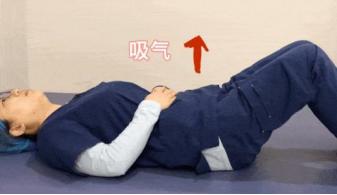
If supine breathing alleviates waist pain, you can try supine knee-bent breathing. Supine, knee-bent 90° , abdominal muscles contraction, spinal column close to bed surface(preferably a hard bed surface or yoga mat), the sacrum slightly arched, repeat 8-10 times, 5 times a set. If elbow support doesn't relieve pain, return to prone position for breathing exercises.
Acute excessive to chronic waist pain training
Training principle—gradual progression
First step—increase local stability, that is, activation of the multi-muscle, abdominal muscles, diaphragm and pelvic floor muscles;
Second step—restore posture control, including static posture control, such as squatting, maintaining good spinal column shape, and dynamic posture control, such as slow running and spinal column stability;
Third step—when we do quick movements, such as performing relatively strenuous movements accompanied by spinal column rotation or spinal column flexion and extension, we can maintain the stability of the spinal column without pain, the rehabilitation purpose is achieved.
Here are recommended training actions for rehabilitation
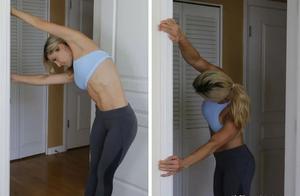
1, Increase the thoracic spine rotation angle (turn book);
2, Static core stability (plank);
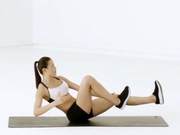
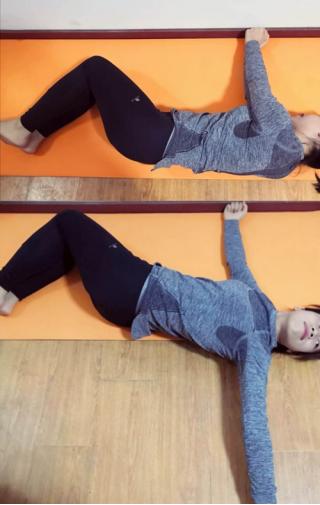
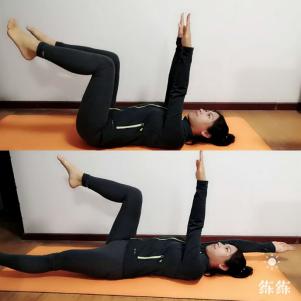
3, Dynamic core stability (dead bug);
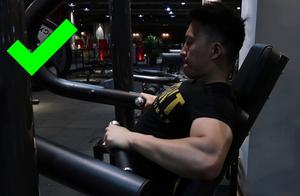
4, Train the strength of the waist muscle (resistance hip flexion);
5, Pelvic stability (shell squeeze, side bridge hip extension);
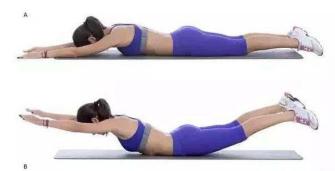
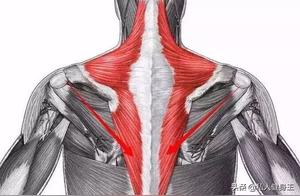
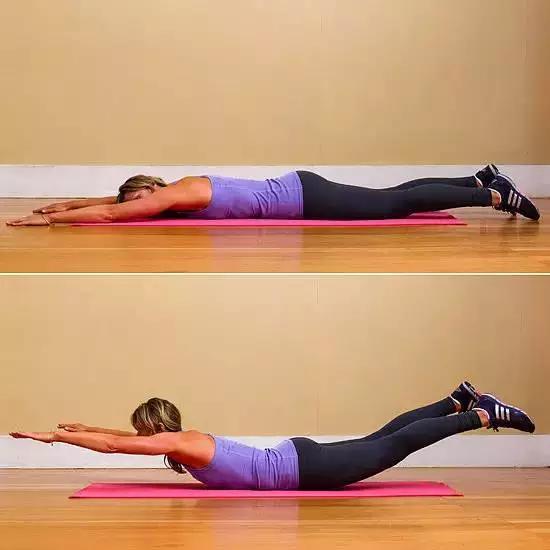
6, Train the muscle group of the waist and back (small swallow flying);
Small swallow flying—in a hard bed or clean hard floor, take a prone position, face down, arms with shoulder joint as support, lift hands lightly, while the shoulders move backward and upwards to pull, the arms stretch out and gently lift the head, the shoulders move back and upwards to pull, at the same time, the feet are lifted lightly, the waist bottom muscle contracts, try to let the ribs and abdomen support the body, continue for 3-5 seconds, then relax the muscles, limbs and head return to the original position for rest 3-5 seconds and then repeat. 15-20 times per set, repeat 3-5 times. The action to be exercised is to use the muscles of the waist and back.

Finally, summarize: if you have waist pain, do not blindly do small swallow flying exercises, distinguish between forbidden situations and acute and chronic phases, acute waist pain needs appropriate rest and add prone breathing exercises, after the pain improves, do muscle group activation, spinal column and pelvic stability training. If the pain does not improve after the acute phase, seek professional help in time, do not blindly train or silently endure pain, delay treatment.
---”S”18-103-5
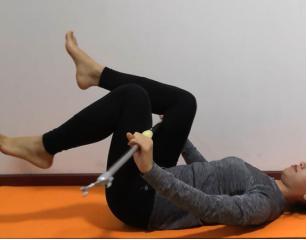
---90°23 203-5
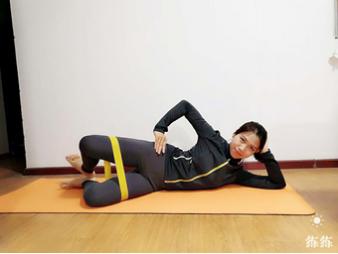
---3-53-515-203-5