Shoulder Joint—One of the Most Vulnerable Joints in the Human Body, You Really Need to Take Good Care of It
The shoulder joint is one of the most flexible joints in the human body, but flexibility often comes with vulnerability. The shoulder joint's complexity provides it with convenience, but because of the many bones and muscles involved, pain or injury can occur if the joint is subjected to undue force or if some part of the process malfunctions.
Therefore, if a muscle in the shoulder develops an imbalance or if you use incorrect movements during training, it can damage the shoulder joint. In general, we should pay special attention to the shoulder joint, just like taking care of a car. If properly maintained and promptly addressing any issues, the lifespan of the joint can be extended. The same principle applies to the human body – effective care can help prevent the shoulder joint from deteriorating and extend its lifespan.
Shoulder joint structure
Before learning how to maintain the shoulder joint, it's important to have a detailed understanding of it. The term ‘shoulder joint’ is often used broadly, but it should actually be divided into two parts: the glenohumeral joint and the scapulothoracic joint. The glenohumeral joint consists of the glenoid and the humeral head, while the scapulothoracic joint consists of the scapula and the thoracic back wall.
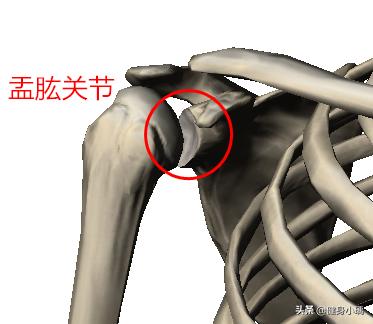
From the diagram, the scapulothoracic joint serves as a base, and the glenoid acts as a tray holding the humeral head. The humeral head can move freely within the tray, and the purpose of the muscles surrounding the shoulder joint is to securely fix the humeral head in the glenoid. The shoulder sleeve muscles play a key role in this function. They extend from the scapula and grasp the humeral head, pulling it towards the glenoid.
Furthermore, when the humeral head moves back and forth, the scapulothoracic joint also constantly holds the humeral head on top to prevent it from falling, as exemplified byShoulder-Glenoid RhythmWhen you raise your arm upward, the scapula will also rotate upward, not only to prevent the acromion and humeral head from colliding, but also to ensure that the glenoid remains aligned with the humeral head. Therefore, the muscles surrounding the scapulothoracic joint control the rotation of the scapula. There are six muscles that control the rotation of the scapula, namely the subscapularis muscle, the teres minor muscle, the coracoid muscle, and the infraspinatus muscle. These six muscles control the rotation of the scapula.
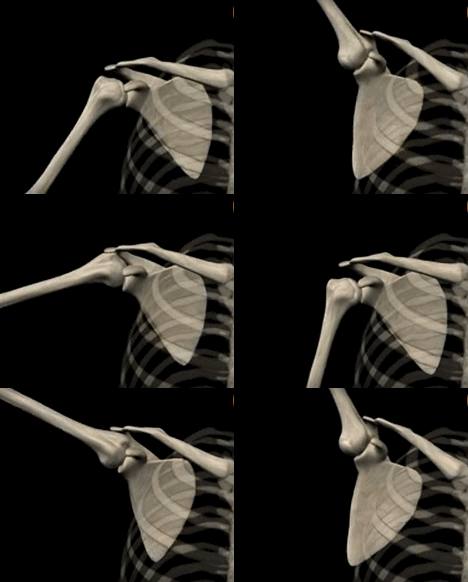
The two main criteria for evaluating a healthy shoulder joint are: one is to ensure that the shoulder sleeve muscles have balanced tension and sufficient strength to securely hold the humeral head in the glenoid, and the other is to ensure that the scapula can freely rotate when the humeral head moves.
Shoulder Sleeve Muscle Assessment and Stretching
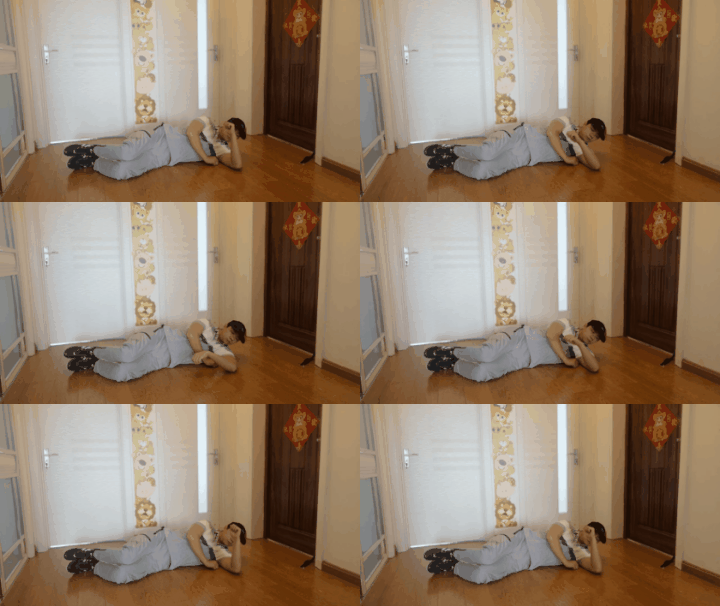
The shoulder sleeve muscles, including the supraspinatus, infraspinatus, teres minor, and subscapularis, play a crucial role in the safety of the shoulder joint. While strength is important, tension and force are different concepts. We need to train the shoulder sleeve muscles, but we also need to carefully assess the tension of each muscle. If the tension of these four muscles is uneven, it can affect the health of the shoulder joint. Therefore, before training the shoulder sleeve muscles, it’s important to assess the tightness of these muscles and correct any imbalances. The assessment method is shown in the following diagram.
Exercise steps:
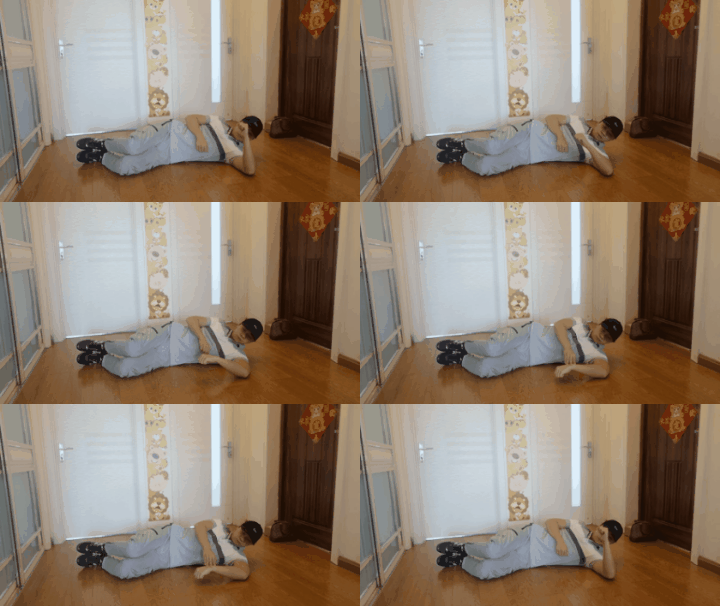
Lie on your stomach on a wooden floor with your arm at a 90-degree angle to your body. Lift your little arm so that it is perpendicular to the ground. Then, let the little arm move forward only, without forcing it. Observe the maximum extent to which the little arm can descend. If the distance between the little arm and the ground is very large, it indicates that the muscles responsible for rotating the little arm outwards—the infraspinatus and teres minor—are too tense and need to be relaxed. Conversely, we can also let the little arm move backwards, and observe the maximum extent to which the little arm can descend. If the final position of the little arm is too far from the ground, it indicates that the muscles responsible for rotating the little arm inwards—the subscapularis—are too tense, and require stretching. The main stretching exercises are shown in the following diagram.Exercise steps:Lie on your stomach on the ground with your arm extended at a 90-degree angle to your body. Then, gradually lower the arm to the ground, without forcing it. Continue lowering until the little arm reaches the ground.
Shoulder Sleeve Muscle TrainingFor training the shoulder sleeve muscles, I recommend four exercises: rope external rotation, rope internal rotation, doorway stretch, and resistance band shake. These exercises are designed to target the growth direction of the four muscles of the shoulder sleeve.Rope External RotationAs shown in the diagram, the rope external rotation exercise primarily targets the infraspinatus and teres minor muscles. The exercise steps are as follows:Place a towel under your armpit to prevent the arm from moving. Hold the rope with your hand, and then rotate your arm outwards, extending your arm to the same plane as your body, and then pull it back to its original position.Rope Internal RotationAs shown in the diagram, the rope internal rotation exercise primarily targets the subscapularis muscle. The exercise steps are as follows:
Hold the rope with your hand, and then rotate your arm inwards, extending your arm to the same plane as your body, and then pull it back to its original position.Doorway Stretch
As shown in the diagram, the doorway stretch primarily targets the subscapularis muscle. The exercise steps are:
Hold a resistance band and raise your arm. Extend your arm to the top of your head, and then lower it to its original position, drawing a large arc with your arm.
Resistance Band ShakeAs shown in the diagram, the resistance band shake primarily targets the subscapularis muscle. The exercise steps are:Adjust the length of the resistance band to find the appropriate elasticity, and hold your arm with your hand at an angle of 60 degrees in front of your body. Then, shake your arm up and down at this position. This will effectively stimulate the subscapularis muscle.
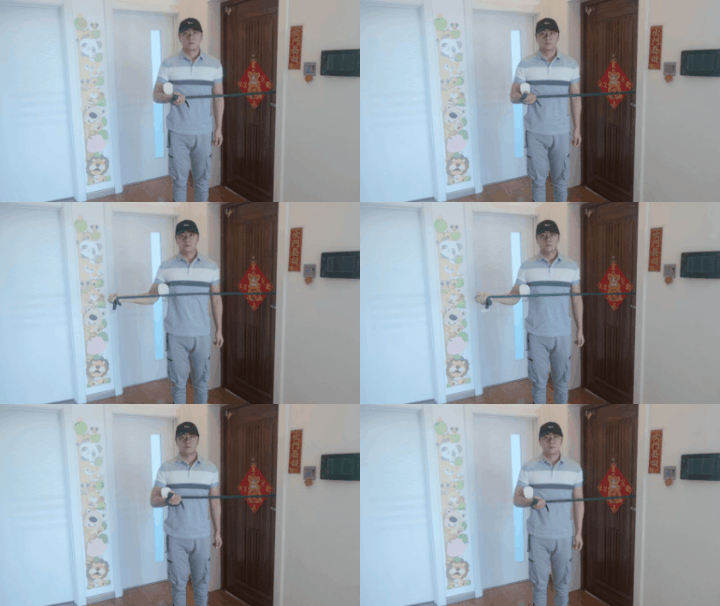
Each exercise is recommended to be performed for 3 sets with 15 repetitions.
Scapulothoracic Joint Movement TrainingMany shoulder injuries and the deterioration of the shoulder joint are related to the range of motion of the scapulothoracic joint. When lifting your arm, if the scapula does not rotate upwards in time, it can cause the acromion and humeral head to collide, leading to injury. Therefore, the range of movement and mobility of the scapulothoracic joint are crucial for maintaining the health of the shoulder joint. There are six muscles that control the rotation of the scapulothoracic joint, namely the corribus muscle, the rhombus muscle, the rotator cuff muscle, and the serratus anterior muscle. These six muscles control the rotation of the scapulothoracic joint.Scapulothoracic Joint Activation

Before training the scapulothoracic joint, it's important to activate these related muscles. The methods for activation include training the scapular retraction muscles, strengthening the scapular rotator muscles, and performing exercises to improve the range of motion of the scapulothoracic joint. For example, you can perform exercises such as the shoulder blade abduction, shoulder blade adduction, shoulder blade rotation, and scapulothoracic joint mobility training. In my previous article, I introduced ways to activate these muscles. Here, I will not elaborate too much.
After activating the relevant muscles, we can then train the rotation of the scapulothoracic joint. Here I introduce a training method called IOS. Each letter represents a movement in the IOS training.
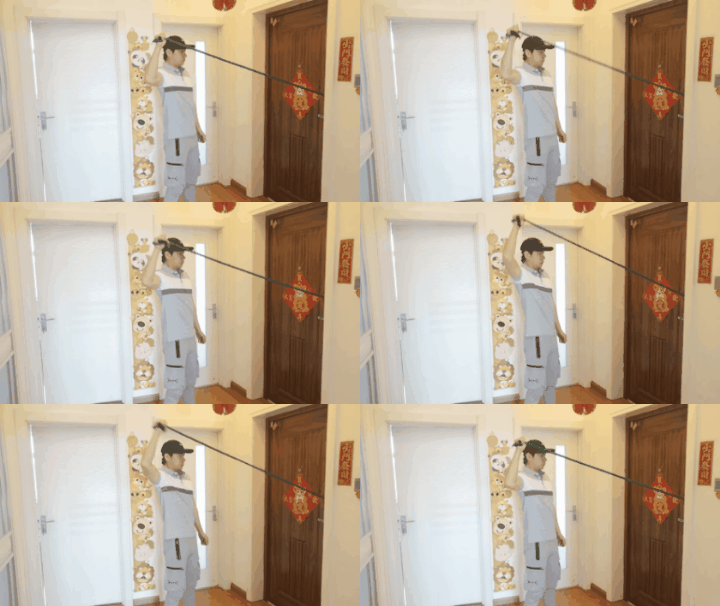
Letter I
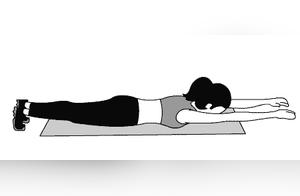
As shown in the diagram, the letter I exercise consists of the following steps:Hold your arms at your head, and extend your arms to the top of your head, ensuring that فريبيس arms are at a 90 degree angle to your body.Letter IOS

The IOS training consists of the following exercises:
:60°
315
633
IOS

I
II

O
OO

S
SS
2
IOS