Ketogenic Diet: Long-Term Consumption is Not Good; ‘The Lancet’ Study Shows Moderate Carbohydrate Intake is Key for Longevity
Hello everyone! I am Fu Ba, a practicing physician, specializing in weight management and disease nutrition therapy for over 20 years. I hope my articles are helpful to you.
When it comes to the most popular weight loss methods this year, it's probably the ketogenic diet. How popular is it? Many big-name celebrities and influencers have claimed to lose dozens of kilograms in a month, all using the ketogenic diet. Even second- and third-tier small celebrities and faded celebrities are saying they succeeded with the ketogenic diet. Specifically, who we are talking about doesn't matter, just to avoid trouble.
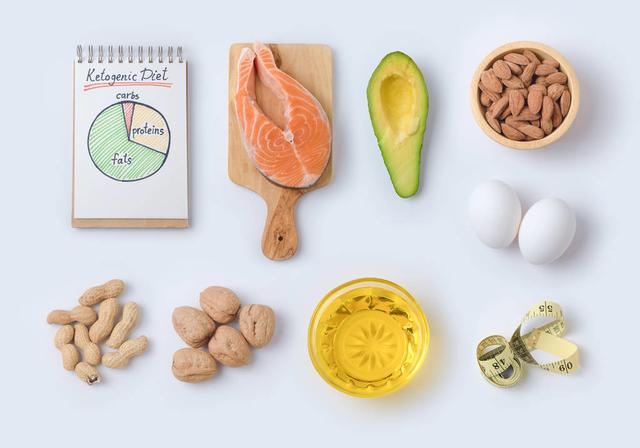
Celebrity effect, plus professional or unprofessional 'nutritionists' vigorously promoting, the ketogenic diet is hard to resist. The key is that the ketogenic diet is indeed effective, and you can eat a lot of meat, how to look at it is a rational weight loss method.
The problem is, after achieving the weight loss goal, should you continue to stick to the ketogenic diet? If not, as soon as you return to normal eating, the weight will rebound. If you stick to it, it's a bit too difficult, completely abandoning decades of eating rice and noodles and sweets, you need to have a strong will. But that's not the key, the key is, is long-term ketogenic diet really good?
Let's talk about two people.

One is vigorously promoting the ketogenic diet and earning a lot of money, American Atkins, his weight loss method is called Atkins's weight loss method. In 2003, Atkins died, his company claimed that he died accidentally from a slip and fall injury, but the Atkins's death certification had the following content: weight 116 kilograms at the time of death, with high blood pressure and severe heart disease, the conclusion is dead from obesity syndrome. Of course, there has always been debate about Atkins's death, let's take a look at the other person, the death reason has no argument.

Japanese (Toshio Kiriyama), was diagnosed with diabetes in 2010, to control the condition, he didn't eat rice and noodles as the main food, nor did he eat any food containing carbohydrates, as a result, his weight dropped from 87 kilograms to 67 kilograms in three weeks, and his blood sugar was also controlled. He wrote about his experience and became a bestseller. However, in 2016, Toshio Kiriyama died suddenly in a Tokyo restaurant at the age of 61, due to acute myocardial infarction.
Fu Ba is not trying to belittle these two deceased, but wants to say an important thing: long-term not eating staple foods is not good for health! Every bite of staple food you eat is related to health and longevity.
Fu Ba said that has a basis, and is highly credible basis. In 2018, the top medical journal 'The Lancet' published a heavyweight paper, studying the relationship between carbohydrate intake and life expectancy. Let's take a look at the result.
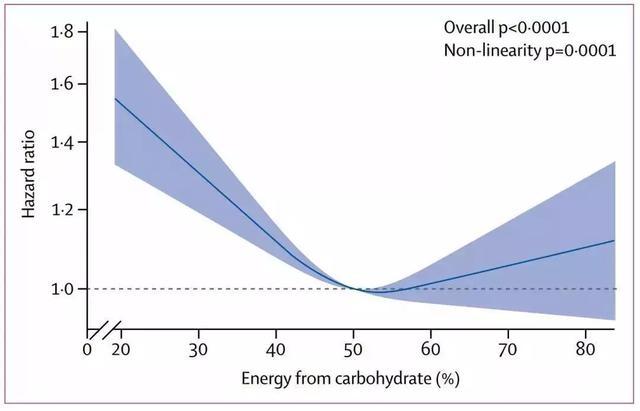
Horizontal axis: Carbohydrate energy contribution ratio; vertical axis: Risk ratio.
The study found that the overall carbohydrate intake and life expectancy are related to U-shaped correlation. That is, eating too little carbohydrates (40%) or too much (70%), will increase the risk of death; the carbohydrate intake is moderate (50%-55%), the risk of death is the lowest; and the lower carbohydrate diet is greater than the high carbohydrate diet, the risk is greater. Specifically, for a 50-year-old, if the carbohydrate intake is moderate (the carbohydrate energy contribution ratio is 50-55%), the average lifespan is 33.1 years.
- Compared with the lower carbohydrate population (the carbohydrate energy contribution ratio is less than 30%), it lives 4 years longer.
- Compared with the lower carbohydrate population (the carbohydrate energy contribution ratio is 30%40%), it lives 2.3 years longer.
- Compared with the higher carbohydrate population (the carbohydrate energy contribution ratio is greater than 65%), it lives 1.1 years longer.
Why is this the case? The study gave the reason for speculation. People who eat low carbohydrates often eat more meat, while people who eat high carbohydrates often eat more refined carbohydrates, all of which increase the mortality rate.

Therefore, for health and longevity, we still need to eat staple foods in moderation. Even people who adopt low-carbohydrate or ketogenic diets for weight loss, shouldn't do it for a long time. Especially the ketogenic diet, the carbohydrate energy contribution ratio is lower than 5%, this will put a lot of pressure on the body in the long run. After all, humans are not lions and tigers, pure meat-eaters.
Of course, staple foods must be eaten scientifically and reasonably. According to the 'Chinese Dietary Guidelines', you should consume 250g~400g of grains and potatoes per day, and people with high exercise volumes should appropriately increase it. Among them, 50~150 grams of coarse and fine grains and potatoes, 50~100 grams of potatoes, the rest are refined rice and noodles.
I am@FuBaChatNutritiona practicing physician, specializing in weight management and disease nutrition therapy for over 20 years. If you think what I said is reasonable, please follow me, there are many practical and interesting nutrition and health knowledge here.