The Difference Between Muscle Gain and Strength Gain, What Do ‘Pump Sensation’ and Soreness Actually Do?

Regardless of your goal is to build muscle or strength, the feeling of pump and delayed soreness are things you need to consider.
Because many fitness enthusiasts, although they have spent a lot of time and effort training, they subconsciously deviate from their initial plans without realizing it.
In fact, strength training and muscle building have a lot of similarities. Both inevitably involve resistance training, and both require continuously increasing weight.
In both cases, heavy weight, multi-joint compound movements typically benefit trainers whether it's for strength or muscle building.
However, there are also differences between strength training and muscle building, namely in the choice of pump and delayed soreness.
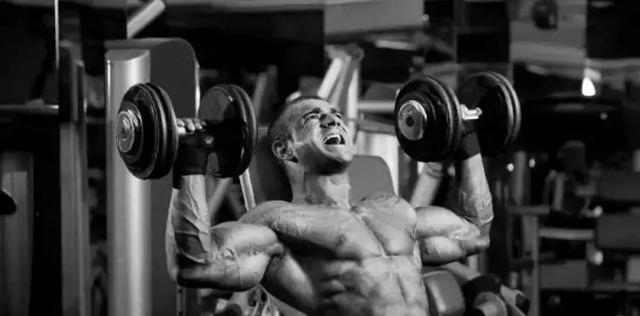
Pump and delayed soreness in strength training
From a traditional weightlifting perspective, if the weight you lift does not exceed 80% of your maximum weight, it will not significantly improve your 'absolute strength'. This is especially true for beginners.
We need to remember the following facts about strength training:
● We can train our strongest muscle fibers during eccentric contractions.
● Absolute strength is the product of ATP-CP and phosphocreatine (ATP-CP).
● To challenge your maximum weight, muscles need to be adequately warmed up and prepared.
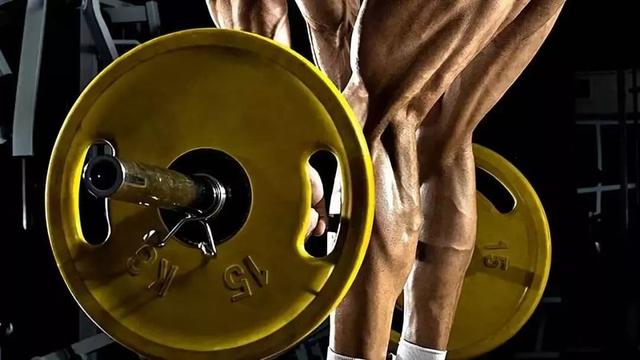
● First:This is the main point. The weight we control during the lowering phase is often greater than the weight we lift, which in itself proves that the lowering phase of the training provides different benefits compared to other phases.
In addition, if you can slowly control the eccentric contraction, this can further demonstrate that you have greater stability and movement coordination, which can also benefit strength training and improve movement consistency.
So, to summarize: Overload eccentric contraction is more effective than concentric contraction in tearing muscle fibers, and it also puts a greater burden on the nervous system, which means thatControlling eccentric training can make you feel more sore, especially for those who don't often use this method.
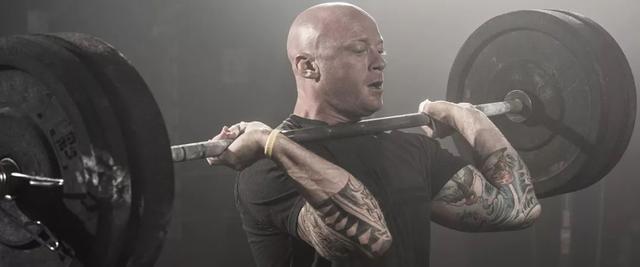
● Second:Strength training is usually presented in short bursts. Compare the 2-5 sets and marathon training, and each set of 15-20 repetitions, as well as the 10 sets and 3 sets, you can easily understand that muscle delayed soreness is caused by high lactate training, which will not make high lactate secretion in strength training.
From a biochemical perspective,Delayed muscle soreness does not prove that your training is effective or can build muscle.What is really important is heavy weight training, especially compound movements, which stimulate the spine to secrete a large amount of hormones, increasing testosterone and growth hormone, thus simultaneously increasing both strength and muscle growth.
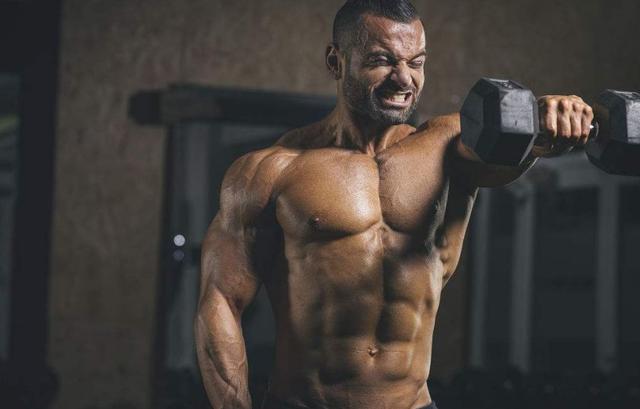
● Third:Strength training depends on the efficiency of the central nervous system. The premise is that you must control strength training, not to slack off or compromise.
However, it is important to note that in most strength training, your goal is to stimulate muscle, not to destroy muscle, so that they cannot lift after training. In other words, the purpose of your training is to make the central nervous system stronger instead of destroying it.
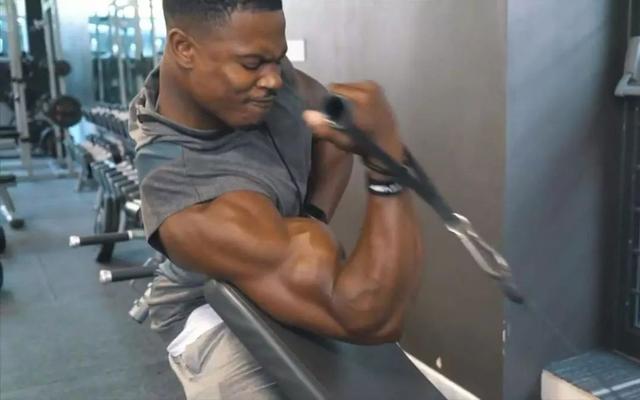
Pump and delayed soreness in muscle building
As mentioned earlier, muscle building and strength training are different. Although muscle building is consistently a traditional large load training, there are several good training methods that can help you get bigger and stronger:
● 10x10 training method
● 8x8 training method
● DOGGCRAOPP high intensity, low volume, high frequency training principle
● Staircase training method
● Pyramid training method
● Drop set training method
● Compound set training method
The above 7 methods are popular in muscle building, and they all have the common point that they can make muscles as fully fatigued as possible, and can ensure that during the training, you can obtain a strong pump, especially when using single-joint isolation training.
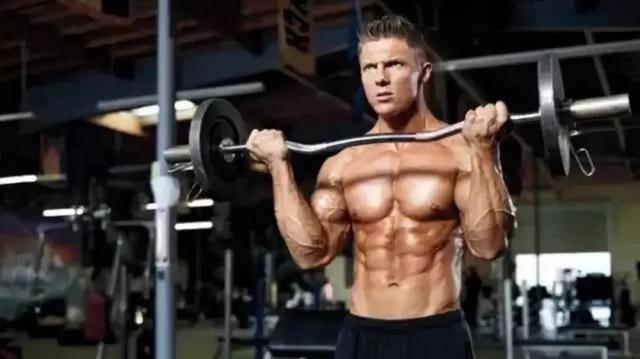
Several techniques can increase blood flow and maintain sustained tension while making muscles fatigued.
For example, several sets of the same training, you only need to increase the volume, will have a qualitative growth.
For example, half-repetition training and rest training, are commonly used to break muscle fibers, especially through concentric repetitions.
As long as you use the correct muscle building training, then in the arduous training, you can usually get pump and soreness in the training.
Clarify that I mean 'very sore' and 'most of the time'. This does not mean that every training will appear, nor is it that you become so sore that you call in sick for two days. If you feel sore for more than 4 days (which is a bit excessive), you need to check whether your nutrient intake and rest have any problems. If there are no problems (I highly suspect), it may be that you are overtraining.
Summary
In every training, are pump and delayed soreness necessary conditions for building muscle and strength?
Not.
In the process of building muscle and strength, can these two elements be avoided simultaneously?
Impossible.