5 Variations of Push-Ups, No Large Space Needed, You Can Do Them at Home
From school physical education to gym training, push-ups are a must-do exercise, requiring no large space and can be done anytime, anywhere.
It can help us build strong chest muscles, strengthen core strength, shape ideal figures, and also exercise ourtriceps and back musclesetc.
There are many variations of push-ups, and each movement has a different effect. Let's learn these push-up variations together and see how many you can do!
1 Wide-Grip Push-ups
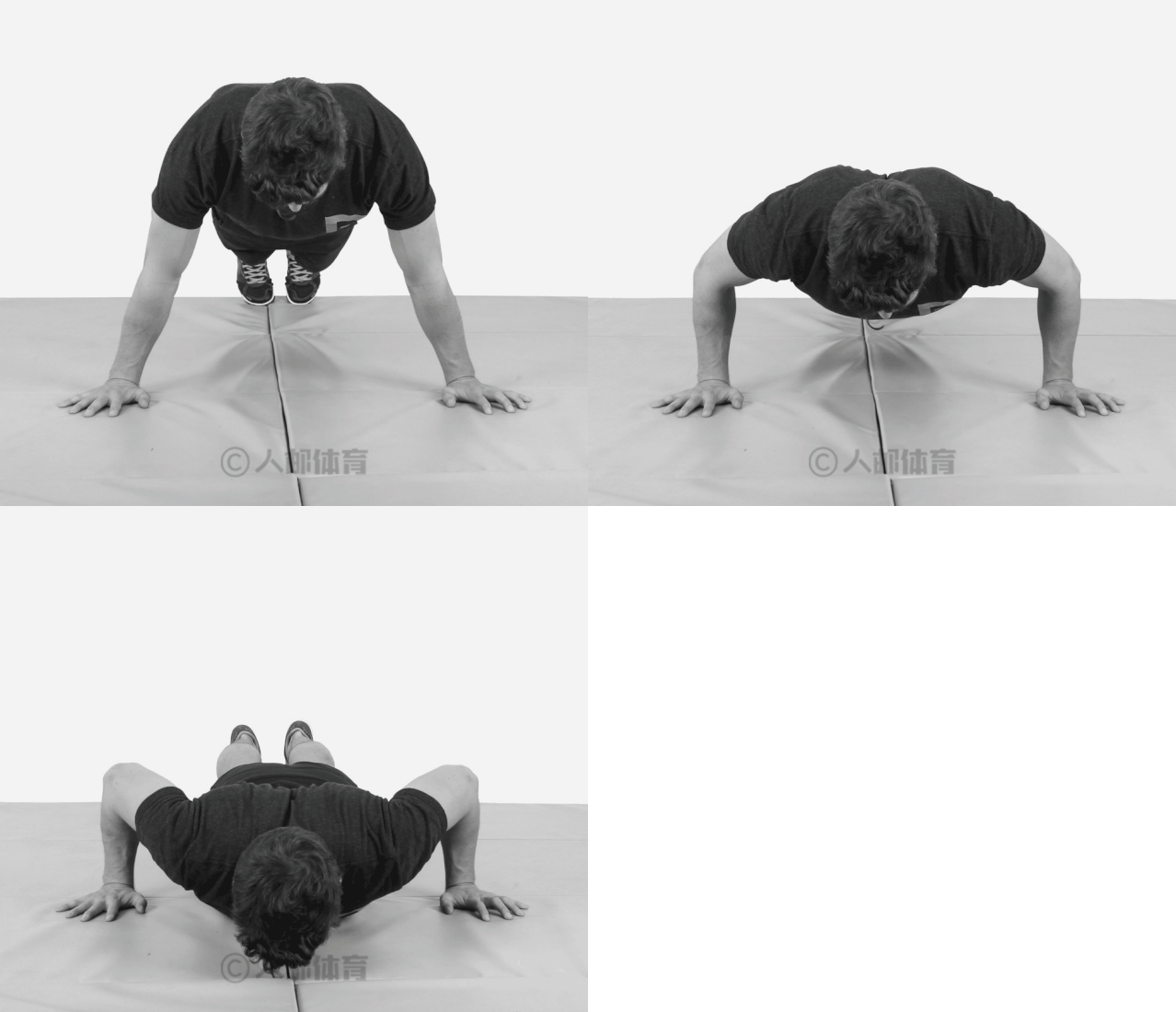
Start in a plank position, with hands slightly on the outer sides of the shoulders, fingers pointing forward, and hands slightly apart. Lock the elbows. Feet are together, body is upright, and the head is in line with the spine.
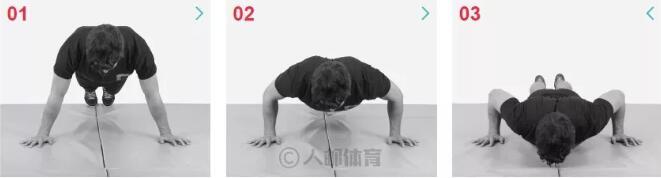
When you lower down, try to keep the elbows above the wrists. The elbows will want to lean outward or inward, depending on your shoulder joint flexibility and strength. At the lowest position, the elbows still remain above the wrists.
2 Narrow-Grip Push-ups
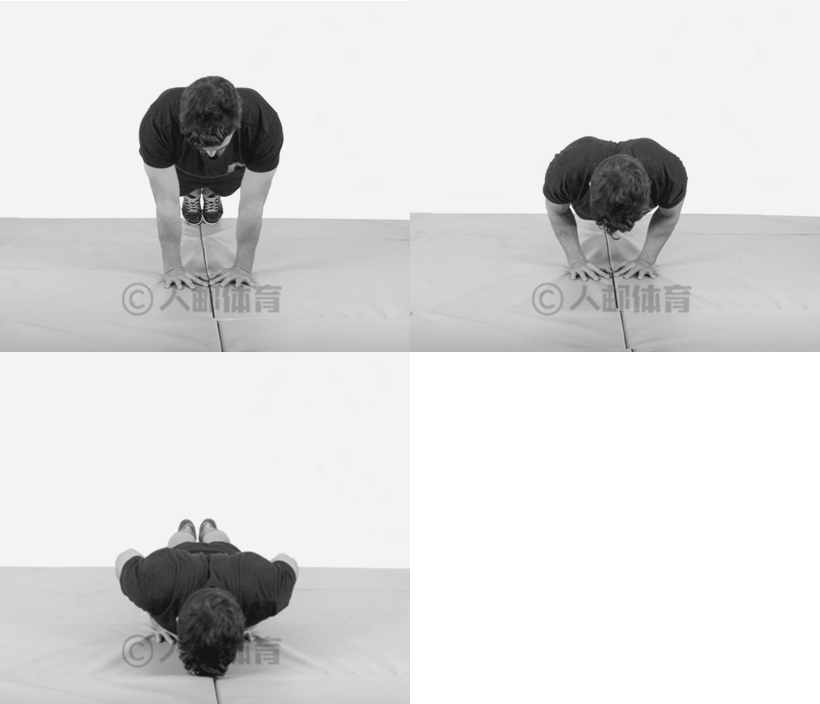
Start in a plank position, with arms locked. Hands are close together, hands almost forming a diamond (or heart) shape.
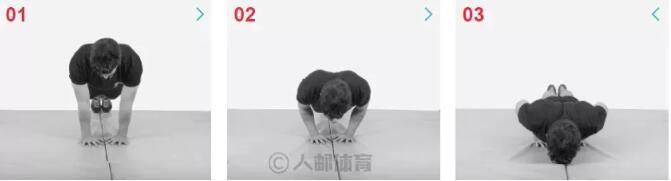
When you lower down, push the elbows so they want to lean outward. But try to keep the elbows clenched, even to create some tension at the level of the wrists and hands.
When you reach the lowest position, the elbows will lean outward because they need to make room for the chest and rib cage.
3 Flying Push-ups
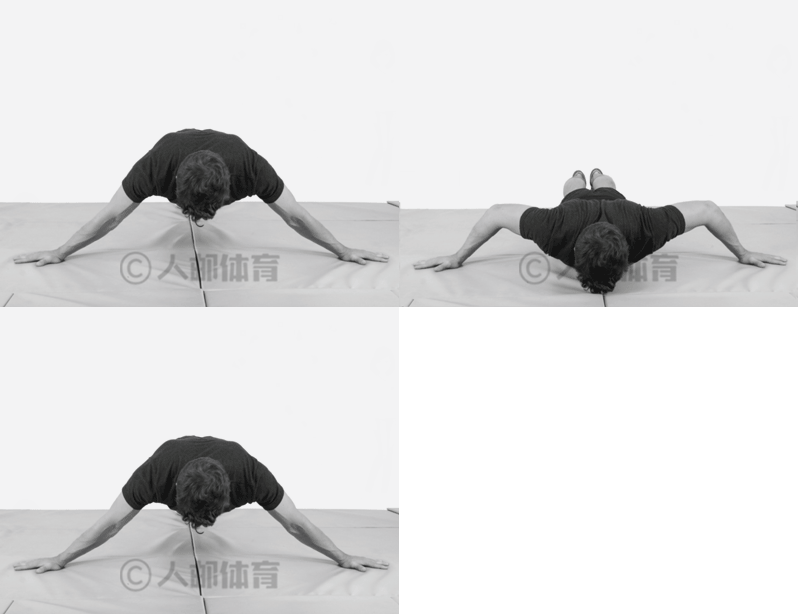
Start in a plank position, with hands spread as far as possible, without letting the chest touch the ground. Lock the elbows, due to the structure of the body, the hands turn outward. Since the angle of the arms relative to the body produces an off-load, you must work harder to grip the ground, and the elbows will slightly arch up.
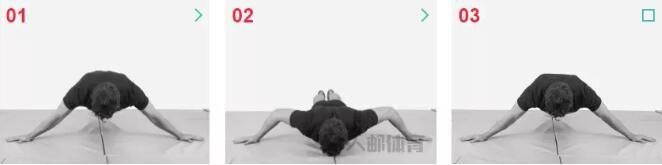
When you lower down, keep the elbows on the inside of the hands, because the upper arm cannot reach above the hands. This makes the shoulder joint harder to work and the elbow joint becomes the main moving joint.
When you push off the ground, try to keep the body in a straight line from head to toe, and focus on locking the elbows, not using the shoulders to push off the ground.
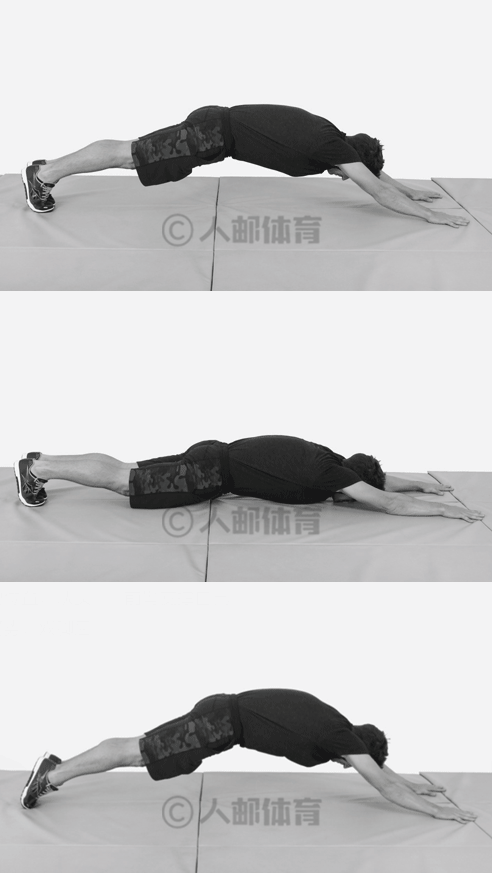
4 Olympic Push-ups Floor Press
Start in a very open hollow body position, with hands as far forward as possible, but keep the whole body bent. Keep the arms extended and the feet together.

Downward: Transform the bent body position into a neutral whole body position, allowing the hips, legs, abdomen, and chest to touch the ground, while keeping the legs straight. In doing so, slightly flex the legs to extend the body and give you some space and support.
Do not use your arms and legs to press down to the ground, but tighten your abs and push your hips up to return to the original hollow body position.
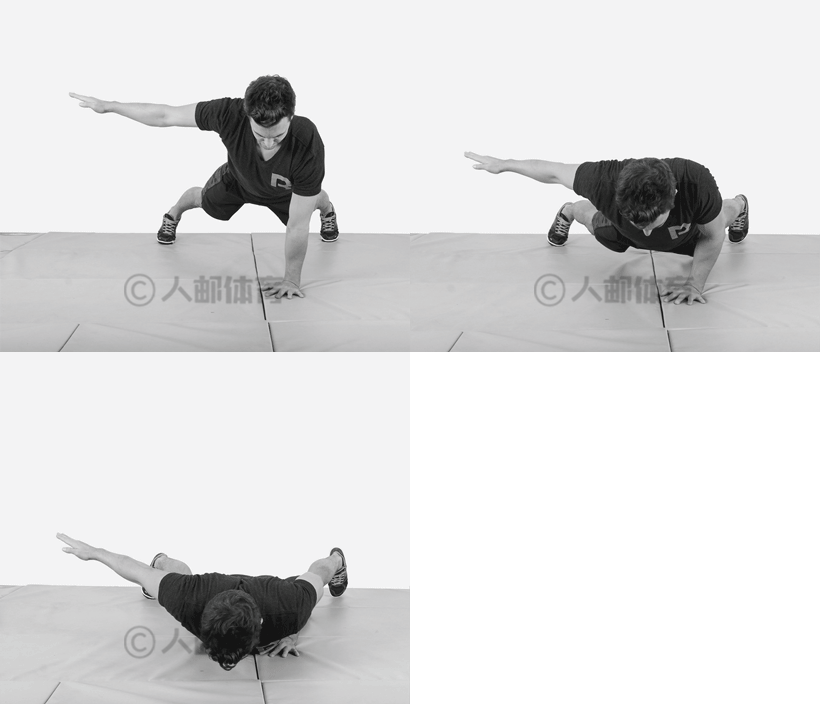
5 One-Arm Push-ups
Start in a plank position, one hand on the floor, the arm doing the push-up arm is extended. Slightly widen the feet to create a tripod shape for better balance and stability. The other arm (the arm not performing the push-up) is raised and extended to the side. You can also place your hand behind you when doing this push-up.
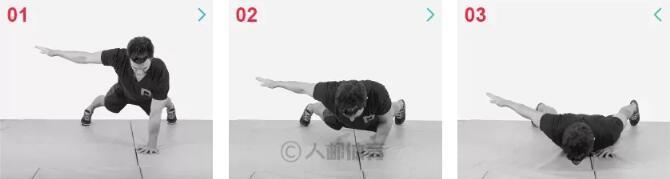
When you lower down, push the elbows so they want to lean outward. Try to keep the elbows as close to the body as possible. Here, the rotational force from one side will cause problems on the spinal level. Resist the rotation and keep the hips parallel to the ground.
When you reach the lowest position of the push-up, keep the arm doing the push-up arm with as much tension as possible, and put the weight on the other arm.
How many can you do?
- END -
Copyright information
Produced by the Sports Science Institute of the General Administration of Sport of China and Renyou Sports Co., Ltd.
Text comes from the book ‘Freestyle Training: 4 Basic Movements Optimize Sports and Life Performance’.
Images are © Renyou Sports.
Reviewed by Experts of the Sports Science Institute of the General Administration of Sport of China.