Rehab Therapist Sharing - Basic Movement Forms

Today, let's share the basic movement forms that can be incorporated into any functional, strength, and stability training scheme. One or more of these forms can be added to a functional, strength, and stability training scheme. Therapists can adjust and modify these basic movement forms accordingly to meet specific needs. Adjusting these movement forms will greatly improve their functionality and interest, while also satisfying the personalized needs of patients or athletes.
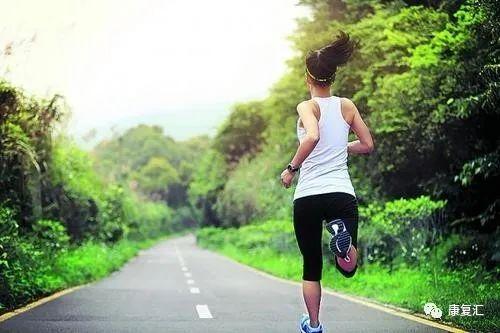
Different forms of movement will focus on activating a specific chain. However, it is important to remember that every movement will affect other parts of the body, so it's difficult to make a movement target only one muscle chain. For example, the anterior oblique chain and the posterior oblique chain represent the prime and antagonist muscles (opposing muscles). However, I believe they are also synergistic (supportive) muscles, such as when you walk or run, your right forearm moves forward, activating the anterior oblique chain; the left arm moves backward, activating the posterior oblique chain. This is both an opposing and a synergistic theory.
The following examples can well illustrate this theory. "When walking and running, the body on the right side moves forward with each movement, which triggers the movement of the body on the left side, and vice versa. You cannot do a single movement without other movements involved."
Here are 6 basic movement forms:
1. Push
2. Pull
3. Squat – Flexion to Extension
4. Flexion to Extension with Rotation
5. Single-Leg Stand
6. Rotation
Each movement form can be practiced using special equipment (such as a resistance band) in a fitness environment, or can be performed in any environment. Most of the movements demonstrated in this chapter can be completed with just a resistance band, a core ball, and dumbbells. The following will detail various muscle chain patterns, demonstrations, and training.
01 Push
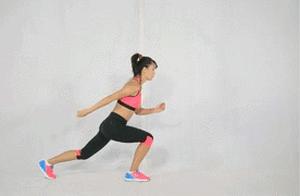
The first suggested movement form can effectively exercise the anterior oblique muscle group. Figure a shows the starting posture, where the athlete grabs the resistance band (or a resistance band can be used instead), with the right arm at the same height as the shoulder, the left hand and left leg are placed in front of the athlete. The athlete uses the inner contraction of the inner oblique muscle, the outer oblique muscle group, and the opposing outer oblique muscle group to push the resistance band forward, crossing the body. At the same time, the left arm is moved back, and the trunk rotates to the left, which exercises the anterior oblique muscle group (see Figure b).
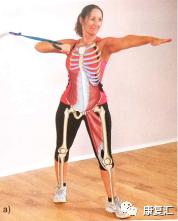
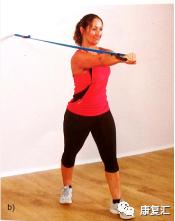
All daily activities will activate this muscle chain, but the best movements are walking, running, and throwing.
Note: It is very important for the athlete to control the movement. For example, in the two phases of the movement, the concentric contraction phase (muscle shortening) and the eccentric contraction phase (muscle lengthening) should not let the resistance band control the movement. In addition, it is also important to activate the internal core muscle group to provide necessary stability for all movements. If you don't master these movement techniques, seek professional guidance before any resistance training.
When demonstrating, I often tell athletes and patients, "You control the movement, not the movement controlling you." This applies to the training of all muscle chains.
02 Pull
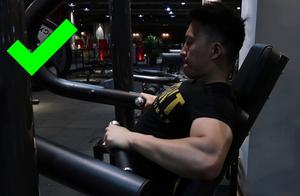
This is one of my favorite movement forms because it can effectively exercise the posterior oblique muscle group. Figure a shows the starting posture, where the athlete grabs the resistance band, with the right arm at the same height as the shoulder, the left leg and left hand are placed behind the athlete. Pull the resistance band across the body, while the left arm moves forward, the athlete uses the posterior deltoid muscle, the sternal-costal fascia, and the opposing greater trochanter muscle to rotate the trunk to the right, which exercises the posterior oblique muscle group (see Figure b).
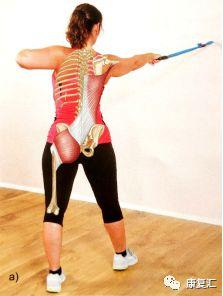
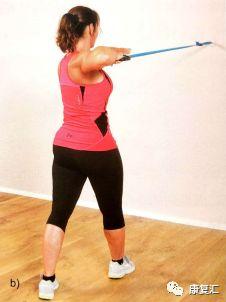
I often tell my students, even athletes and patients, that every ‘pull’ action contains a ‘push’, and every ‘push’ action contains a ‘pull’. It is impossible to do only one of these actions. I believe this sentence can effectively enhance the effects of the two movements mentioned above.
03 Squat – Flexion to Extension
Any training or activity containing flexion to extension movements, such as a classic squat or deadlift, will exercise the posterior (deep) vertical chain and the posterior oblique chain.
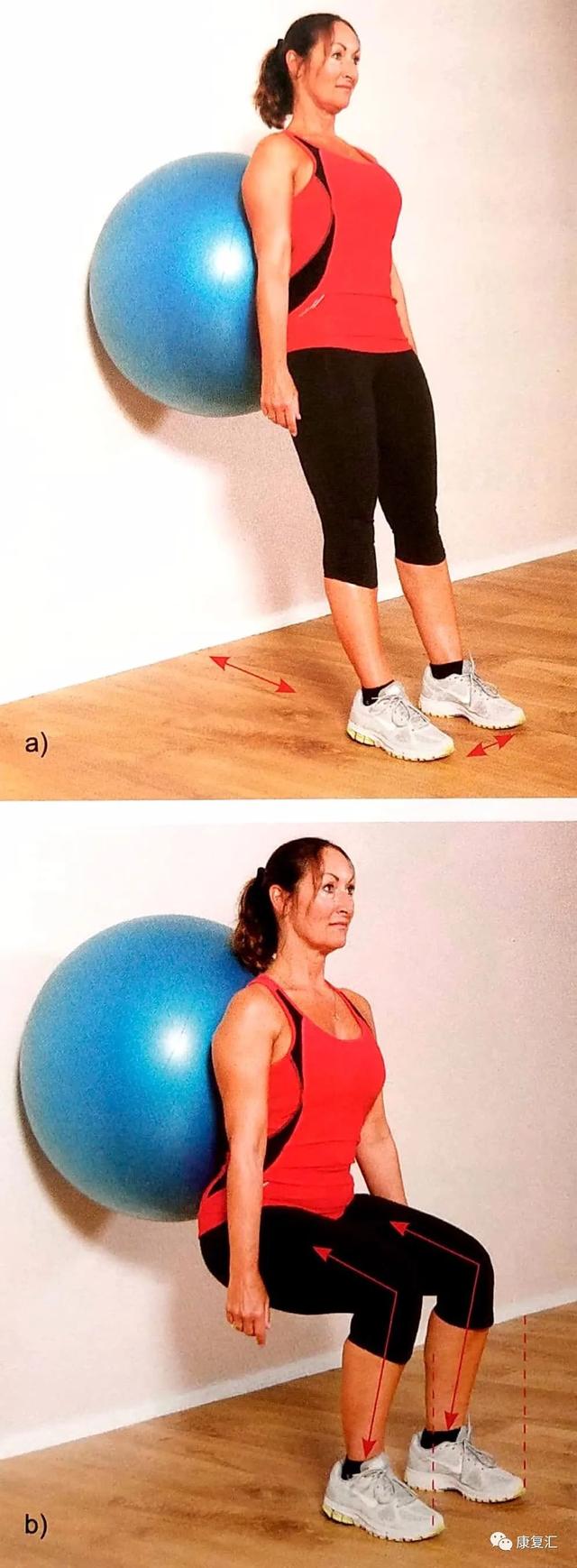
Gym Ball Squat
Place the back of the ball against the wall, as shown in Figure a. In this position, the patient slightly shifts their feet forward, with their knees bent and at the same width as their shoulders. Then, the patient activates the internal core muscle group and slowly squats (eccentric contraction) until the knee joint bends close to 90 degrees (see Figure b). The therapist should ensure that the patella is on the same line as the second toe, and the patella should not exceed the toes (see Figure b arrows). Then, the patient stands up in 2 seconds (concentric contraction), and contracts the gluteus maximus at the last moment of the squat.
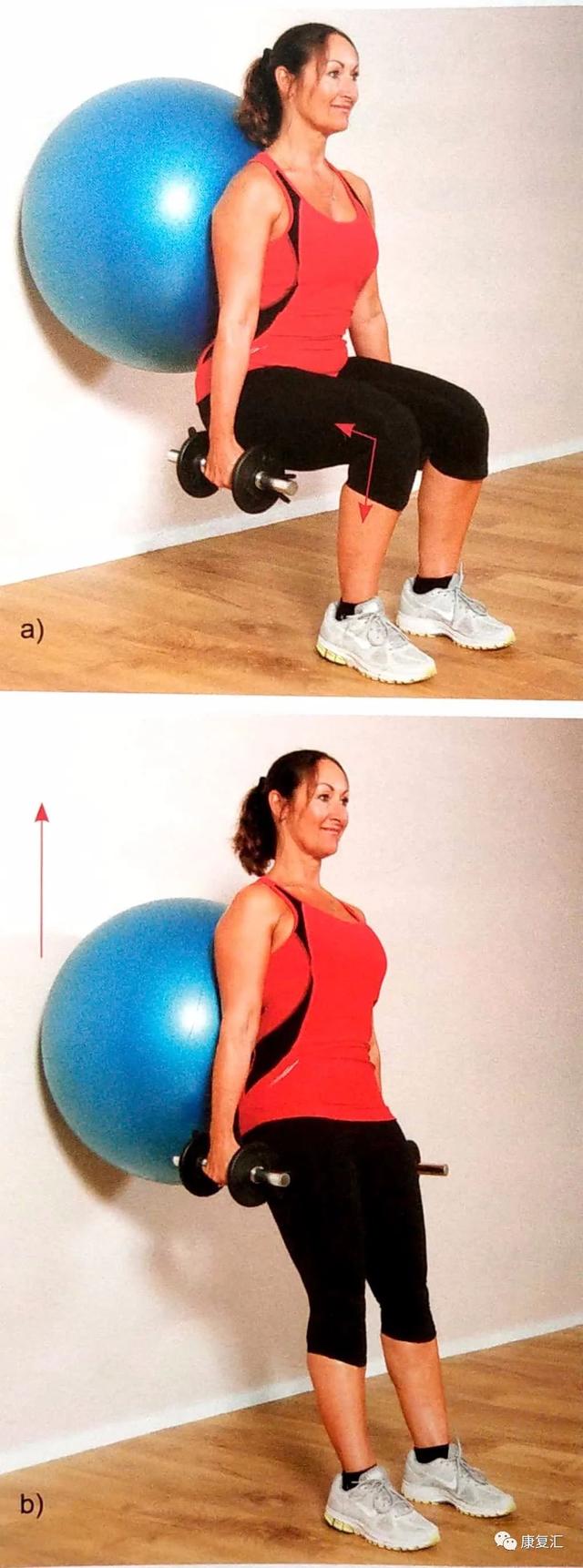
Advanced method 1: Weight Loading
Perform a squat as described above, while the patient holds a weight in their hands (see Figure a). Concentric contraction (see Figure b).
Advanced method 2: Weight Loading without Gym Ball
The starting posture is shown in Figure a, where the athlete holds dumbbells with both hands, with their knees bent and at the same width as their shoulders, and squats down to a knee joint angle of about 90 degrees (see Figure b).
Note: The patellar sliding trajectory should be on the same line as the second toe, and should not exceed the toes. Then, return to the starting posture (this movement can be performed with or without a weight).
04 Flexion to Extension with Rotation
The movement of flexion to extension with rotation is a very good way to exercise the posterior (deep) vertical chain and the posterior oblique chain.
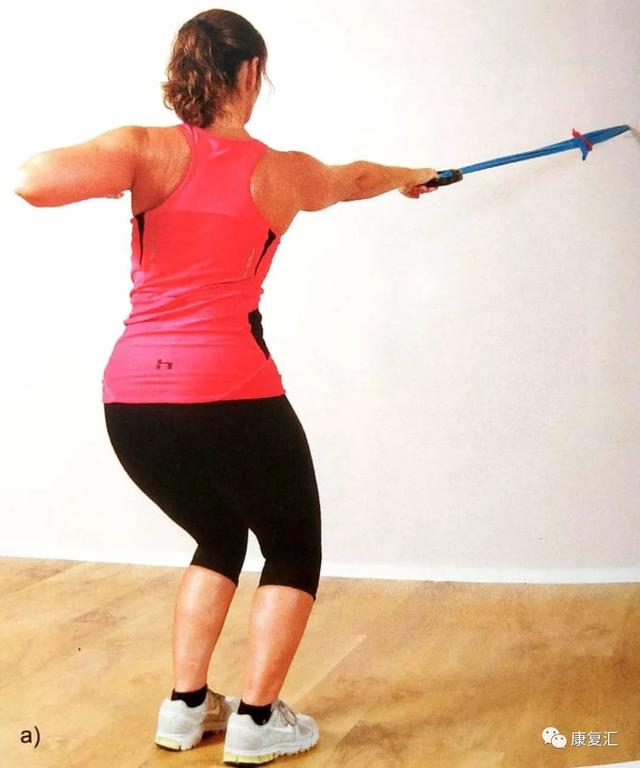
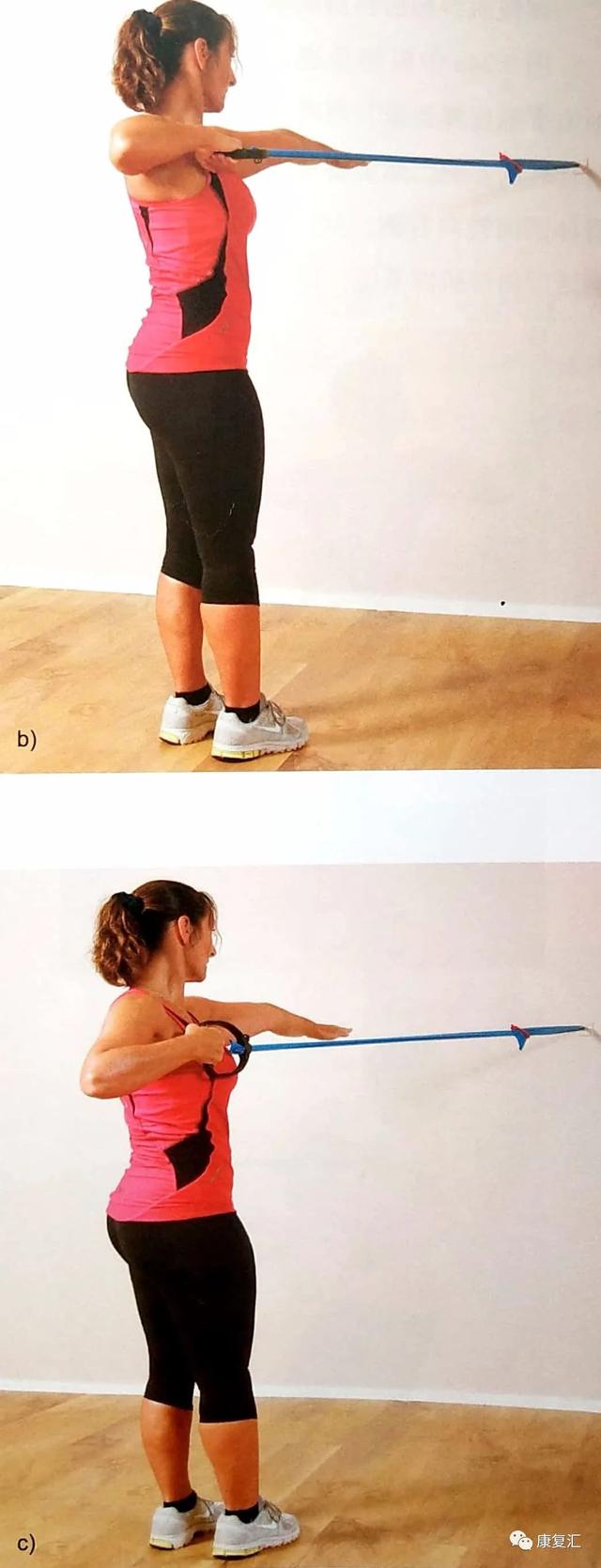
Forward Rotation
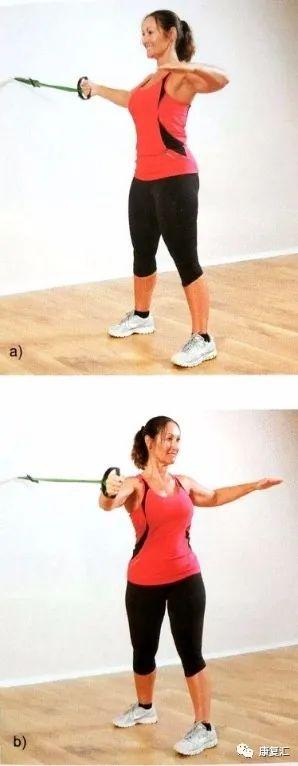
As shown in Figure a, the model stands with their feet apart and at the same width as their shoulders, and grabs the resistance band with their right hand, keeping the shoulder height, and then turns their body to the left, exercising the oblique muscle group (see Figure b). The arm should be relatively fixed, because the movement comes from the trunk, not the arm.
Backward Rotation
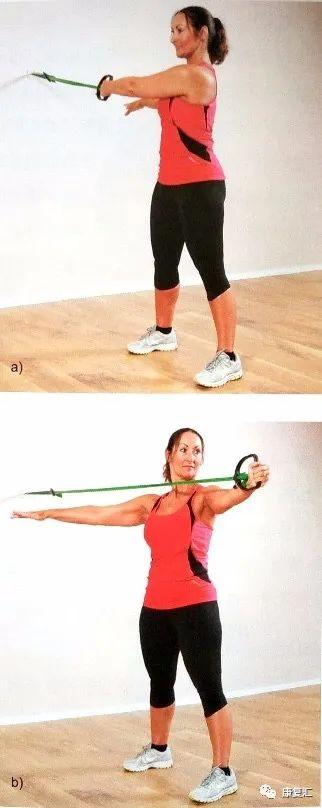
As shown in Figure a, the model stands with their legs apart and at the same width as their shoulders, left hand holding the resistance band, keeping the shoulder height, then turns their body to the left, exercising the oblique muscle group (see Figure b).
05 Single-Leg Stand
The side chain muscle system stabilizes the body in the coronal plane, in various forms of single-leg standing, it supports the hip abductor and adductor muscles, and the obliques stabilize the pelvis. At the same time, the internal and external oblique muscles contract to maintain the stability of the spine and pelvis. When the side chain muscle system is impaired, it often leads to pain and dysfunction in the waist, sacrum-iliac joint, and the supporting leg. If you think about it, you will find that most movements are single-leg movements. Especially when walking, especially running and short-distance running, the body is driven forward by strong single-leg movements.
Therefore, the vital glutes: connecting the gait cycle pain and dysfunction ( Gibbons, 2014) book emphasizes the importance of single-leg standing training for activating the side chain muscle system's gluteus medius. Therefore, I will demonstrate single-leg training in this section. I will also train with 'push' and 'pull' actions to activate the anterior oblique muscle group (or posterior oblique muscle group).
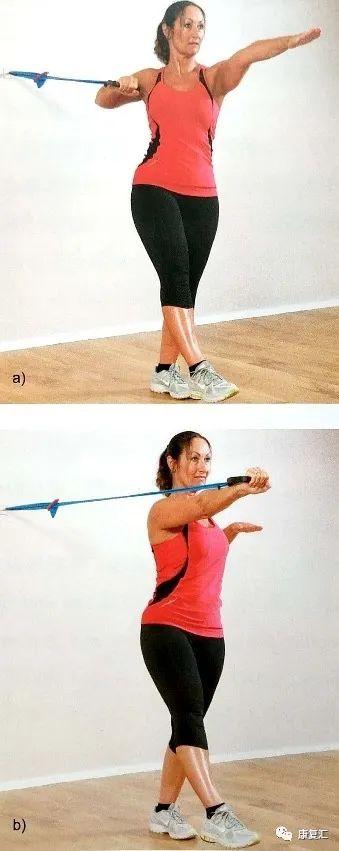
Note: If you have difficulty standing on one leg, it may be due to weakness in the side chain muscle group. I suggest you first read The vital glutes connecting the gait cycle pain and dysfunction (Gibbons, 2014) and then do the following exercises, so you will better understand ‘why’ and ‘how’ to strengthen the gluteus medius and side chain muscle system.
Side Chain and Anterior Oblique Muscles
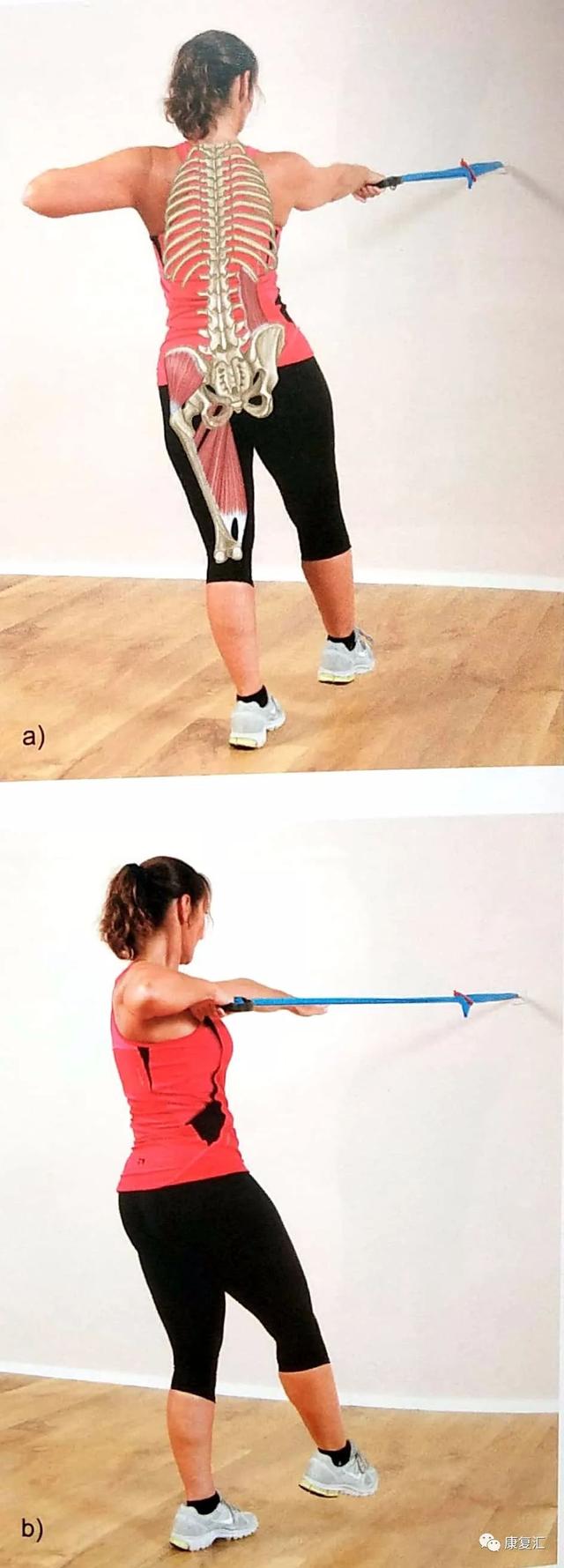
In Figure a, the model is standing on one leg (side chain muscle), while the right hand grabs the resistance band, keeping the shoulder height, and the left hand is placed in front of the body to the right, then the right arm pushes forward, and the left arm pulls back, the body turns to the left (see Figure b). This action activates the anterior oblique muscle group, while also supporting the side chain muscle group.
34 Exercises for Muscle Demonstration in Strength Training, Recommended Collection!
How to understand electrocardiograms is not difficult, a complete guide in one article
Practical TipsHuman Body Surface Landmark Positioning and Anatomy (including human anatomy diagram)
Rehabilitation treatment and nursing of peripheral nerve damage
RehabilitationRecovery treatment of shoulder periarthritis
Complete DemonstrationMuscle demonstration of strength training actions, recommended to collect!
34