4 Common Mistakes Dog Owners Make When Applying Medication to Their Dog's Skin

Many dog owners believe that in the treatment of canine skin diseases, in addition to injections, another important treatment method is topical medication for the affected skin areas. Giving medication to a dog's skin lesions is not difficult for dog owners, but through feedback, it is actually very rare that owners can do it effectively and efficiently. Pet doctors found that these owners often have these common misconceptions.

Firstly, many dog owners think that when applying medication to a dog's skin, whether it's a solution or a cream, the more you spray, the better. A case previously handled by the pet doctor, a dog with wet eczema and dermatitis, sprayed a 30ML bottle of medication on a small spot on its skin once a day. This doesn't improve the dog's skin disease recovery speed because we know that,A dog's skin absorbs substances through the skin, and a single application can only absorb a fixed amount of medication. If owners have applied medication to their dogs, they should realize that the amount of medication sprayed doesn't matter; when sprayed too much, the remaining liquid has no effect, and the skin can only absorb that much. Owners often spray their dogs' skin every few minutes to improve the effect. This is the same as the idea that spraying more medication is better. In essence, it's the same logic. We know that most topical medications are mainly for anti-inflammatory and anti-itch, so we can temporarily consider them as antibiotics. Each drug has a half-life in the body, which is why some drugs need to be taken once every 12 hours, and others need to be taken once every 6-8 hours. Our topical medications also operate on this principle. If the interval is too short, the last application of medication has a good effect, and spraying again is a waste, and it also increases the drug's toxicity. Therefore, this method is incorrect.
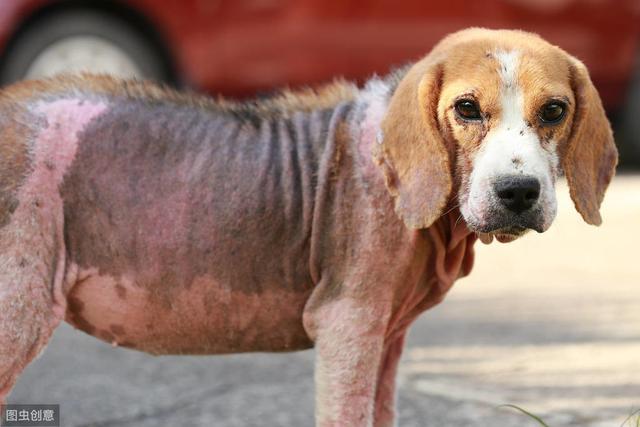
Dogs with small skin lesions, many owners don't want to shave their dogs' fur to maintain a beautiful appearance, even if it's a partial shave. What are the bad effects of this? Firstly, when we apply medication, most medications are sprayed on the hair, not directly on the skin, which wastes medication and also hinders absorption. Secondly, when dogs have hair, we may not be able to find the affected skin area, so we can't treat it effectively. Finally, it leads to large-scale hair loss, and it's necessary to shave all the hair. The pet doctor gave an example: a dog's hair is beautiful because of healthy skin; their hair can grow longer and better. If the skin is not healthy, the hair will naturally fall off. So it's not a wise choice to not shave it.
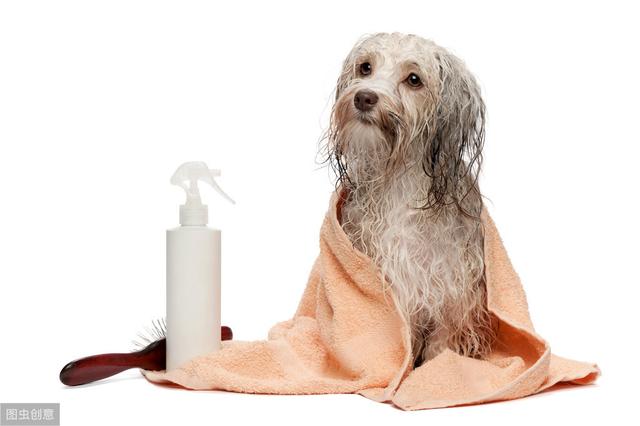
Another common mistake made by dog owners is that the affected area of a dog's skin often has exudates, so there are often scabs and dirt attached. Many dog owners directly spray medication on the affected area without removing the dirt. The drug then only penetrates the scabs, not the skin lesions. This is a waste of medication and makes the dog's skin disease worse.
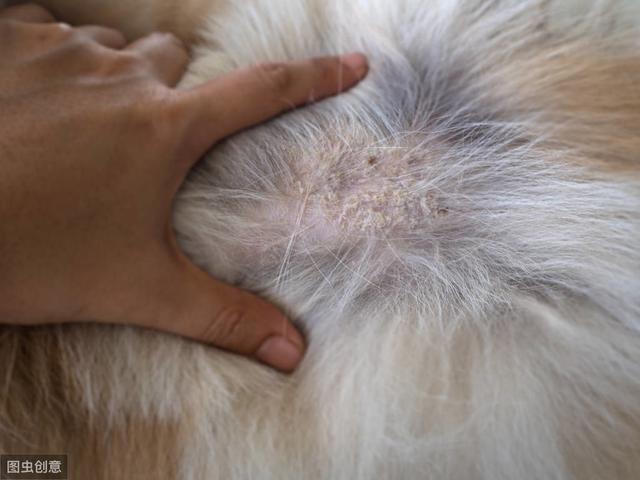
The correct method of applying medication is: first, shave the hair around the dog's skin lesions clean, then cleanse the dirt and secretions with saline solution, absolutely don't use tap water. Then, apply medication to the dog's skin lesions. The area to spray should be greater than 3CM. The standard for spraying is to wet and cover the affected area completely. Then, spray once every 8 hours.

Pet doctors remind: Canine skin disease treatment is a slow process. Dog owners should be patient and not rush. Use enough medication, and don't waste it.
Use easy-to-understand ways to popularize professional pet disease knowledge, follow me, listen to the pet doctor speak3CM8