In the African Tropical Rainforest, There Still Lives a Third Kind of Elephant—The African Forest Elephant
If asked, most people will answer: two, Asian elephant and African elephant. But besides these two, there is a third, that is the African forest elephant.
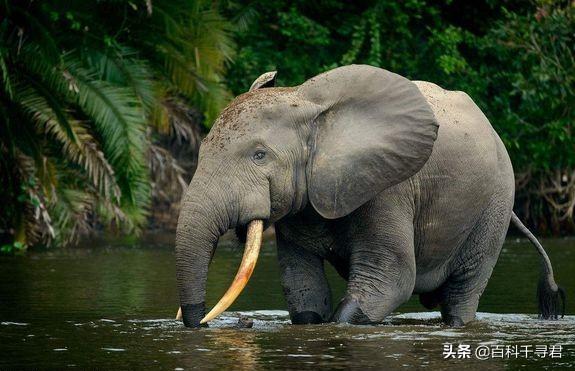
forest elephant
Elephants are the collective name of the object-species of the Elephantidae family. The Elephantidae family is the only family that exists today belonging to the order of long nose, divided into two genera.The African elephant is divided into African grassland elephant and African forest elephant, commonly known as grassland elephant and forest elephant. Another commonly referred to desert elephant is the grassland elephant that lives in the Namib Desert in southern Africa, it is not even a subspecies, but rather a population of grassland elephants.
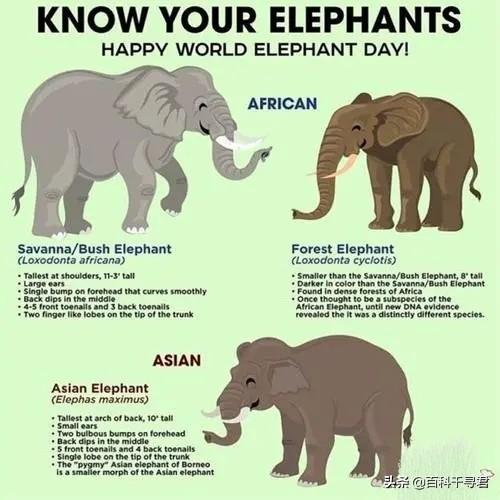
We usually say African elephant refers to the African grassland elephant. The Asian elephant genus is also called the Elephant genus, with only one species, divided into four subspecies, Indian elephant, Sri Lankan elephant, Sumatran elephant, and Borneo elephant.
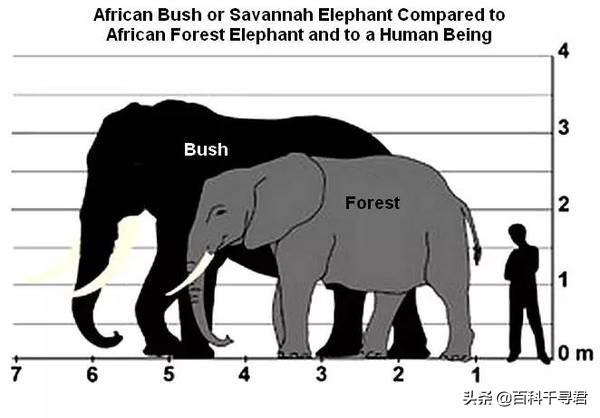
Grey is for forest elephant, black is for grassland elephant
The forest elephant was originally considered a subspecies of the grassland elephant, but after genetic analysis, it was found that it had separated from the grassland elephant 2.5 million years ago, so it was listed as an independent species, scientific name Loxodonta cyclotis (ScienceNOW, August 23, 2001).
Forest elephants and grassland elephants are very similar, the main differences in appearance are 3 points.
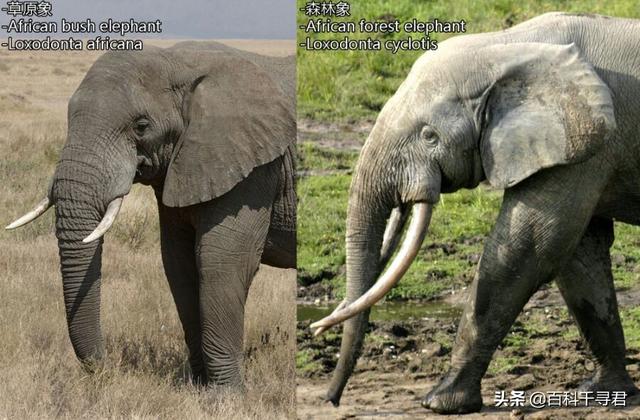
on the left is grassland elephant, on the right is forest elephant
Firstly, in terms of body size, the grassland elephant is huge, and the body is mighty. The forest elephant is smaller, and the body is sturdy.
Secondly, in terms of teeth, the teeth of the grassland elephant curve forward; the teeth of the forest elephant grow downwards, almost parallel to the front leg, which is convenient for walking in the jungle to prevent leaves and vines from being tangled.
Thirdly, in terms of ears, the ears of the grassland elephant are large, and the two ears together are heart-shaped, some people say that the grassland elephant's ears are very similar to the African map shape; the ears of the forest elephant are almost circular on top, without corners, so it is also called ear elephant
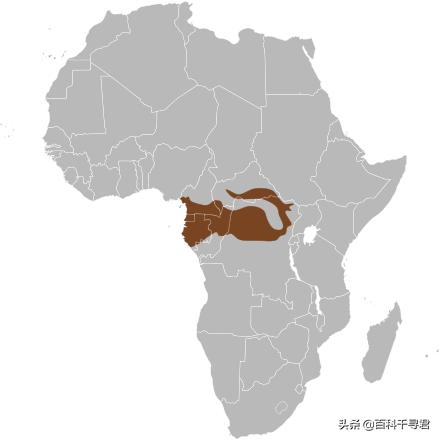
Originally, all elephants living in the central and western tropical rainforests of Africa were regarded as forest elephants, but recently, a research group said that the species of elephants in Africa still needs to be further divided, that is, the elephants in the West African rainforests and the Central African rainforests have significant genetic differences, that is, whether the West African forest elephants are subspecies of the forest elephants or subspecies of the grassland elephants is still undetermined.Currently, the forest elephant mainly refers to the elephant in the Central African rainforest, from south of Cameroon to the east of the Democratic Republic of Congo.
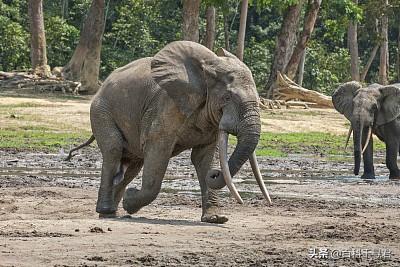
The forest elephant is the smallest elephant, both in average size and maximum size is smaller than grassland elephant and Asian elephant.
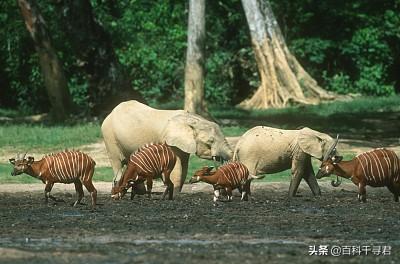
forest elephant and purple
Regarding the weight of the forest elephant, the weight measured in the Congo region before the elephant was measured is the weight of the male elephant is 2.8-3.2 tons, and the female is 2-2.3 tons.
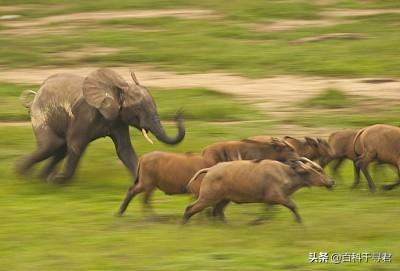
The forest elephant drives the bush elephants of the Congo.
The maximum shoulder height of the forest elephant is 9 feet 10 inches, that is 2.997 meters, measured by the Pierre command of the Congo military administration of the elephant center between 1900-1926 in Apia. The maximum weight of the forest elephant is 6 tons, in 1906, a male elephant was shot in Apia, measured its shoulder height to be 2.85 meters, and cut to weigh 6 tons, and the blood and stomach contents are estimated to be 340 kilograms.
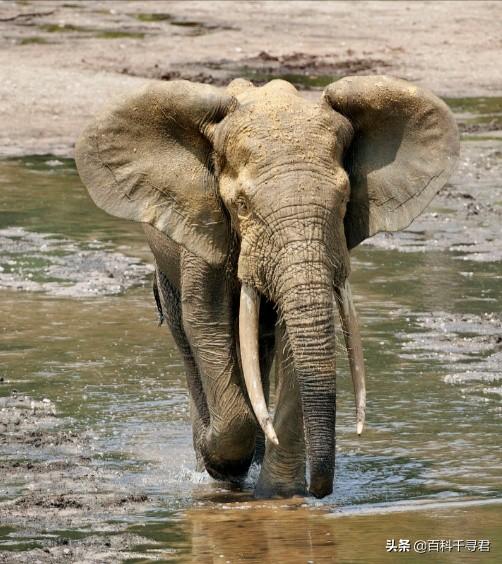
Shoulder height 2.85 meters, weight 6 tons, this is obviously disproportionate, either this elephant is really fat, or the measurement is wrong. Jumbo, an elephant raised in the London Zoo, had a shoulder height of 3.23 meters and a weight of 5998 kilograms. There was also the largest wild female grassland elephant, which was shot in the Merchiston Falls Park on January 16, 1964, with a shoulder height of 2.59 meters and a weight of 3.23 tons. Compare this forest elephant is really fat out of the ordinary.
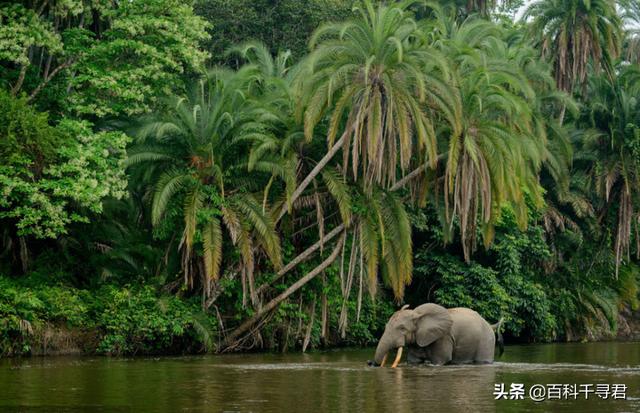
Currently, the number of forest elephants is about 6-10 thousand, the specific situation is unknown, but they are also threatened by poaching and habitat destruction like grassland elephants.