Why are locust plagues sudden disasters? How did they manage to appear simultaneously and in such large numbers?
Grasshoppers are seasonal insects that appear in large groups in dry, warm areas. This is mainly due to lack of rainfall, which causes fewer locust eggs to die, and a large number of locust eggs quickly hatch into adults in the appropriate season.

Locust plagues do not occur suddenly, but are rooted in the previous year. Locusts will mate and lay eggs when the temperature starts to drop. The eggs remain in the soil and survive the cold season with the warmth of the soil. Locust eggs are more resistant to drought, but not to rainfall, which means that locust eggs can be drowned, resulting in locusts appearing in the second year, but mostly just maintaining the population, unable to cause widespread harm. China has ancient records of the number and amount of winter snowfall, which are used to monitor possible locust plagues so that disaster relief tasks can be carried out in time to address food shortages. Currently, locust plagues in Africa and India are mainly due to drought, locust eggs have not been killed, and now in Africa and South Asia, the temperature is suitable and relatively dry throughout the year, causing more locust eggs to hatch and survive. Imagine the scene of a large number of locust eggs hatching quickly.
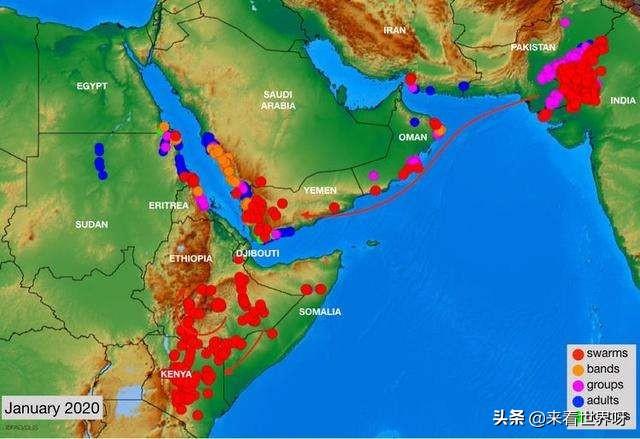
This is a good example of species evolution. Although locusts are large in number and cause many harms, such as in some places in Pakistan, crops may be reduced by 40% and locust plagues are difficult to eliminate because of their large numbers, which quickly damage vegetation, and then they fly aimlessly to suitable environments, causing great harm. However, they are still insects and can be caught by birds or carried away by lizards, so their strength is very weak. They survive by relying on such a large number and have a close relationship with changes in the natural environment. Therefore, they are typical opportunistic survivors that rely on numbers to feed predators, then rapidly reproduce, and maintain their population by reproductive capacity, and use the accidental nature of environmental changes to cause explosive growth and continue to evolve and reproduce in the competition for survival in the natural environment.
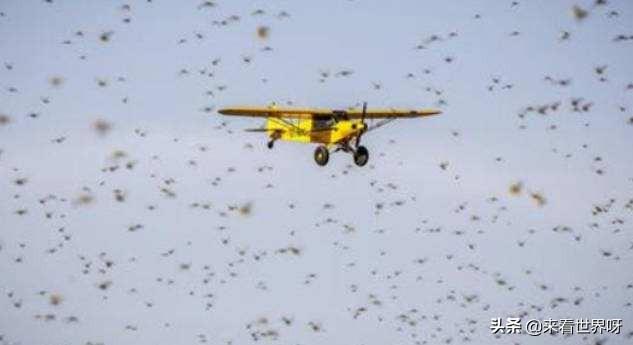
The environment in different regions of the world is different, and in recent years, climate change has also caused drought in Africa and India, leading to locust plagues. However, if mechanical equipment is used to spray drugs, the locust plague can be subdued relatively quickly. To long-term manage locust plagues, we need to improve the ecosystem and make locusts still die most of their eggs in seasonal changes, like their ancestors.