Saber-toothed Tiger
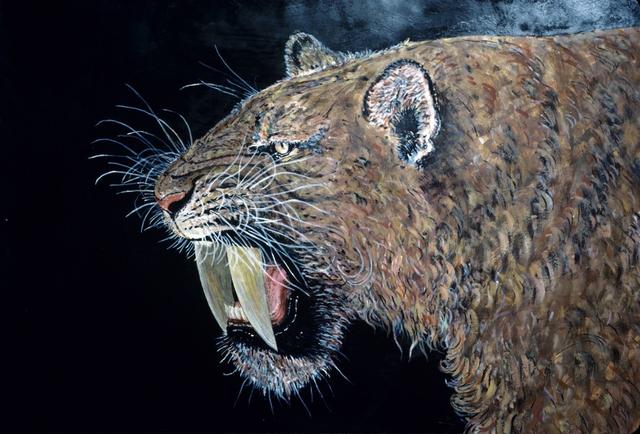
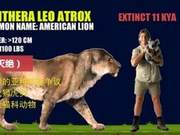
Saber-toothed cats are various species, representing an offshoot in the evolution of large felids, living during the Middle and Upper Miocene and Pleistocene periods. They are classified within the saber-toothed subfamily, the *Smilodontinae* family, and the Felidae family, and include two families of marsupials. They existed during different periods of the Neogene and Quaternary, each evolving characteristic saber-like canines. Their upper canines can reach up to 120 mm in length, even though their mouths are closed, the canines are still clearly visible. Saber-toothed cats are generally bulkier than modern cats, like bears. Most saber-toothed cat subfamilies preyed on large herbivorous animals. Saber-toothed cats went extinct during the late Middle Pleistocene, leading to the evolution of machairodendras. The La Brea Tar Pits in Los Angeles, California, is one of the most unusual fossil sites in the world, where over 2,000 specimens of *Homotherium* fossils have been found, providing a deeper understanding of saber-tooth cats.
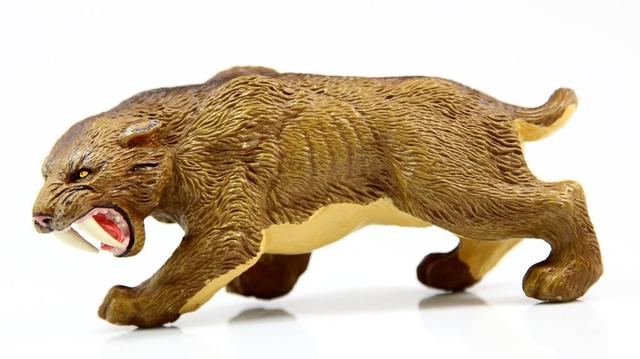
Saber-toothed cats existed from the early Middle Miocene to the Late Pleistocene. It is a branch in the evolution of large felids, most famously the genus *Homotherium* which lived approximately 3 million to 100,000 years ago in the Pleistocene and Holocene periods, coexisting with the evolution of humans for nearly 300,000 years. The body size of saber-toothed cats was close to that of modern tigers, and some *Homotherium* members were about the size of lions. However, their upper canines were much larger than those of modern tigers, even larger than the tusks of wild boars, resembling short, curved swords. “
Canines are used as weapons to kill prey in carnivores. The normal situation is that both upper and lower canines are developed proportionally, allowing them to bite prey together when attacking. However, the upper canines of saber-toothed cats evolved to be extremely large, while the lower canines were relatively reduced, creating an imbalance. This specialized feature was likely designed to target large, thick-skinned herbivorous animals like elephants. With only one pair of long canines, they could be thrust deep into the bodies of prey and maximize the size of the wound, causing massive bleeding and death. To adapt to this, the skulls and muscles of the head of saber-toothed cats also changed, allowing the mouth to open wider and the lower jaw to move at a 90-degree angle or more to effectively utilize the canines. However, this extreme specialization had its drawbacks, namely reducing the environmental and prey adaptability. As the large, thick-skinned herbivores went extinct during the Upper Pleistocene, the slow, clumsy saber-toothed cats gradually lost their purpose, unable to compete with more agile and comprehensively developed general carnivores, and eventually, with the extinction of its prey, it also led to its extinction. The subsequent rise was the modern tiger and other large carnivores.
Saber-toothed cat subfamilies were large in size, with the largest species, the African Giant Saber-toothed cat, standing about 1 meter tall, weighing nearly 300 kg, although not very tall, they had sturdy bodies, especially their forelimbs. Its most striking feature was its two long canines, measuring up to 10 cm, deeply embedded in the upper jaw, almost at the same level as the top of the head; the lower jaw extended downward in a small shield. This shield was helpful in protecting the protruding canines, but it also increased the risk of fractures and infection, and made the head heavier, which to some extent affected the flexibility of movement. “
Some saber-toothed cats are often mistaken for lions with large teeth, such as *Homotherium*, which are very different from lions. The weight of saber-toothed cats is much heavier than that of modern lions. Their hind legs and tails are very short, more like a robust, slim bear. Adult saber-toothed cats weigh about 300 kg-400 kg, feeding on large mammals. “
The La Brea Tar Pits in Los Angeles, California, is one of the most unusual fossil sites in the world. However, La Brea is famous for discovering a specific animal—the deadly *Homotherium*. Two thousand specimens have been recovered, making *Homotherium* the best-known prehistoric cat. “
Saber-toothed cats were prosperous during the Pleistocene, but with the evolution and development of other species, faster and stronger species made it increasingly difficult for saber-toothed cats to hunt, and eventually, they met their greatest enemy—humans. “
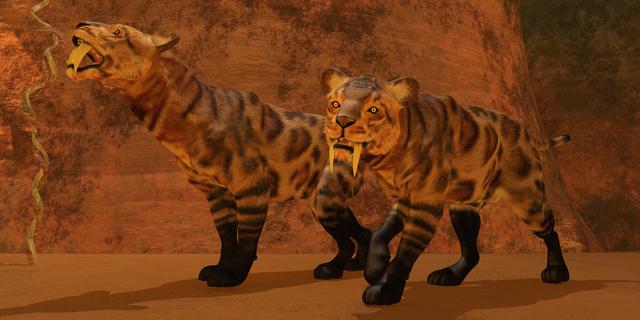
Saber-tooth cats certainly went extinct, coexisting with early humans. Experts believe that the extinction of saber-toothed cats was also due to human influence. Early human ancestors with stone tools were able to confront saber-toothed cats. “
The La Brea asphalt lake preserved hundreds of *Homotherium* bodies, providing a wealth of material for studying saber-tooth cats.
——