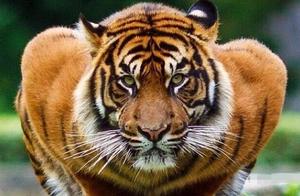
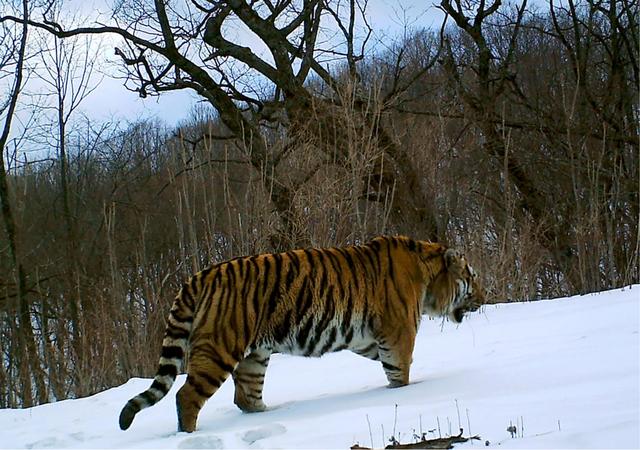
4 Wild Northeast Tigers Spotted in Luoping Taiqinggou Protection Zone, Ending the Tiger-Free Period in Little Xing’anling!
Tiger is the king of beasts, and the 'wang' (king) stripes on its head make it feared by all. Because it mainly lives in dense forests, it is also known as 'king of the forest'. As of today, the tiger is the largest and most ferocious land predator. Tigers originated approximately 2 million years ago in China, but gradually spread to other areas of Asia and evolved into 9 subspecies, namely the South China tiger, Northeast tiger, Bengal tiger, Indochinese tiger, Malayan tiger, Sumatran tiger, Caspian tiger, Javan tiger, and Baluchistan tiger.
The Return of Wild Northeast Tigers
However, due to the influence of human activities, the Caspian tiger, Javan tiger, and Baluchistan tiger went extinct, and the current number of tigers remaining is not optimistic. As the number of tigers decreases sharply, humans finally realized the preciousness of tigers, and countries began to take measures to protect tigers, and tigers were listed as protected animals, and protective areas were established in areas where tigers were active.
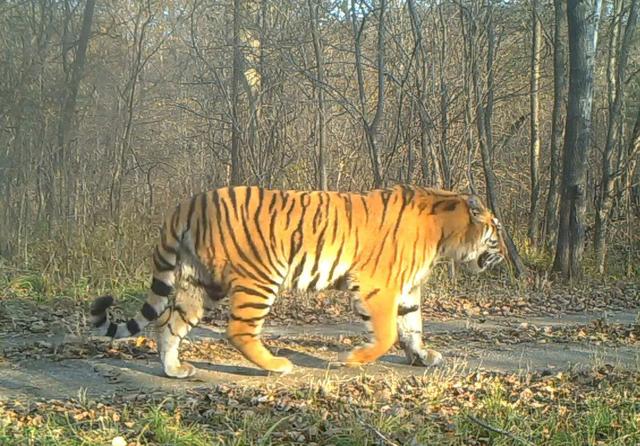
Jilin Hunchun's Wild Northeast Tigers
For example, China, although it has the most subspecies in the world, with 4 subspecies, the number is very small, and the South China tiger is extinct, and can only be seen in zoos. Currently, the situation of Northeast tigers is the best, Northeast tigers are currently the largest subspecies among the 6 subspecies, with male body length up to about 3 meters and tail length about 1 meter, and the average weight of adult males is 250 kilograms, reaching about 350 kilograms.
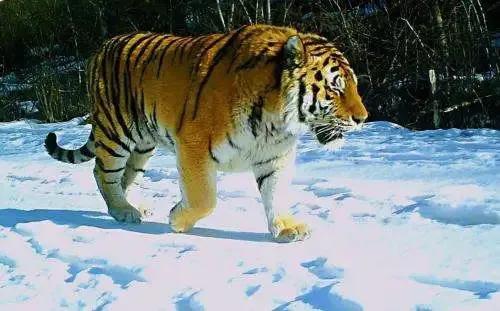
Wild Northeast Tigers once almost went extinct, especially after the Qing Dynasty, over 100 years, with the large-scale population migration north, it disrupted the balance between people and nature. At that time, people even considered Northeast tigers as one of the 'three pests' and carried out many hunting actions against Northeast tigers. To avoid human hunting, the remaining ones could only escape to the opposite Russia. Fortunately, the Far East region of Russia is sparsely populated, which avoided the extinction of Northeast tigers.
Finally, Little Xing'anling's lack of tigers is over
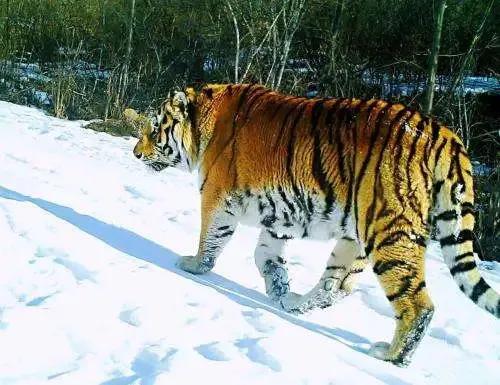
In recent years, with the environment and vegetation in Northeast China gradually recovering, Northeast tigers have begun to return to their original homes. Jilin Hunchun City, due to its proximity to Russia, has become the main activity area, and the current number has reached 30. Recently, 4 wild Northeast tiger footprints were discovered in Little Xing'anling Luoping Taiqinggou Protection Zone, and related high-definition image materials were successfully captured, which not only ended the lack of tigers in Little Xing'anling, but more importantly, it has a very positive effect on the recovery of the Northeast tiger subspecies, which is really exhilarating!!!
304