Take a Look at the Different Worlds Seen by Animals, Which is Quite Amazing
Now, there are millions of people who live with dogs, cats, and goldfish. We observe them and their movements. But have you ever wondered how they see the world? Have you ever thought about the differences between the world seen by non-human animals and humans? Vision is very important for all species, and today, Jerry will introduce you to 7 different worlds seen by animals in nature.
1, Snake
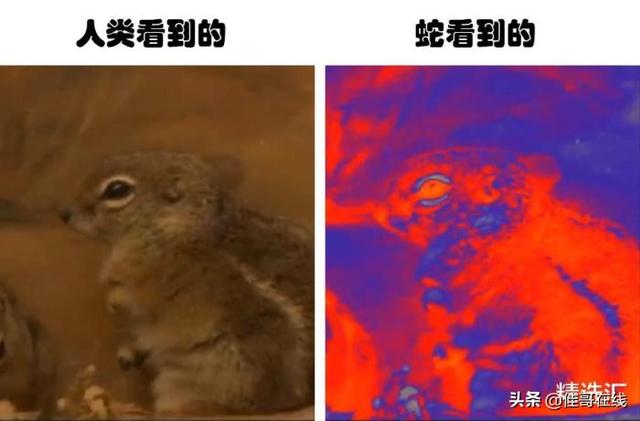
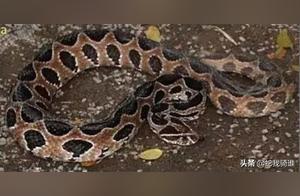
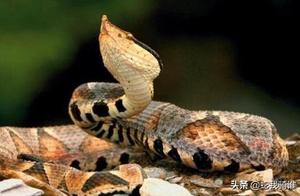
Some animals, such as snakes, cannot see colors as humans do. Snakes that spend most of their time underground have small, simple eyes, and their vision is not good. Snakes that live on the ground need to use their vision to hunt, with very clear vision and good depth perception. Certain types of snakes, such as pythons, have an 'indentation organ' on their heads, which allows them to see heat sources. Therefore, they essentially have their own pair of built-in infrared goggles.
2, Cow
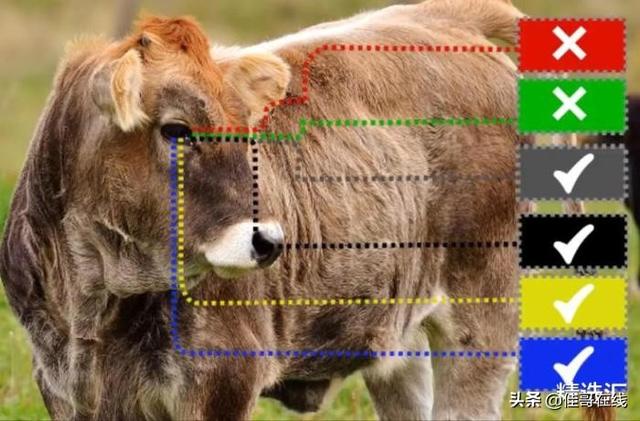
Cows seem boring, and most cows see a limited number of colors because they are red-green colorblind. They see most colors as gray, black, yellow, and blue. Unlike humans, humans have three types of cones, while cows have only two.

Of course, cows also have what is called 'full-field vision,' which means they can see everything all around. Cows can see a field of vision of 300 degrees with just a small blind spot area by moving their eyes.
3, Birds
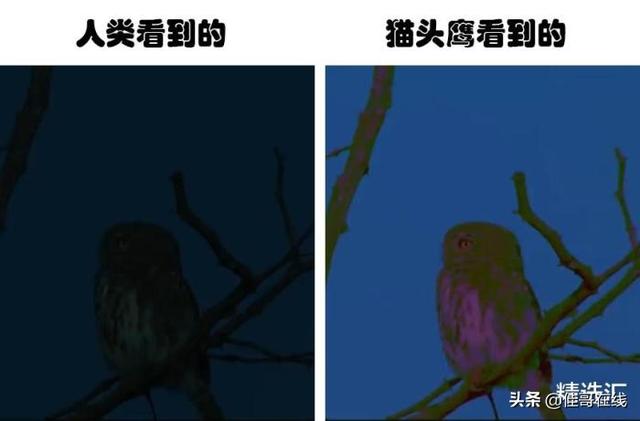
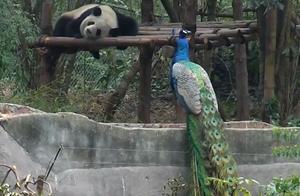
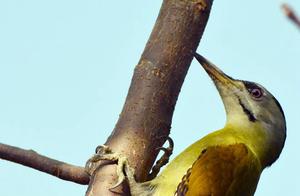
Compared to their size, their eyes occupy a large proportion, unlike humans, humans have three types of cones, but birds have four. Therefore, they can see many colorful colors in the ultraviolet spectrum. Interestingly, many birds can quickly change their eye status, because they have a third transparent eyelid. Therefore, some raptors basically can see things like cameras, with both macro lenses and zoom lenses. They can focus on multiple things at once. Some birds even have special eye abilities. For example, owls, nocturnal birds, have tubular eyes instead of spherical eyes. This allows more light to enter their eyes, providing clearer images. This makes their eyes particularly suitable for nocturnal hunting.
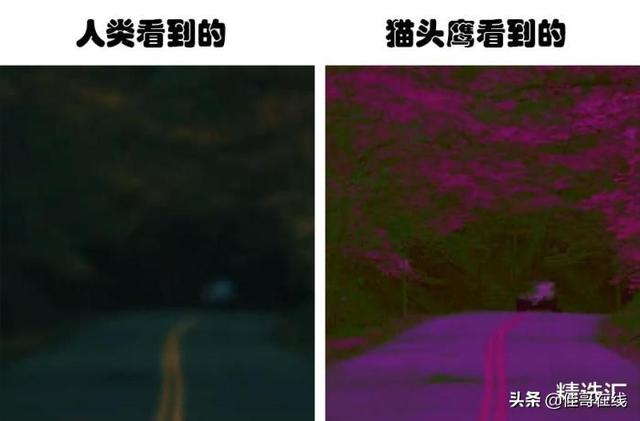
Some seabirds even have red or yellow areas in their eyeballs, which allows them to see things in hazy conditions.
4, Horse

Among all terrestrial mammals, the horse has one of the largest eyes. Because their eyes are on the sides of their heads, their field of vision is larger than that of a cow. They can see a range of 350 degrees without turning their heads. Horses usually only see two colors, namely blue and green. This is why when training horses to jump over obstacles, the obstacles are always brightly colored and contrast strongly with the ground.
5, Frog
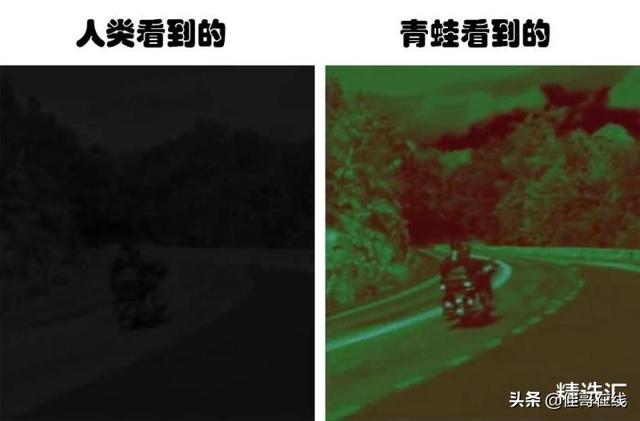
Compared to humans, frogs are nearsighted because they cannot see so far. Their eyes are very sensitive to movement. Therefore, if the frog's prey doesn't know it, the frog won't notice it. They also have excellent night vision because there is a layer like a mirror behind their eyes. Frogs can detect the degree of color. However, in the environment around them, they can detect different shades. In fact, they can even detect color in dark conditions, while most animals can only see gray shadows. If a frog's eyes are damaged, it seems that some structures can be regenerated. Scientists believe that by studying the eyes of frogs, they can find a way to solve some of the vision problems in humans.
6, Chameleon
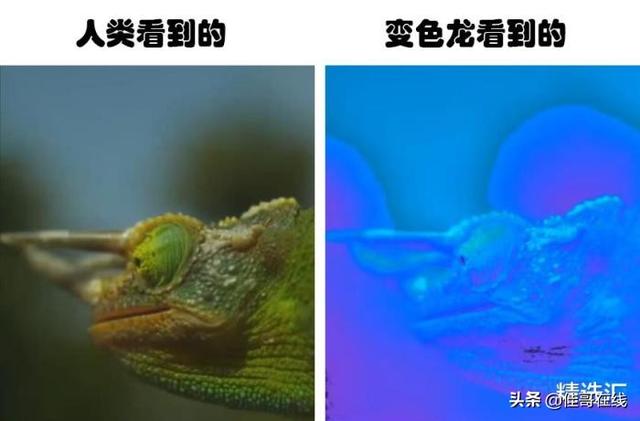
Like birds, chameleons can see all the colors we see, as well as the colorful colors in ultraviolet. Most interestingly, chameleon's single eye can be rotated independently, which means it can observe two objects at the same time. At the same time, on different levels, they can focus their gaze on different objects.
7, Goldfish

Although research shows that the highest acuity of a goldfish is still half that of humans. However, science tells us that fish's eyes are similar to humans, but there is a protective film above their eyes, so they can see things more clearly underwater. Their eyes have rod cells and cone cells in the retina, so we know they can see colors and gray, light and dark shades. Almost all fish have a certain degree of night vision. Our eyes contain chemicals that allow us to see color and different spectra. Fish's eyes contain these same chemicals and other chemicals, so they can also see some ultraviolet frequencies.