Red-Crested Pochard Makes Its First Appearance in Jiangbei, Attracting Birdwatchers from Other Places
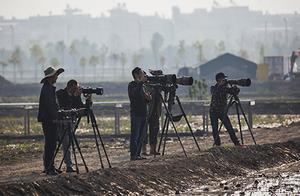
Yangzi Evening News reported on January 22nd (reporter Mei Jianming, correspondents Wu Jiemin) As the saying goes, spring river warms, ducks know first. Recently, Nanjing bird enthusiasts have spotted red-crested pochard sightings in Nanjing Jiangbei New District. The red-crested pochard is charming and cute, attracting much attention from bird watchers from other places.
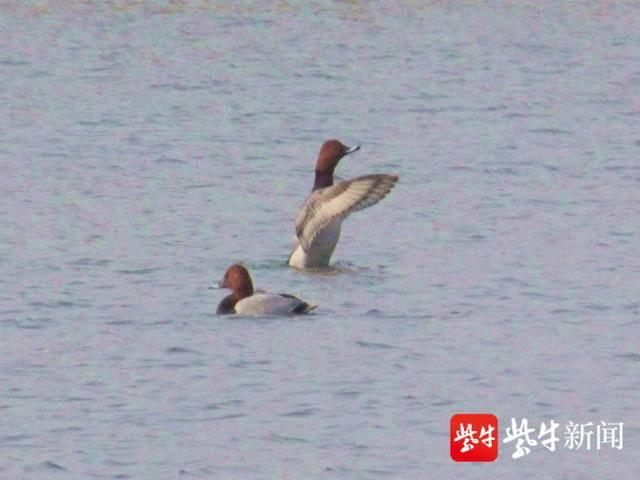
Red-crested pochard first appeared in Jiangbei.
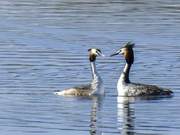
“It’s really rare that so many red-crested pochards have been found in Jiangbei for the first time this year!” Citizen Hu told reporters excitedly, “These red-crested pochards are in flocks and play in the river, sometimes flapping their wings and calling, sometimes diving their heads into the water to forage, and sometimes flying in the air, adding to the beautiful Jiangbei provincial green water bay wetland.
Roughly counted, there are about 50 red-crested pochards, which delighted many onlookers. The red-crested pochard male has a chestnut-red head and upper neck, brown-black chest and lower neck, and gray feathers with black wavy patterns on the shoulders, back, and wings.
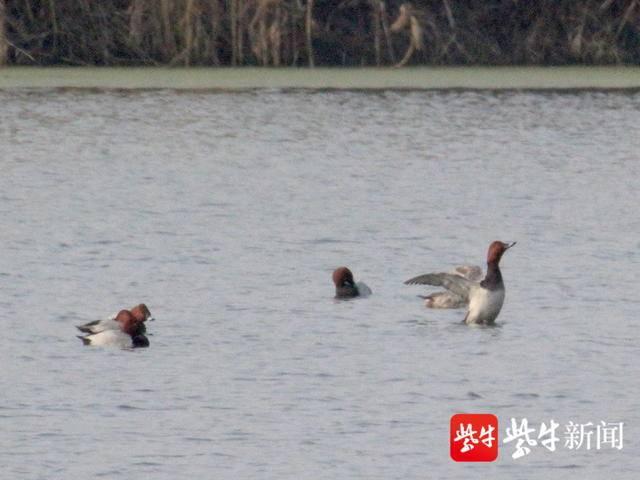
Red-crested pochard first appeared in Jiangbei.
It is estimated that recently the warm winter has made this habitat suitable for waterfowl to live, thus attracting this flock of red-crested pochards. With the improvement of the green water bay wetland environment, the number of bird species flying into the wetland is also increasing.
It is reported that the red-crested pochard mainly inhabits open lakes, reservoirs, ponds, river bays with aquatic plants. It often appears in winter in slow-flowing rivers, river mouths and bays. It often gathers in flocks, especially during migration season and winter, and sometimes gathers in large groups. It sometimes mixes with other ducks. There are only sporadic observations in China.
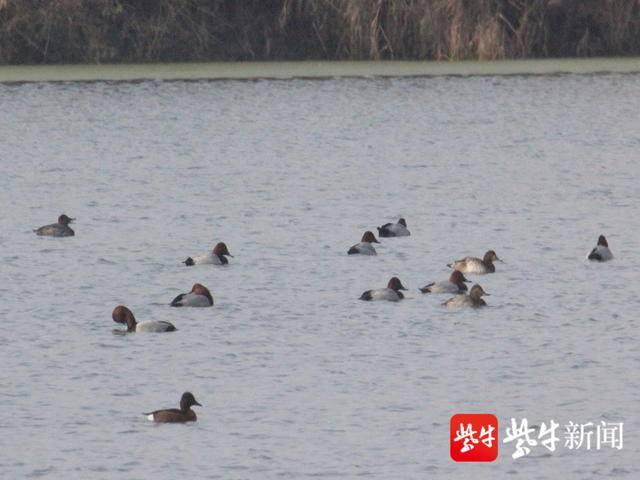
Red-crested pochard first appeared in Jiangbei.
Red-crested pochard is listed in the “List of Wild Animals of Important Ecological Value or with Significant Economic and Scientific Research Value” issued by the State Forestry Administration on August 1, 2000.