Locusts Swarm Over Bahrain, Paralyzing Traffic and Covering Windshields
According to the UK's Daily Mail on February 21st, on February 20th, swarms of locusts entered Bahrain, plunging areas into darkness and causing traffic to grind to a halt.
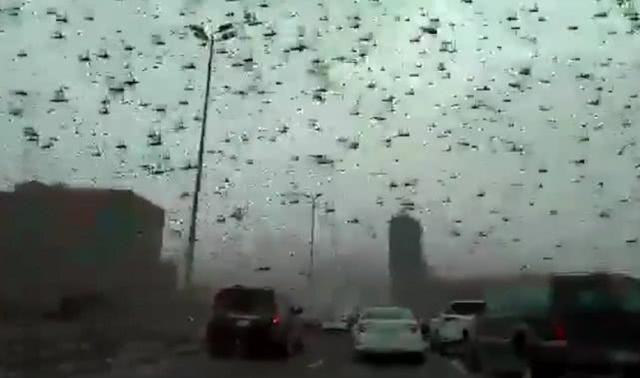
It is reported that this batch of locusts came from Saudi Arabia and has spread from there. Recently, strong winds have enabled the locusts to fly over Riyadh, Mecca and Al-Qassim.
According to Bahrain News, the Bahrain Ministry of Agriculture and Marine Resources said, 'There is no need to panic,' and they are monitoring these locusts in real-time. Experts explained that this locust migration is due to low pressure. Low atmospheric pressure encourages insects to move from Yemen and Oman to Saudi Arabia's Dhaman, Al-Asi and Al-Bagga.

You can see from the videos that a swarm of locusts covered a three-lane highway in Bahrain, darkening the sky and causing traffic to be paralyzed. Some insects landed on windshields, obstructing visibility and causing cars to slow down and drivers to honk in an attempt to drive them away. The scene was described as astonishing and disgusting by onlookers. Other videos posted on social media showed that the locusts invaded gardens and swimming pools as well.
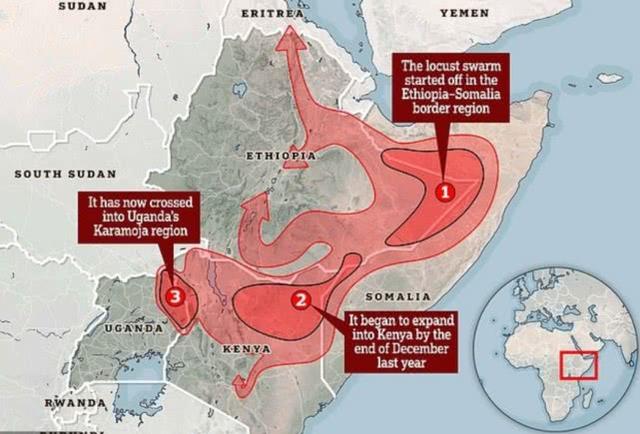
Locust swarm route
These locusts have spread from Africa. They have formed teams as large as Moscow's area. They have already destroyed vast amounts of crops in Ethiopia, Somalia, Kenya, Djibouti, Eritrea, South Sudan, Uganda, Saudi Arabia and Yemen. Now their numbers have increased again, estimated at 360 billion. Experts warn that with the maturation of the locusts' previous team larvae in April, a second locust team may appear.
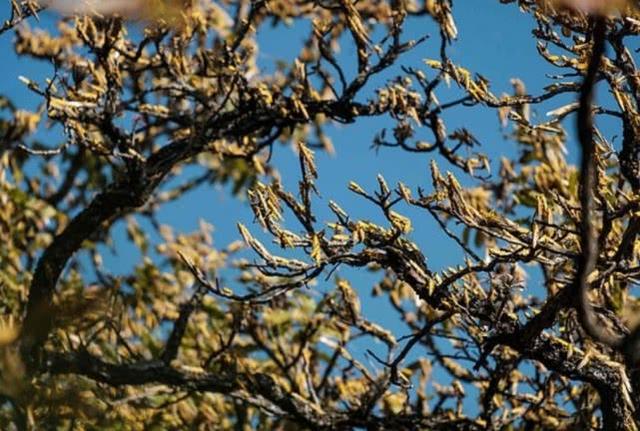
Trees occupied by locusts, taken on February 17th in Kenya
The United Nations has already issued a humanitarian crisis warning and has urgently allocated $76 million (approximately RMB 540 million) to pay for the cost of aircraft and insecticides to control the spread of locusts. Countries have also made deployments, with Uganda even deploying military forces to spray drugs.
Expected fresh vegetation in the coming weeks will bring a burst in locust numbers.
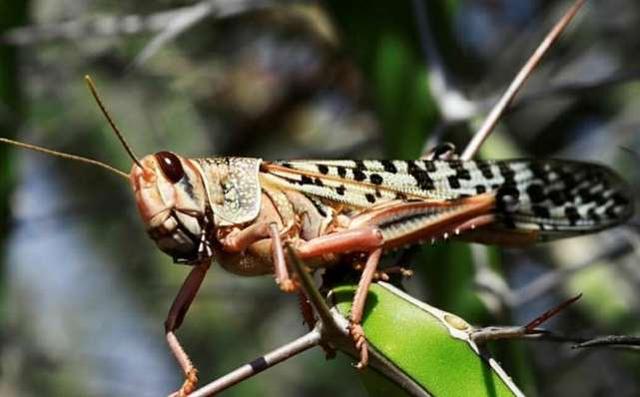
Desert locusts are typically solitary creatures, but they form large groups under the right conditions. Research shows that locust swarms are affected by a chemical called 5-hydroxylamine. Normally, locusts are solitary and do not interfere with each other, but once the level of 5-hydroxylamine in their bodies increases, they will clump together and gather together. Such a change is so great that scientists believe that solitary locusts and swarm locusts are actually two different species.