Stag Beetles – Dynastes
Chaojia (qiāo jiǎ), also known as chao xing chong, belongs to Insecta class, Coleoptera order, Lucanidae family, with outstanding intraspecific diversity and typical sex determination phenomena. Many male species have polymorphism, making it an excellent taxon for studying insect evolution and phylogeny. Globally, nearly 100 genera and more than 1000 species have been recorded ( Fujita, 2010), and in China, 24 genera and more than 200 species have been recorded (Hua, 2002). Due to the fact that some species have large size and peculiar shape, which are loved and collected by the public, and are raised and bred as pets, they have become important specimen commodities, with good economic and cultural value.
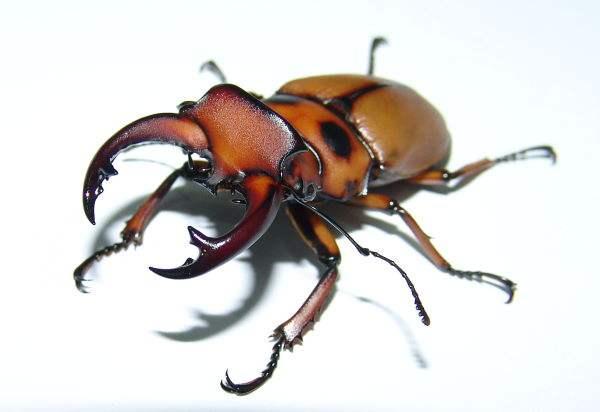
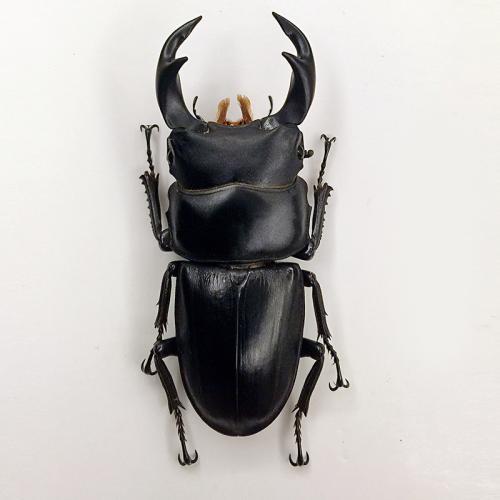
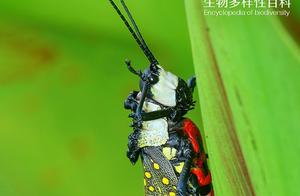
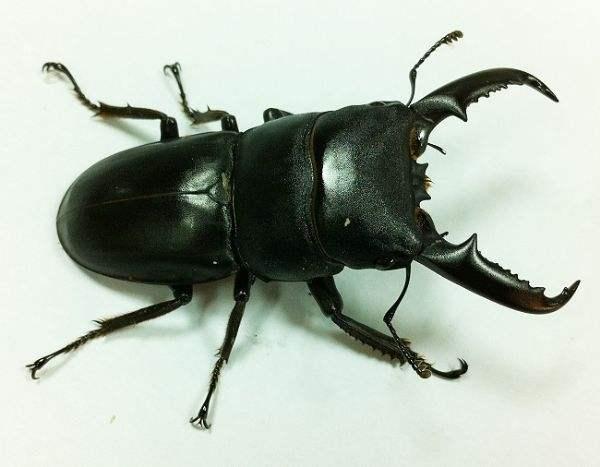
The chao xing chong (chao xing chong) of the Lucanidae family are characterized by their elongated, oval shape, often black or brown beetles with a metallic sheen, with robust skin and males have large, prominent mandibles resembling deer antlers, large and strong heads, and clubbed antennae (as shown in the figure), 11 segments, with the last 3 segments fan-shaped, large compound eyes, the upper lip is not exposed, the lower jaws are hidden below the lower lip, the fore basal joint is closed, the middle foot base joint is broad, the midsternum is short, the hindsternum is large, and the elytra cover the entire abdomen, with 5 segments of the tarsus, the 5th segment is the longest.
The larvae are plump, milky white, and fully grown, turning yellow, similar to stag beetle larvae, but each segment has 3 swellings of pleated folds. They generally live in rotten wood, humus soil, and the larvae have a small movement range, so the development is closely related to the food richness of their surrounding environment. They are commonly found in forested areas.
Complete metamorphosis occurs, involving four stages: egg, larva, pupa, and adult. Reproduction is exclusively sexual between males and females.
Adults feed on sap, forage for nectar, and some have carnivorous habits. The larvae feed on rotting wood and live in tree stumps and their roots, helping to decompose rotten wood and humus, occupying a unique ecological niche, and having potential for developing biological control. Adults mainly come out at night, most species are phototrophic, and some are diurnal.
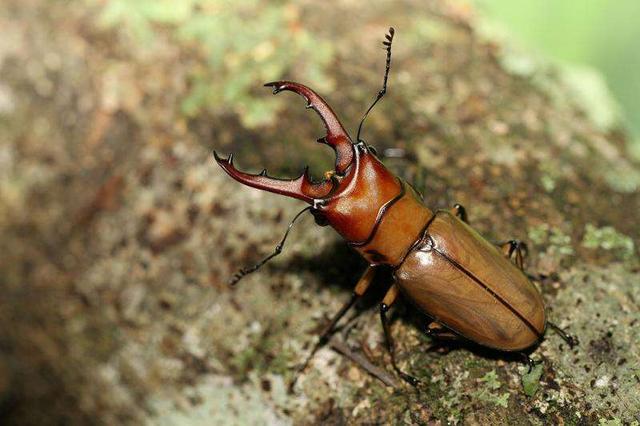
The head of the chao xing chong is commonly used for classification features, which is the morphological difference between different genera and species in terms of the male and female organs, as well as the morphological differences between different individuals of the same male species. This shows sex determination phenomena and male dimorphism phenomena.
The mandibles are the most intuitive characteristic. In males, the mandibles are usually long and strong, often accounting for 1/4 to 1/2 of the body length, with complex large teeth and dense small teeth. The female mandibles are short and less than the length of the head, only with a few small teeth.
Different male chao xing chong have different mandibles and head features, with developed mandibles, the male head has more obvious spikes, ridges, or depressions, and gradually become underdeveloped as they transition to the undeveloped state, presenting male dimorphism phenomena.
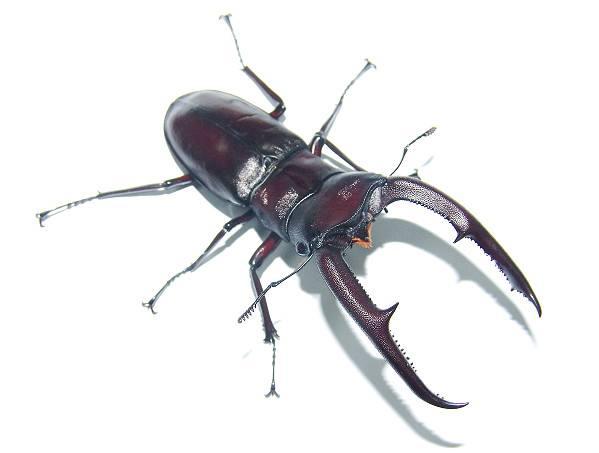
In evolutionary biology, 'large males' and 'small males' are often mentioned. The former is larger in size, has developed mandibles, and uses combat to protect territories and obtain mating rights. The latter is smaller in size, has undeveloped mandibles, and often avoids direct fighting, adopting a sneak attack strategy to approach females for mating.
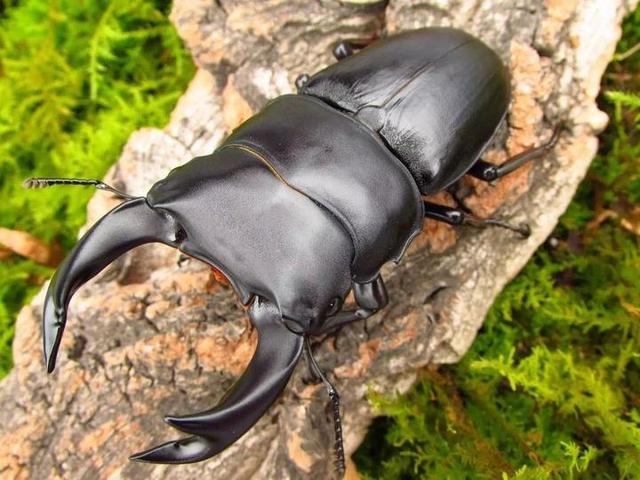
The peculiar mandibles are a typical and important characteristic of the Lucanidae family. The mandible of the larva is used to bite and chew various rotten wood or humus soil; in the adult stage, the male mandible is often abnormally developed, which is considered as a weapon in combat during courtship and mating, and to help grasp the female during mating. The female mandible is short and wide, which is considered as used to pierce tree bark to suck sap or assist in laying eggs.