Who is the 'Climber' of Mammals? Who is the Highest-Living Mammal in the World?
Author: Written by Yu Ziqing
On Earth, organisms are constantly evolving, and their evolution leads to fundamental changes. Generally, organisms in high-altitude areas are scarce, while those in low and mid-altitude areas are most suitable for survival. However, with the evolution of organisms, more and more organisms have broken through our limits of thinking, and may be considered to have exceeded the basic value of science.
Because their survival environment and adaptation intensity have reached a new peak. According to a report by 'National Geographic' magazine, in 2019, scientists discovered the highest-living mammals in the world. Now this limit has been broken again.
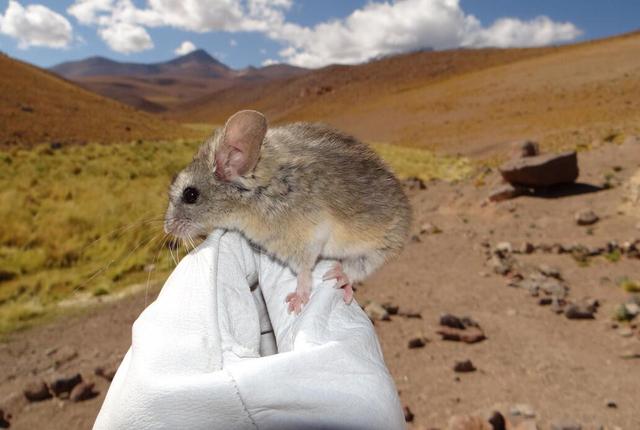
Scientific reports state that in 2019, scientists discovered a yellow drum-shaped ear vole living in the Llullaillaco volcanic region spanning Argentina and Chile, with a living location altitude of approximately 6200 meters. And interestingly, there was little food in this mountain and almost no rain. At such a high altitude, the temperature was below 75 degrees Fahrenheit, how could it survive? It is truly unbelievable. Scientists don't understand why the vole has become so strong for the time being.
And we said above that this is just a data record in 2019. However, during an investigation in 2020 in February, scientists once again refreshed this record. At that time, they were specifically looking for rodents.

And this time the organisms that scientists found were still voles, and this height was far higher than 6200 meters. Scientists encountered another yellow rounded vole on the highest peak of Llullaillaco, with an altitude of about 6739 meters. It's not kidding, directly broke the record announced just in 2019. So rodents like voles may have appeared 'breakthrough' evolution. This study was also published on the bioRxiv journal.
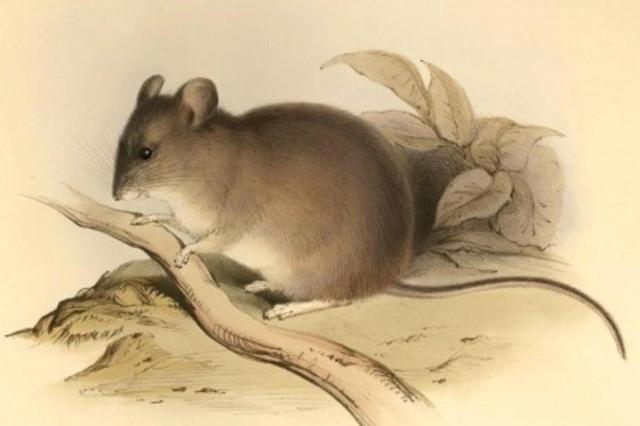
This discovery can indirectly allow us to understand an organism's adaptation to extreme conditions, and can even achieve major breakthroughs in medical applications for humans in terms of low oxygen levels, such as illness, fatigue or altitude reaction. Because it is the first time we have ever seen such an adaptive mammal, and in February's investigation, most of the voles belonged to four different species.
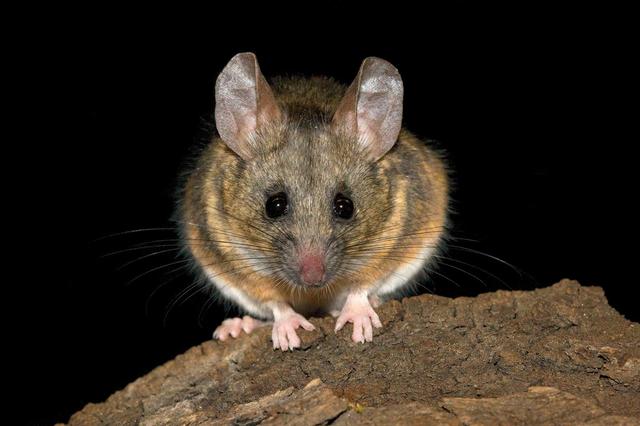
So it seems that most of the voles have 'evolved' in terms of this, and have also become quite strong. This can be considered a 'climber' of mammals, and so far there is no organism that can survive at an altitude of about 6739 meters. Of course, through the study of the yellow ear vole (Phyllotis xanthopygus), we find that they are not only live in high-altitude areas, but can also be found in areas as low as sea level. This is truly an extraordinary discovery. According to Scott Steppan, a professor of biology at Florida State University, no other species can do this.
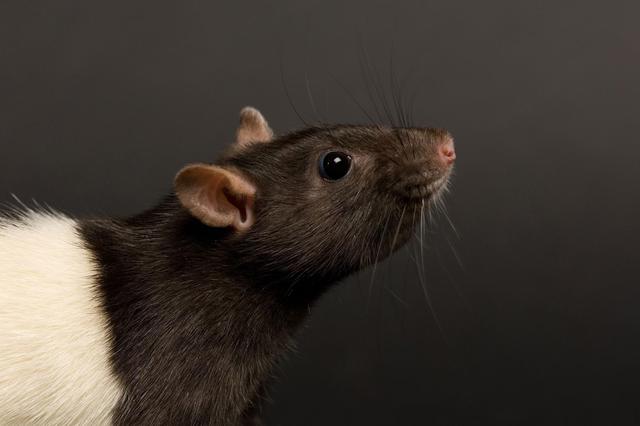
This research discovery also tells us a problem, we have completely underestimated the adaptive ability of some organisms, and many problems have emerged. Above we said that how these voles survived at such a high altitude, what do they eat? This is not the reason. Scientists will continue to study and explore, because this organism has many unknowns. In addition to discovering its habitat is higher, 'National Geographic' magazine has not released some newer content, we can only continue to wait.
Of course, here we need to say that voles are not only the fastest breeding animals in mammals, but also very strong animals.
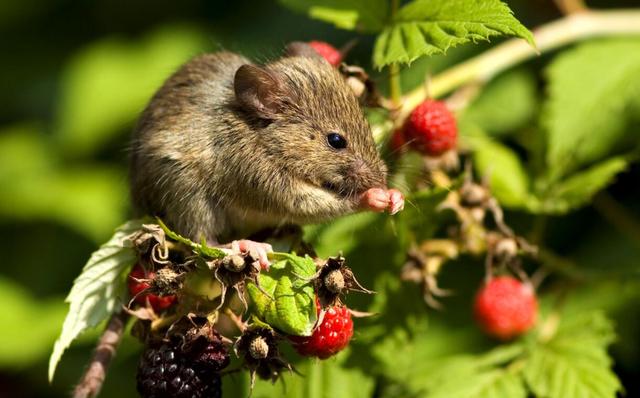
So, survival ability is in the category of voles, which is equivalent to being a strong and adaptable animal with strong survival ability. At the same time, we can see in our lives that the strength of the vole is that it can be seen in the basement of tall buildings and in the top area of tall buildings. What does this mean?
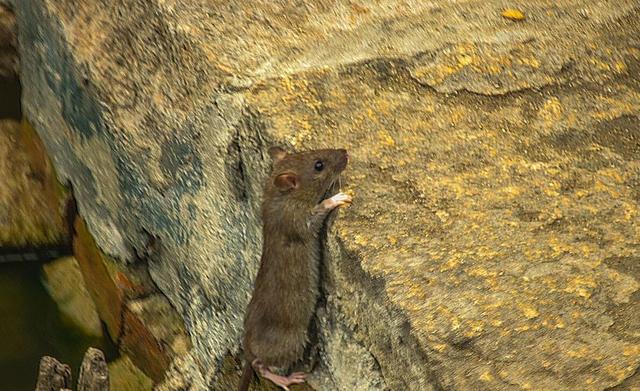
Voles may never be 'natural eliminators', because their survival ability may be beyond imagination. This may be one of the reasons why voles can survive at an altitude of about 6739 meters. But overall, scientists don't know the reason, there is no explanation.