Peregrine Falcon: Speed is Key, Action is Style
The Amazing Animal, Egg Hunt!

Hello everyone, welcome to the Broken Egg Voice channel, and enjoy every wonderful day with Broken Egg,

The fastest bird in the world – Peregrine Falcon
As we all know, the hummingbird is the smallest bird in the world, but what is the fastest bird in the world? This bird is the Peregrine Falcon. We may not be familiar with this bird because Peregrine Falcons are not common in our lives, they don't like to live in groups, and they don't often approach humans. Peregrine Falcons are fierce when hunting, and will dive at their targets at the fastest speed. If we see it at that time, we must not approach it, otherwise we may be injured. Because of its large size and fierceness, the Peregrine Falcon is also the national bird of the United Arab Emirates and Angola. Let's take a closer look at the Peregrine Falcon.
Morphology and Habitat
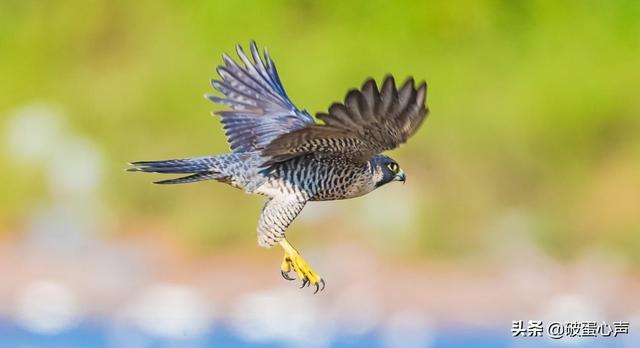
The Peregrine Falcon is the largest falcon in the falcon family. It is also known as the Peregrine Hawk, Duck Hawk, and Blue Swallow. It is a medium-sized falcon that lives in North America. Peregrine Falcons fly very fast. When diving, their speed can reach up to 389 kilometers per hour. This is the fastest bird in the world. However, their straight-line flight speed is very slow, usually 50 to 100 kilometers per hour. At this time, they often fail to hunt.
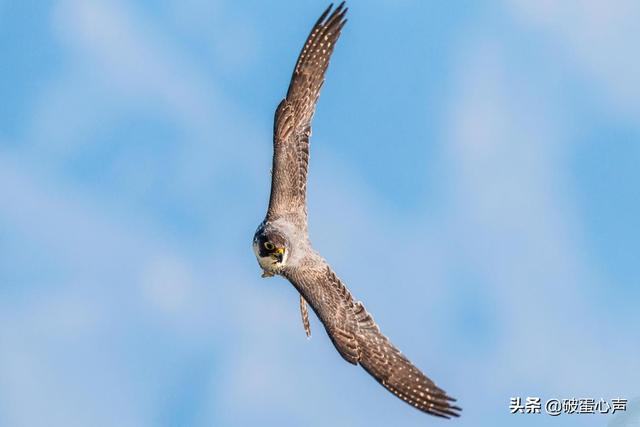
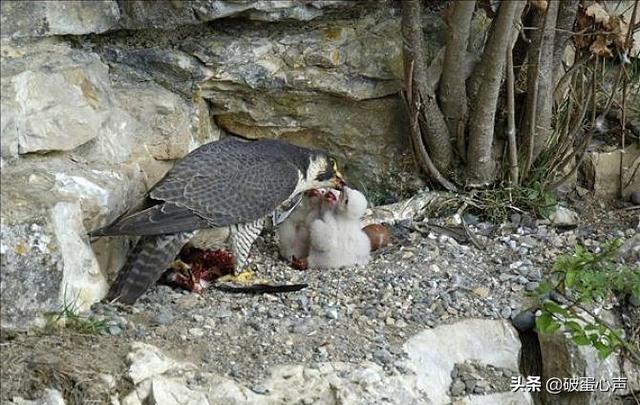
Body length 41-50 cm. The wings are long and pointed, with yellow feathers around the eyes, and a vertical downward black mustache on the cheeks. The head to the neck is gray black, and the rest of the upper body is bluish-gray. The tail has several black horizontal bands. The lower body is white, with black spots on the upper chest, and the lower chest to the tail is covered with black horizontal spots. When flying, the wings and tail are covered with white feathers, which are densely arranged, often interspersed during flapping wings and gliding, and often soaring in the air. It is easily recognizable in the wild. The chicks have a dark brown upper body and a pale yellow-brown lower body, with black-brown vertical stripes on the chest and abdomen. The Peregrine Falcon lives in mountains, hills, deserts, semi-deserts, coastlines, wilderness, grasslands, along rivers, marshes, and lakes. It also visits open fields, cultivated land, and villages. It is distributed widely, almost everywhere in the world, even in the suburbs of New York or near some air force bases. It is a migratory bird in some places in Asia and is subject to strict protection.
Hunting
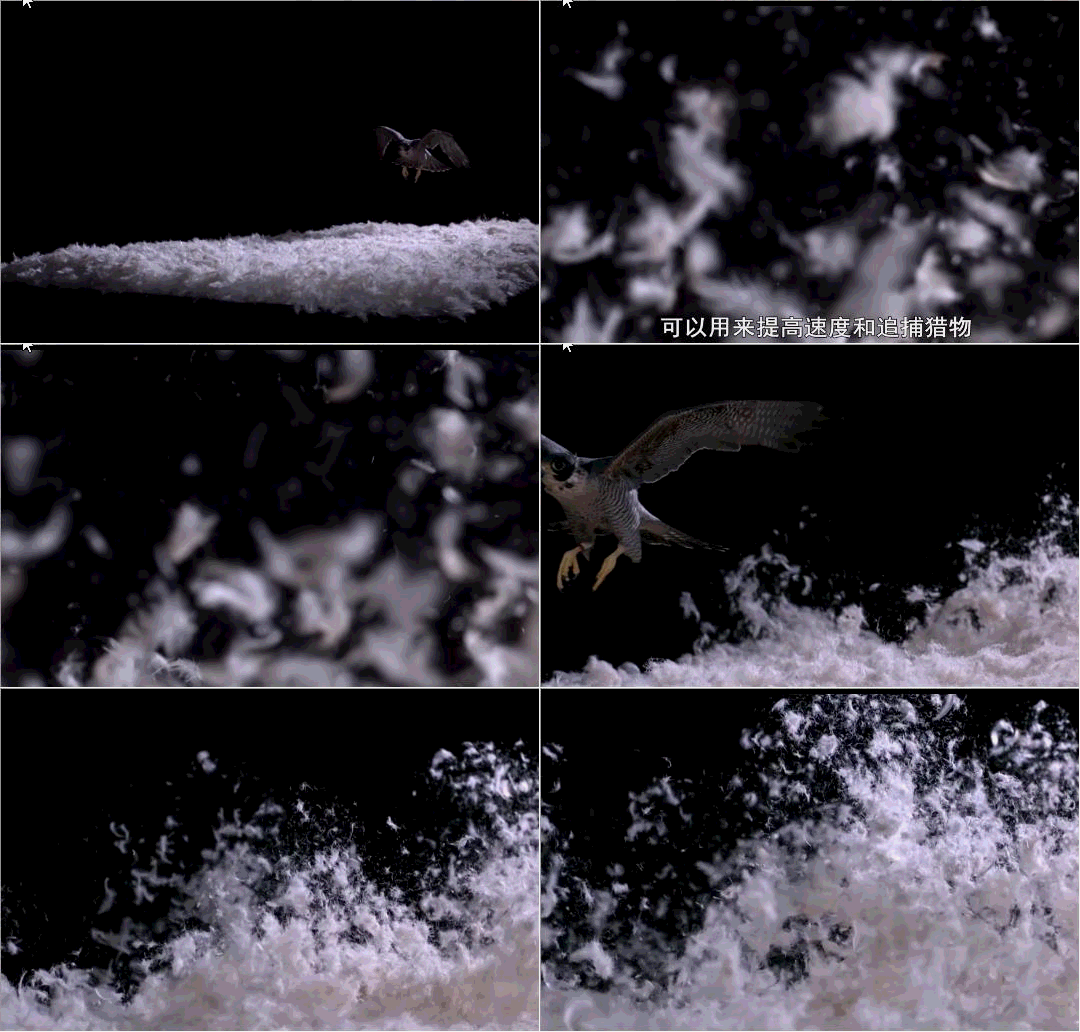
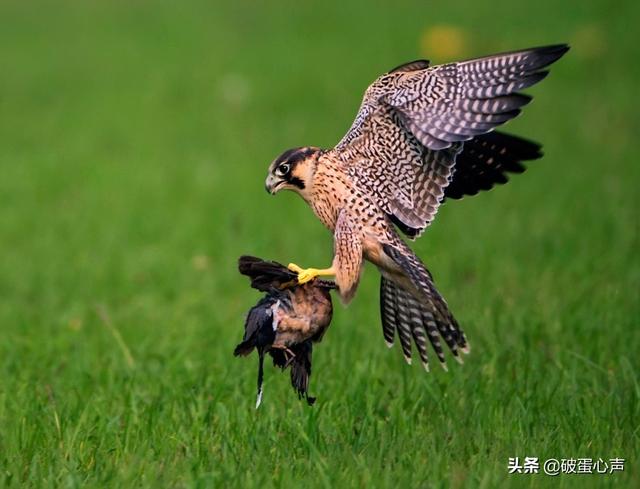
As the fastest bird in the world, Peregrine Falcons fly quickly, and their calls are sharp. Hunting food is the most important skill for birds, and the speed of the Peregrine Falcon is a tool for hunting. Usually when flapping wings quickly and gliding, they also like to soar in the air. They mainly prey on small birds such as ducks, gulls, pigeons, crows, and chickens. Occasionally, they also prey on small mammals such as mice and rabbits. They are fierce in nature and will attack even much larger golden eagles and falcons. Because they mainly hunt in the air, they need faster speed than other birds of prey, so they have a relatively large weight, such as airplanes with narrow wings to reduce drag, and shorter tail feathers. The Peregrine Falcon is also very clever, knows how to wait patiently for prey, and when it finds prey, it will quickly rise to a high position to occupy the high ground, then spread its wings and body axis parallel to the feathers on its wings, retracting its head to its shoulder, at a speed of 75-100 meters per second, at an angle of 25 degrees towards the prey, and then dive down. When approaching the prey, they slightly open their wings to bite through the prey's backbone with sharp beaks, and at the same time use their hind toes to strike, making the prey injured and lose its ability to fly, and when the prey falls, they quickly rush to the prey and grasp it with their claws. This whole process is like a computer controlling, extremely fast and accurate. Finally, they take the prey to a more hidden place, hold it with their feet, peel off the feathers, and tear it into small pieces to eat. Sometimes they also hunt on the ground. To adapt to this hunting method, their tarsal pad has become short and thick, and their toes are thin and long. This is how they hunt.
Status and Protection
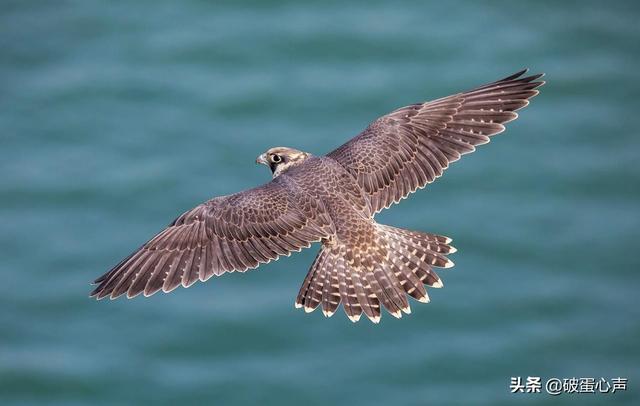
In countries such as Britain and Europe, due to the use of chlorine-containing seed fertilizers, the number of top predators such as Peregrine Falcons, Eagles, Red Falcons, and Sparrow Hawks has decreased in the food chain. These toxic chemicals have accumulated in the prey's bodies, which eventually poisoned Peregrine Falcons and other predators, causing their eggs to become thin, easily cracked during incubation, leading to infertility and deformed chicks, and ultimately the death of many chicks and adults. In addition, the number of Peregrine Falcons is severely threatened and declining worldwide. The main reason for this phenomenon is the widespread use of pesticides. Peregrine Falcons prey on hunted animals with accumulated pesticides, which damages their reproductive system, reducing egg laying rate and embryo survival rate. More seriously, trace amounts of pesticides have been detected in the brains of Peregrine Falcons, which is a potential threat to the Peregrine Falcon's highly developed movement regulation system. Once the pesticide level in the brain reaches a toxic level, the Peregrine Falcon will no longer be able to hunt effectively, and it may even have difficulty flying. In the United States, Peregrine Falcons are considered to be on the verge of extinction, and many scientists are working hard to save and protect them.
The status of Peregrine Falcons cannot be ignored. We must take action. Human activities have reduced the number of Peregrine Falcons, so we must take action from the root. We should advocate for green fertilization and sustainable development. People often prioritize short-term benefits, but ignore the harm to future generations. For some profits, plants are frequently sprayed with pesticides to quickly grow and mature, resulting in decreased yields. These pesticides accumulate in plants and are then passed on to other animals through the food chain, eventually poisoning Peregrine Falcons and humans. Therefore, we must advocate for green fertilization and spread awareness about this concept. One person's action can lead to others joining in, and we can all work together to create a beautiful world.