Simple Introduction to Yellow-Rimmed Mud Turtles
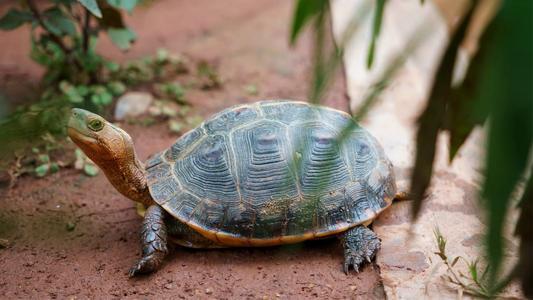
Yellow-rimmed mud turtle, also known as the broken board turtle, is a semi-aquatic turtle.
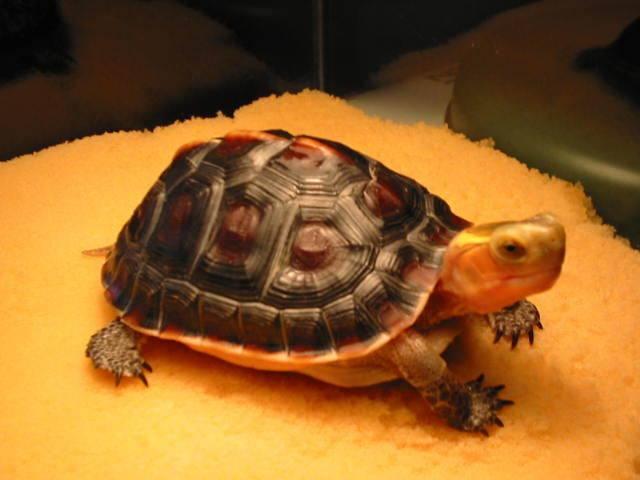
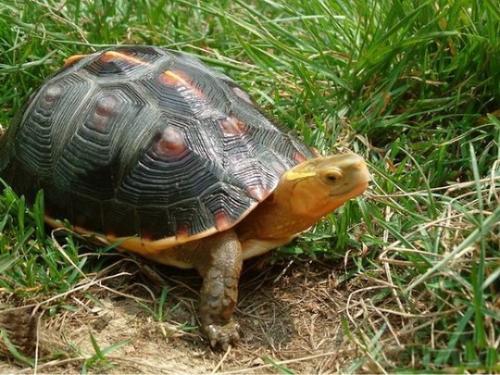
The head of the yellow-rimmed mud turtle is smooth and scaleless, with a flat snout and a prominent curved hook on the upper jaw, typically of the Anura type. The bone plate is round and clear, with large eyes and a wide golden yellow arc behind the eyes. The carapace is brown red or brown, prominently raised, with a yellow-waxed spinal ridge in the center, and the carapace scales have obvious concentric rings. The plastron is flat and rounded on both sides, with a brown black or brown-black color, with a fresh rice yellow outer edge and flank shield. There is a transverse groove on the middle of the plastron, which divides the plastron into front and rear halves. When the head and limbs are retracted into the shell, it completely closes. The limbs are flat and covered with scales, with half-webbing between the toes, and the tail is short.
What is the habit of Yellow-rimmed mud turtle?
In its natural state, the Yellow-rimmed mud turtle lives in the edges of hills and mountains in forests, in grasslands and shrubbery, under tree roots and in crevices, in relatively safe places. The habitat is often close to water, it likes to live in groups, and you often see multiple turtles in the same cave. The Yellow-rimmed mud turtle is very docile, and rarely fights among its own kind. When encountering enemy threats, it will retract its head and limbs into its shell for defense. In spring and autumn, when the temperature is around 20℃, it usually appears during the midday. In the hot summer, it mostly appears in the morning and evening. It likes to bask in the rain. When the temperature is below 19℃, it stops eating. When it is below 15-13℃, it begins to hibernate.
The Yellow-rimmed mud turtle has a diverse diet, mainly feeding on insects, earthworms, centipedes, and even small snakes, and also eats fresh plant stems. In artificial breeding, it likes to eat meat.
The Yellow-rimmed mud turtle tends to live on land, so when setting up the environment, the ratio of land to water should be separated, the land area should be larger, and there should be a cave for the turtle to feel safe.