As this bird, which is extinct in Japan, Korea, and other regions, now only protected in China.
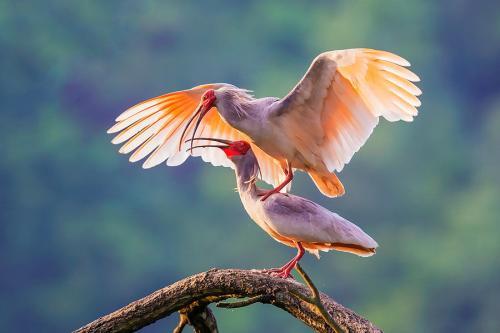
White-bellied Green Heron
White-bellied Green Heron
Formerly known as 'Red Heron' or 'Chinese Egret', it is a species of the White-bellied Green Heron, endemic to East Asia. It is a medium-sized wading bird with white plumage, a long, willow-shaped crest at the nape of the neck, and bare, reddish skin on the forehead and face. During the breeding season, it uses its beak to repeatedly peck and apply a gray pigment secreted from the muscles of its neck to its head, neck, upper back, and wings, turning it into gray-black. It inhabits wooded areas at an altitude of 1200-1400 meters, prefers to wade and walk in nearby streams, marshes, and rice paddies to forage for small fish, crabs, frogs, snails, and insects; it rests and sleeps on tall trees; it is a resident bird, and in autumn and winter, it forms small flocks and wanders over low mountains and plains. Nesting begins in April-May, with one clutch of 2-4 eggs produced annually, which are incubated by both parents. Incubation lasts approximately 30 days, and fledging occurs around 40 days of age. It reaches sexual maturity at 3 years old, with the longest recorded lifespan reaching 37 years.
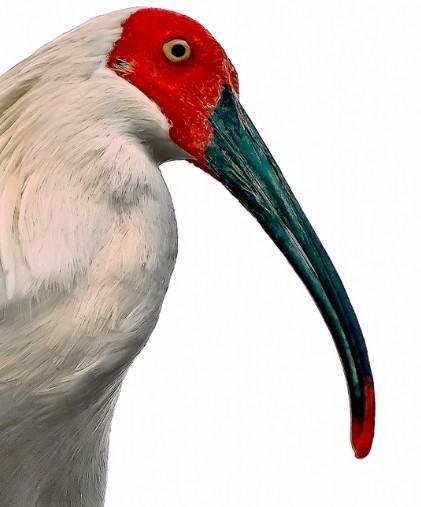
Known as the 'Oriental Gem', the White-bellied Green Heron was once widely distributed in eastern China, Korea, Japan, and Russia. At that time, the White-bellied Green Heron was a relatively common animal. However, due to environmental pollution, ecological destruction, and other factors, the population declined sharply, and it was once on the verge of extinction.
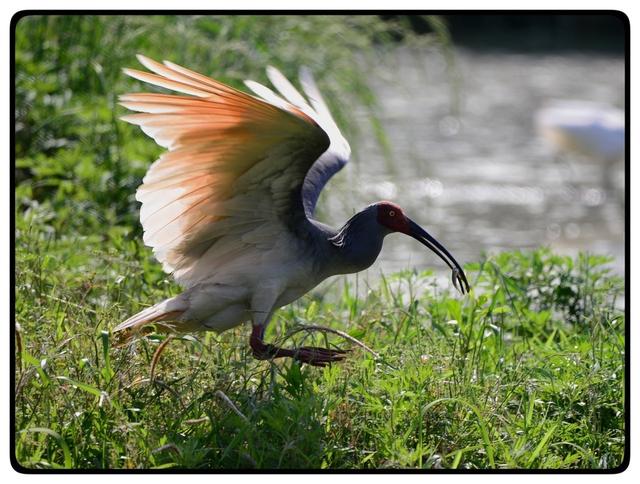
In 1963, the White-bellied Green Heron disappeared completely from Russia.
In 1975, the last White-bellied Green Heron disappeared from the Korean Peninsula.
In 1981, Japan captured the last 5 wild White-bellied Green Herons for artificial breeding to prevent their extinction, but to no avail, and the last White-bellied Green Heron died in Japan in 2003.
White-bellied Green Herons were not seen in China from 1964 to the following 14 years. Fortunately, in 1981, 7 wild White-bellied Green Heron populations were discovered in Qinling Mountains, south of Yanguan County, Shaanxi Province, China, where they were in the chick-rearing period, with two pairs of adults and three chicks. This major discovery rekindled the hope of reviving the White-bellied Green Heron population.
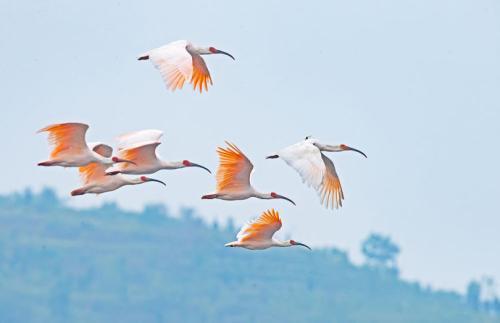
'Oriental Gem's' Rescue Road
To prevent chicks from falling and to protect against accidental attacks by predators such as snakes and, the 7 White-bellied Green Herons in their nesting trees were immediately subjected to 24-hour strict monitoring and supervision. In addition, people tried to expand the protected area around the nest tree to the greatest extent possible, and all non-related human activities within this area were strictly restricted, and the state was responsible for compensating local farmers for any losses. Later, after learning from the experience of other countries, Chinese researchers adopted a combination of natural breeding and artificial breeding, and some people's White-bellied Green Herons were artificially bred and released into the wild. As a result, the White-bellied Green Heron population in the local area increased year by year. By 2005, the first White-bellied Green Heron protection zone was established in Qinling Mountains, Shaanxi Province, which stabilized and improved the White-bellied Green Heron population, although the wild population was still small, artificial breeding had achieved considerable results. Currently, the situation is slightly better than that of the South Asian Tiger. There are now more than 3000 in Shaanxi Province's Qinling Mountains.
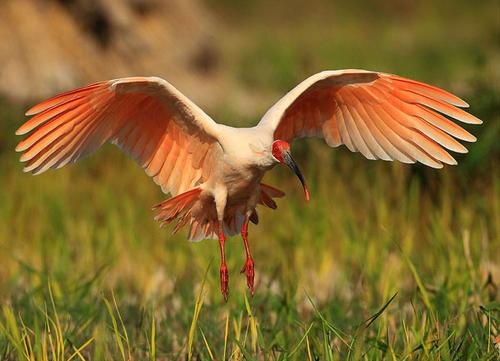
This 'ancient bird' which lived approximately 6000 million years ago, almost extinct 40 years ago, has experienced many thorns and difficulties along the way, from 'discovery' to 'near extinction' to 'protection' to 'breeding' to 'rebirth'.Finally, from 7 in 1981 to more than 3000 in 2020...This 'miracle' has achieved complete success in the rescue work, which delighted the entire world.
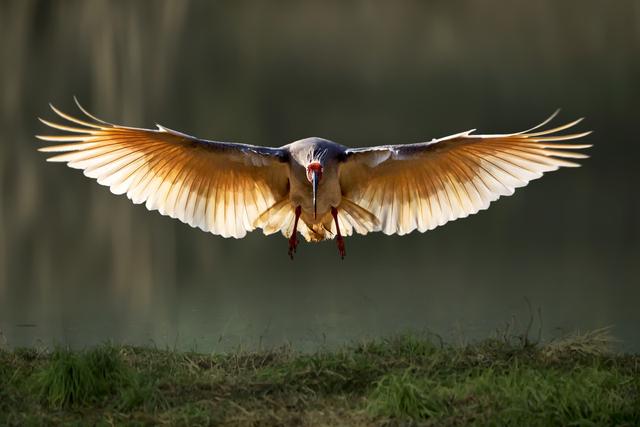
Rebirth