Africa Coffee Producing Countries Guide | Besides Kenya and Ethiopia, what other African countries produce coffee?
Coffee cultivation is mainly located between the north and south, mainly grown in Africa, Central America and Asia across the intertropical region. Among them, coffee in Asia is mainly characterized by herbal spices and flavors, while in America it is mainly balanced flavors, and in Africa it is generally fruity acidity.
In coffee shops, we commonly see Ethiopia and Kenya, which are representative of African coffee beans. So, besides these two coffee-producing countries, what other places in Africa produce and output coffee?
Here we will share about African coffee producing countries.
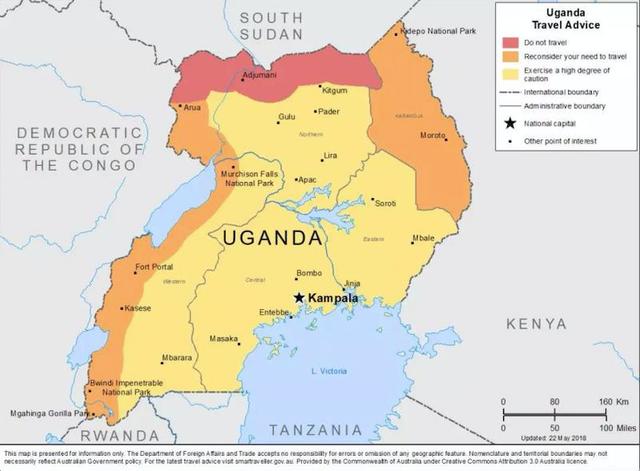
Uganda
Uganda is located at the source of the Nile River, a landlocked country in Africa without access to the sea. Although it has a coffee production history as long as other East African countries, due to racial conflicts, the coffee quality has never improved. The good coffee is widely planted in areas adjacent to Kenya, and some good coffee beans are shipped to Kenya for mixing and selling as Kenyan coffee until the 15-year-long war stopped, Uganda has finally risen as a rapidly developing coffee country.
Uganda has dense, green forests, lakes, wetlands, and abundant river water resources. Coffee is the largest crop in Uganda, with approximately 500,000 coffee farms employed by about 25% of the population, mainly Robusta coffee trees, accounting for about 94% of the coffee cultivation in Uganda, with only 6% being traditional Arabica trees. These rare beans grow in tropical rainforests and are mostly exported to various countries in the world.
Burundi
Burundi's coffee was introduced and planted in the 1930s by the colonial mother country Belgium, but Burundi did not have a coffee planting history. However, with fertile soil, excellent growth conditions, and then supplemented by the excellent cup of 2012, which has prompted more and more farmers to plant this crop over the past ten years, and Burundi's specialty beans have a sweet and sour taste with delicate spice variations.
Burundi is a member of the East African Community (EAC) and the Great Lakes Area (GLA), formerly known as Ruanda, located in inland Central Africa, with a small country and picturesque rolling hills. It is the crossroads of Central Africa and East Africa and the dividing point of the Great Rivers of the Nile and Congo. It has been known as the 'Heart of Africa' for centuries, with the capital Bujumbula located on the banks of the vast Lake Tanganyika, which is also the natural border between Burundi and the Democratic Republic of Congo and Tanzania. Burundi has a high terrain with a large altitude variation, with the lowest altitude at 700 meters and the highest altitude of Mount Iha at 2670 meters, relying on agriculture as its pillar of national economy.
Tanzania
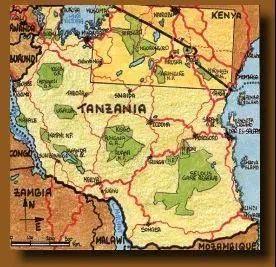
In Tanzania, coffee is known as 'kahawa' (Kahawa). Tanzania is a typical East African country, bordering Kenya and Uganda to the north, Malawi and Mozambique to the south, and Zambia to the west, bordering Rwanda and Burundi to the south. Its coffee history is also quite long, and its coffee cultivation area is not small, with a total planting area of about 250,000 hectares.
Although not as famous as Kenyan beans, its annual yield is almost equal to that of Kenya, with an annual yield of 50,000 tons. The earliest Arabica seeds were introduced from Réunion Island (French) and planted on the slopes of Mount Kilimanjaro in 1893. Other varieties were introduced and planted in Tanzania's western regions in the 1950s from neighboring Burundi. Currently, they mainly plant in high-altitude areas, occupying 75%, however, wild coffee still appears in the local area.
Disclaimer: Some of the images in this article are sourced from the internet. The website respects the copyright of the original author, and we will indicate the source when appropriate. However, due to the large number of images, some images and texts may not be able to be marked with the source in the future, please forgive me. If the original author has any objections, please contact the website to handle it, and we will correct it immediately once verified. 'Coffee Workshop' compiled and edited. Please indicate if you reprint.