Why do Huangshan Pines Grow in Such Strange Ways, Even in Rock Cracks?
Yellow pines are the iconic symbol of Huangshan, and the Huangshan pine is its namesake. Anyone who has visited Huangshan will undoubtedly be deeply impressed by these trees.
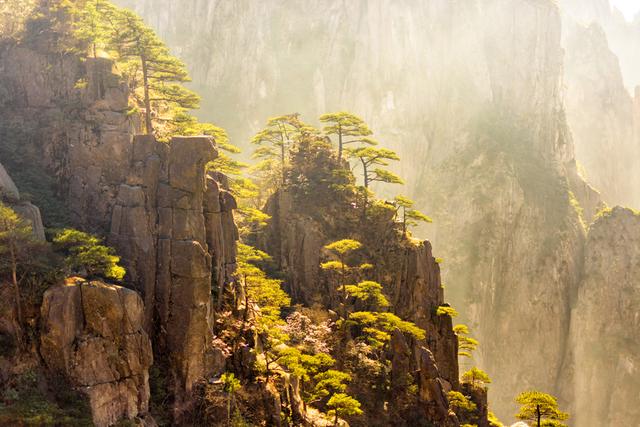
In Huangshan, there are 10 pine trees selected as 'The Ten Great Pines of Huangshan'. They are the finest examples of Huangshan pines. They are: Yingke Pine, Songke Pine, Peike Pine, Waneke Pine, Wangke Pine, Pube Pine, Tanhai Pine, Douhua Pine, Wangquan Pine and Tiebi Pine.
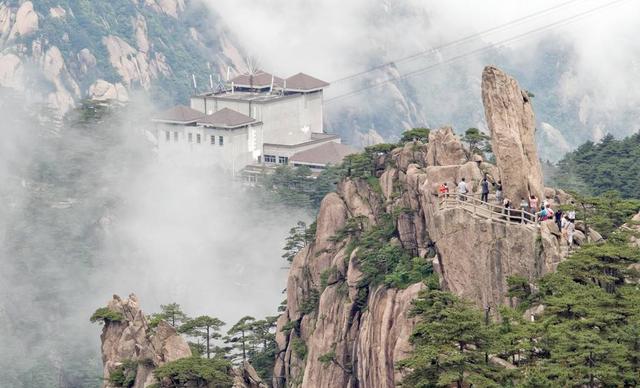
The best viewing spot for Huangshan pines is Xu Xiake's 'ideal viewing spot' – Yipin Tower. The three famous pines – 'Yingke', 'Peike', and 'Songke' – are clustered around the cliff face of the tower.
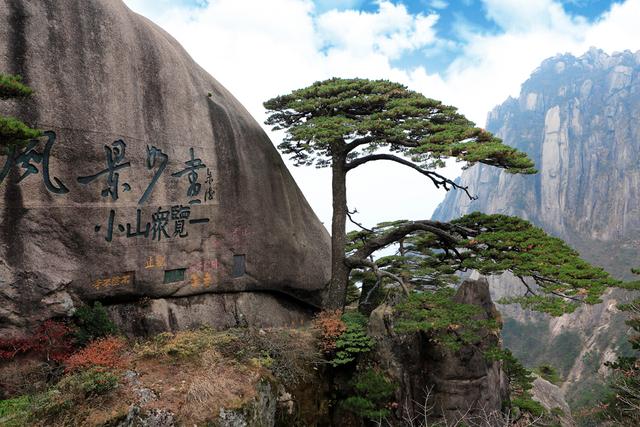
The Peike Pine stands gracefully at Yipin Tower's opposite side. Its posture seems to be both accompanying visitors and observing the scenery with a quiet gaze. People say that after seeing this pine tree, the fatigue of climbing disappears, and their mood improves.
The Songke Pine is located on the road from Yipin Tower to Lilin Peak. The ancient pine is gnarled and verdant, with a shape resembling someone bowing to say goodbye. However, this Songke Pine is not the original one, which died in 2005 and has since been removed. The current Songke Pine is about 200 years old and is very similar to the original.

Among these, the Yingke Pine is most famous. It first appeared in Huang Zhimin's 'Huangshan Travel Notes' in 1859, and was captured on camera for the first time in 1912 by famous painter Wang Cai Bai. Unfortunately, the original film has not been found to this day. The earliest visible Yingke Pine was photographed by Yuan Enpei in 1914. At that time, the Yingke Pine was flat and upright, full of vitality.
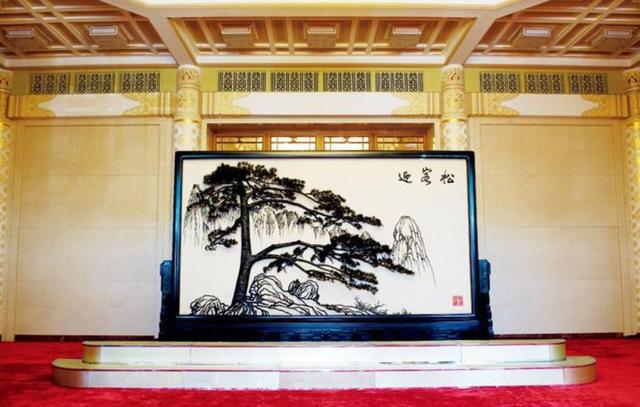
In 1994, Huangshan-born painter Liu Hui painted the Yingke Pine and hung it in the East Hall of the People's Great Hall of People in Beijing. Since then, the Yingke Pine has become a symbol of Huangshan and a representation of the Chinese people's hospitality.
To protect the millennium Yingke Pine, in the early 1980s, Huangshan began to establish dedicated protectors for the Yingke Pine, conducting 24-hour scientific guardianship. Today, it is the 19th guardian of the pine. They check the branches, measure the temperature, and measure the soil acidity every 2 hours, even at night. All of this is written in 'Yingke Pine Guardian Detection Diary.'
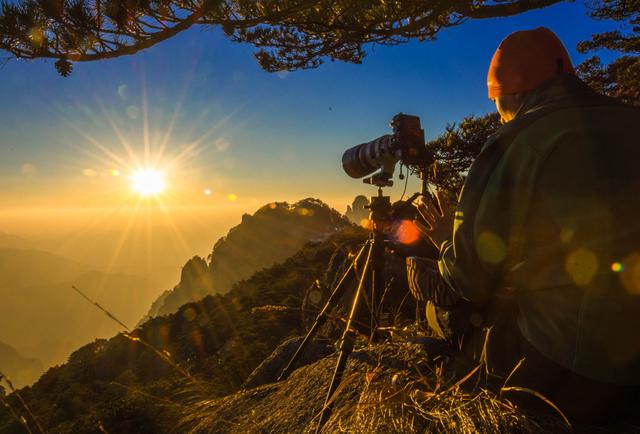
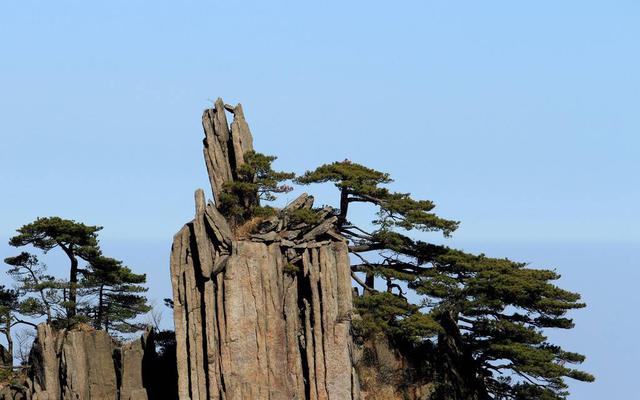
Perhaps someone will wonder why Huangshan pines grow in such bizarre ways and thrive in cracks in the rocks? This is due to the unique environment of Huangshan. Because the soil in the rock cracks is very scarce, it determines that Huangshan pines grow slowly, and the wind on the mountaintop is strong, so the crown of the tree is flat, and the influence of light makes the branches grow towards the direction with sunlight, so some pines are shaped like flags, and some are shaped like umbrellas.
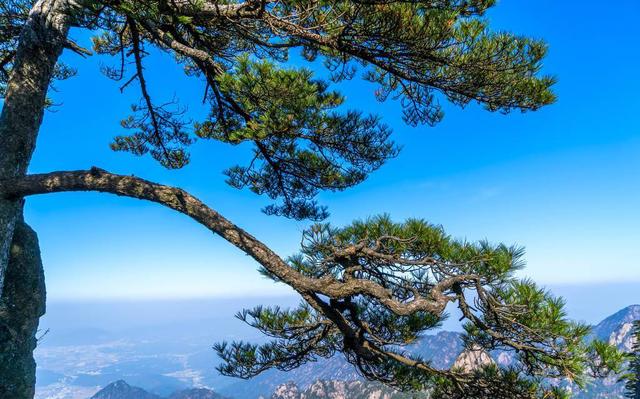
There are mostly bare rocks on Huangshan, and the soil is very scarce. The Huangshan pines' roots secrete an organic acid, which erodes the granite, forming a small amount of soil to support their roots. In addition, Huangshan pines can also absorb nutrients from the air and snow.
Therefore, Huangshan pines have survived and reproduced on the cliffs and peaks, and their tree shapes have left deep marks over the centuries. Even one of Huangshan's four scenic wonders, 'Strange Rocks', is famous throughout the world. The outstanding qualities and vitality of the Huangshan pines undoubtedly impressed the great travelers.
Xu Xiake visited Huangshan twice and praised it: 'Outside the Yellow Sea and the outside world, there is no place like Huangshan in Anhui. Climbing Huangshan is like climbing all the mountains in the world. It is amazing.' This is the origin of the famous phrase 'When you return from the Five Great Mountains, don't look at mountains; when you return from Huangshan, don't look at Huangshan'.
Some images come from the internet