Xidi: The Last Remaining Huizhou Archway
Huangshan's second stop was Xidi, where we stayed overnight. The first stop was staying on Tunkui Old Street, 'day trip to the old street, night tour of the old street', we also went to Liyang In Lane.' The second day, we took a bus from the bus station to Xidi, departing on the hour. It was an impressive experience because I arrived at the station at 8:03 am and sat there for nearly an hour.
We booked a homestay in Xidi, as it was early February (a week before the Spring Festival) and off-season, costing less than 100 yuan, which was very good.
I chatted with the owner's mother, and it naturally made me more interested in the history of Xidi. She told us about the beautiful archway we saw at the entrance of the village, and was told that the village had once had 13 archways, lined up for hundreds of meters, from the entrance all the way to the parking lot. Later, they were demolished and crushed into white ash. Some enlightened people thought it was a pity and proposed to preserve one as an example of how not to do things. Fortunately, this one was painted with a red slogan and was preserved. Now, it's the 'center' of Xidi, where a light show takes place every night.
The missing 12 archways would look like what? The one that remains is a typical Huizhou-style archway, more exquisite than those seen in the north.
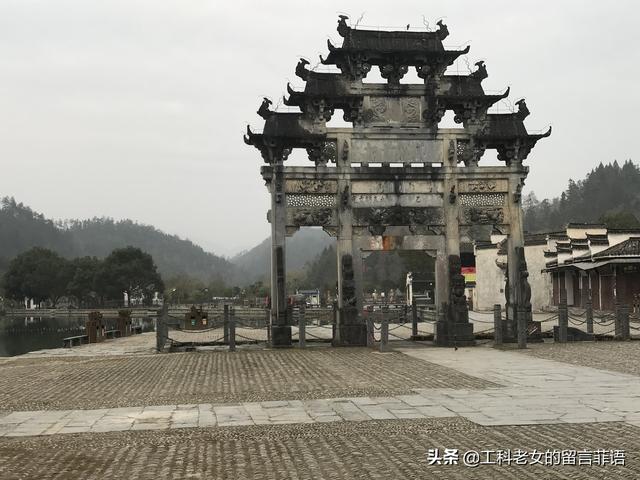
There used to be a row of 13 archways, and now only one remains. The others were taken to be ground into white ash for construction.
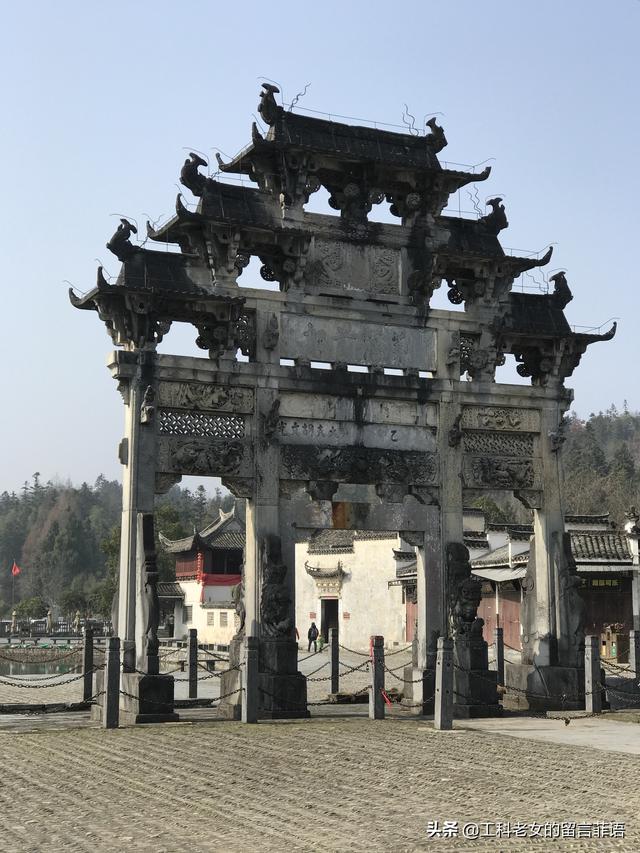
This archway was built in the sixth year of the Wanli reign of the Ming Dynasty (1578), with three stories and four pillars.
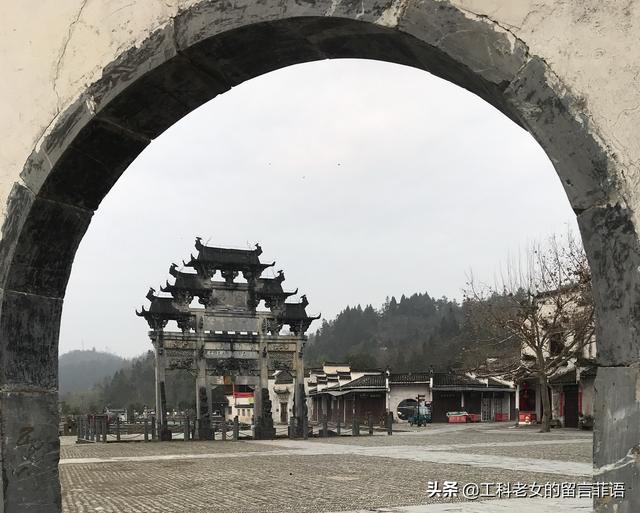
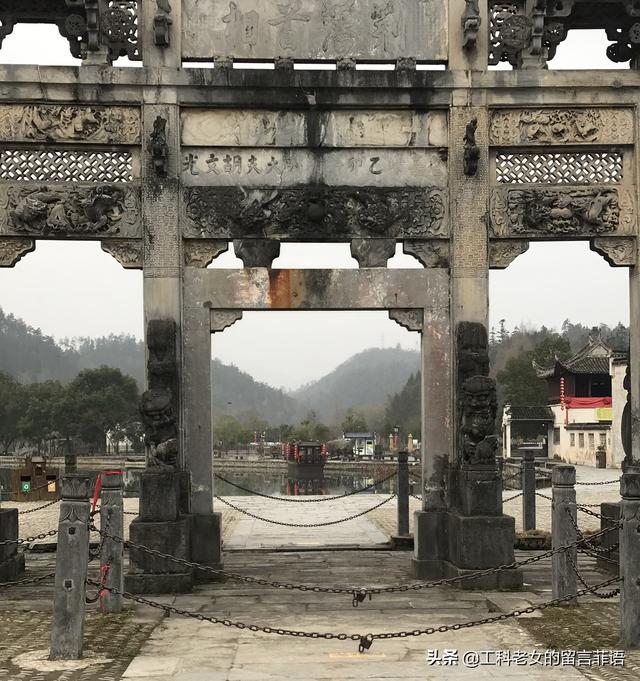
It has a water pool beside it, and a light and music fountain is staged at night.
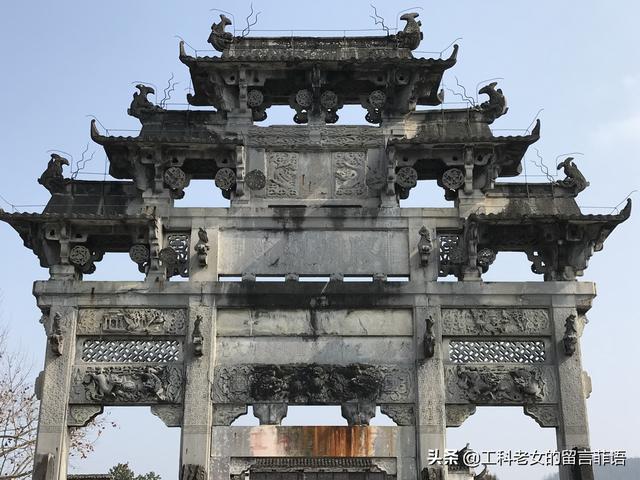
The corners of the three-story building are adorned with upturned eaves, and the ridge is made into a dragon head crest, embodying the ambition to 'occupy the' ( – a mythical sea creature symbolizing dominance).
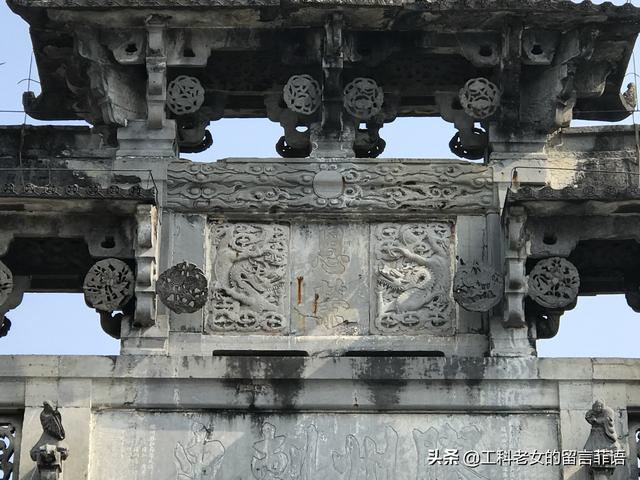
Ancient archways were divided into three categories: imperial grants, honors, and decrees. An imperial grant referred to an imperial decree, and the state treasury would fund the construction. An honor referred to an imperial decree and local funding. A decree referred to a local application approved by the emperor and funded by the family itself.
This one is an 'honor' – commissioned by an imperial decree and funded by local government.
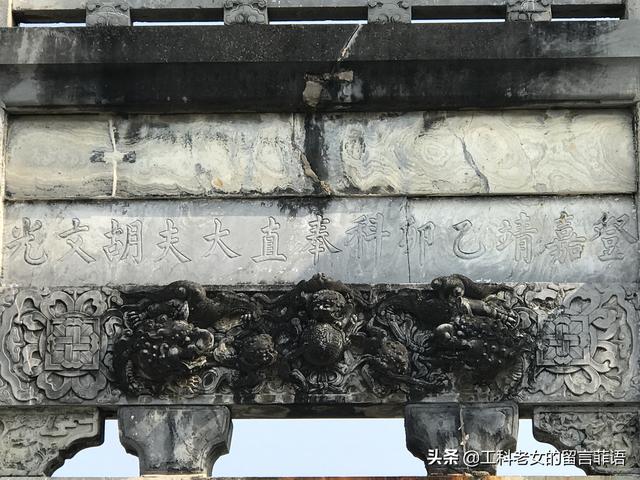
The inscription reads 'Hu Wenguang, a graduate of the Jiajing 14th year (1555) and a Grand Councilor.'
Hu Wenguang was a villager of Xidi. In the 34th year of the Jiajing reign of the Ming Dynasty (1555), he passed the imperial examination and served as a Jizhou (County Magistrate) of Jingzhou. He governed well, earning high praise from the court and support from the people. The Ming Dynasty Emperor granted him the honor of erecting an archway in his hometown to honor his family's legacy.
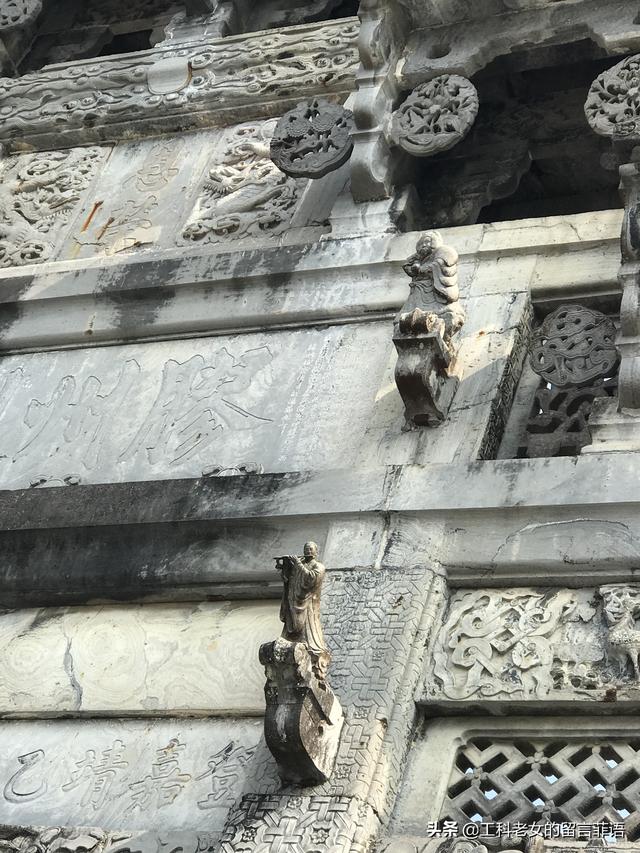
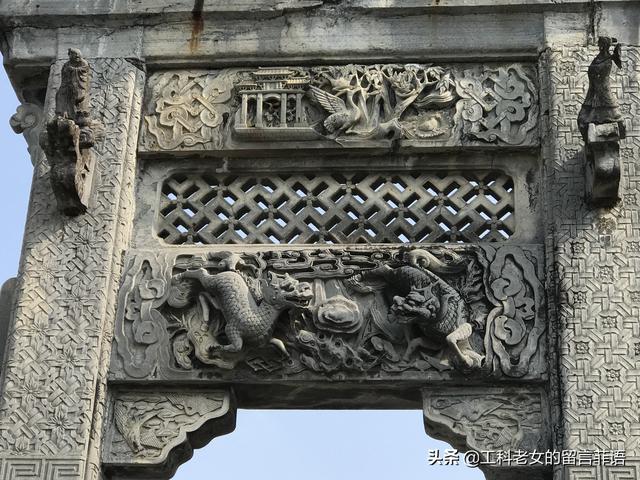
The workmanship of the archway is exquisite, featuring not only common carvings but also independently carved Eight Immortals and decorative flower plates.
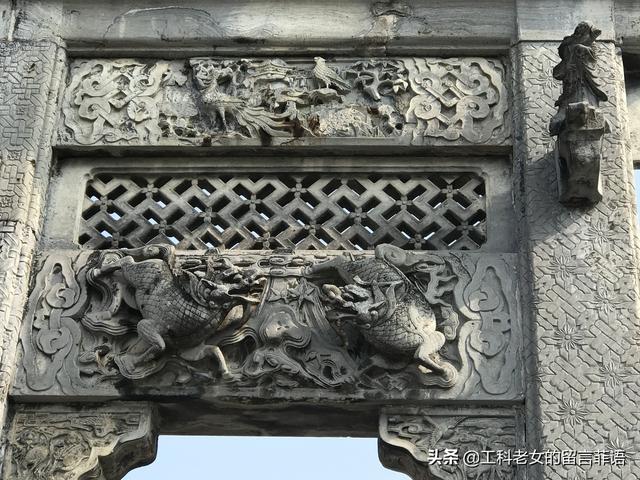
The pillars are carved with intricate patterns, including geometric reliefs and floral panels, with relief carvings of auspicious animals on both the top and bottom.
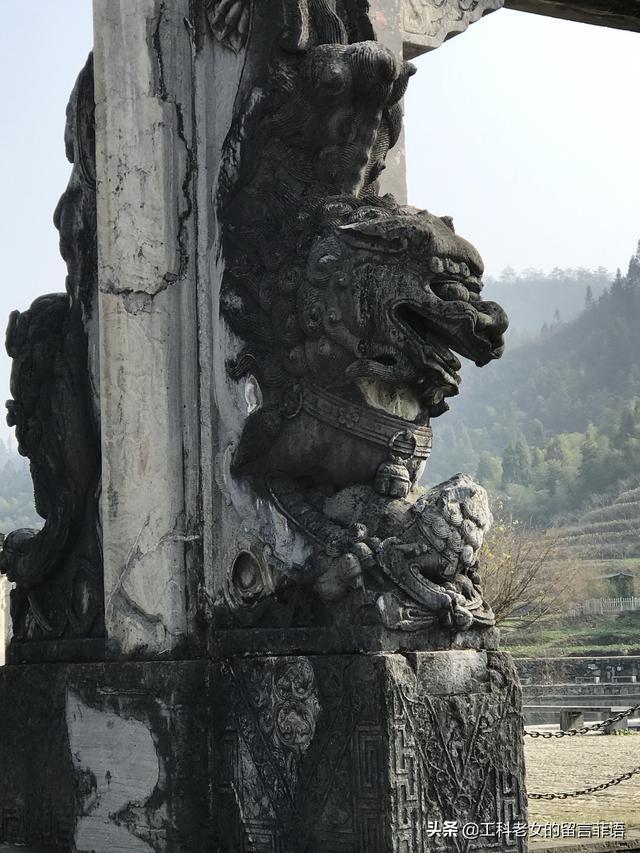
The stone lions are exquisitely carved with dynamic poses, with their mouths open in a majestic and powerful stance.
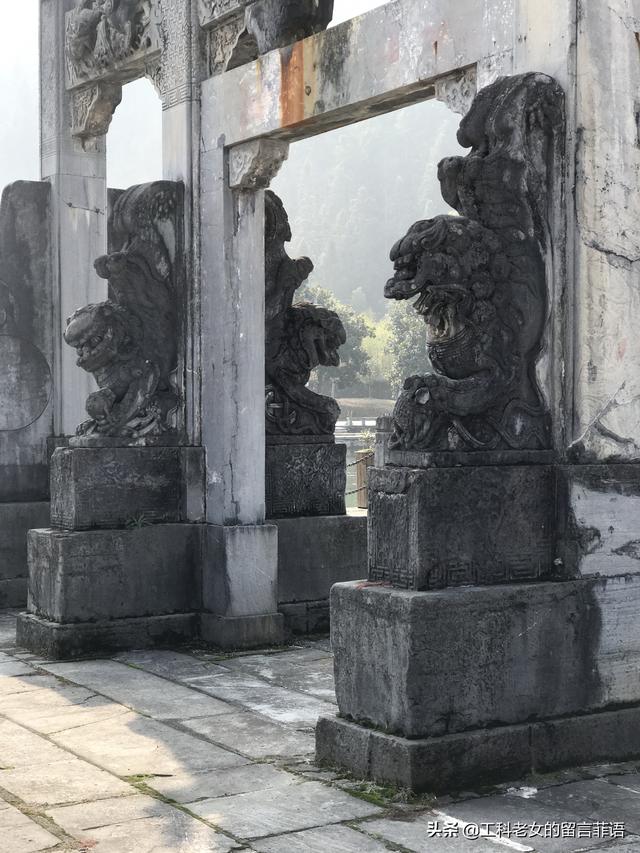
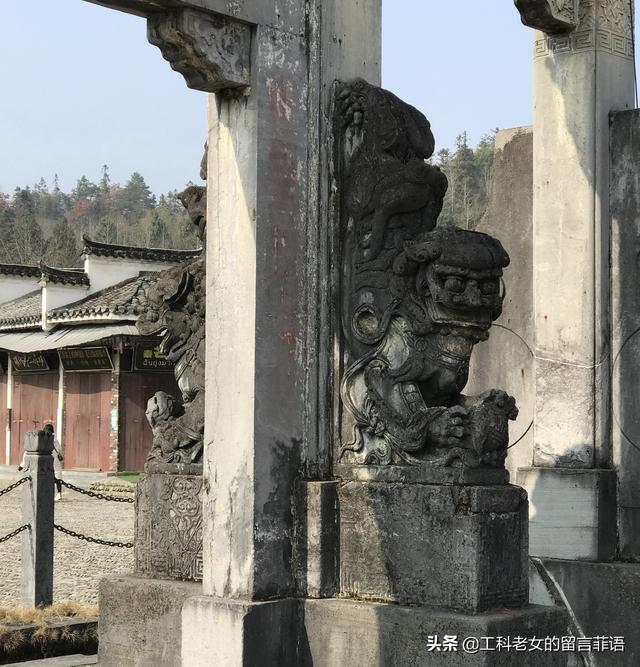
The traces of the red slogan are still visible.
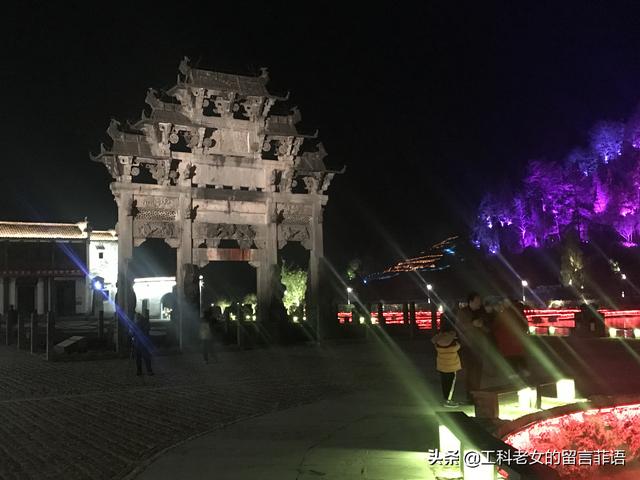
There is a light and music fountain at night.
Recommended reading:
Which do you choose, the jade from the Forbidden City or the Cartier jade?