Why Datong, Shanxi Province, a Coal City, Was Historically a Key Strategic Location?
Since many people associate Datong, Shanxi Province, with coal, Datong is indeed known as a coal city nationwide. However, a portion of people still remember that Datong is not only a coal city but also a historical city and a strategically important military stronghold throughout history.
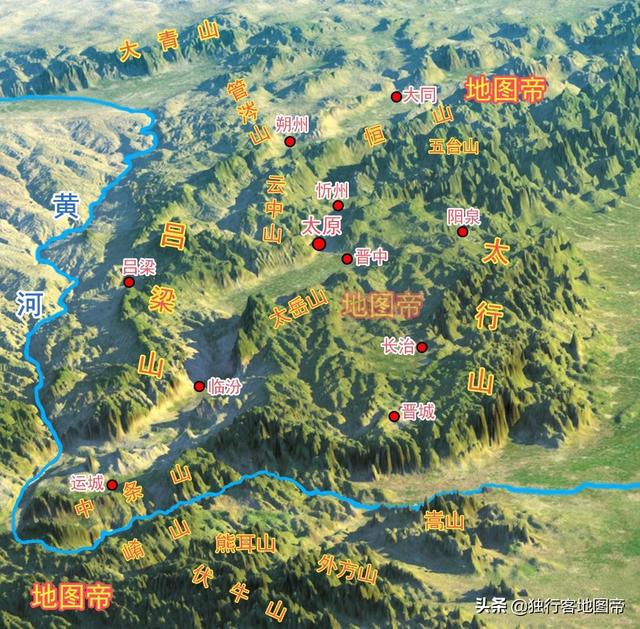
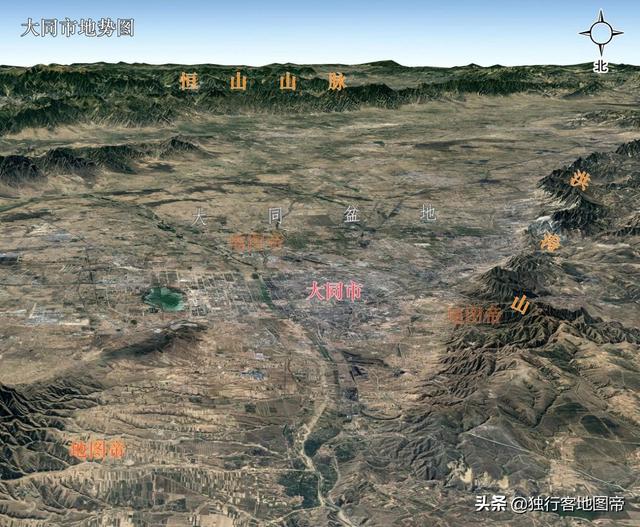
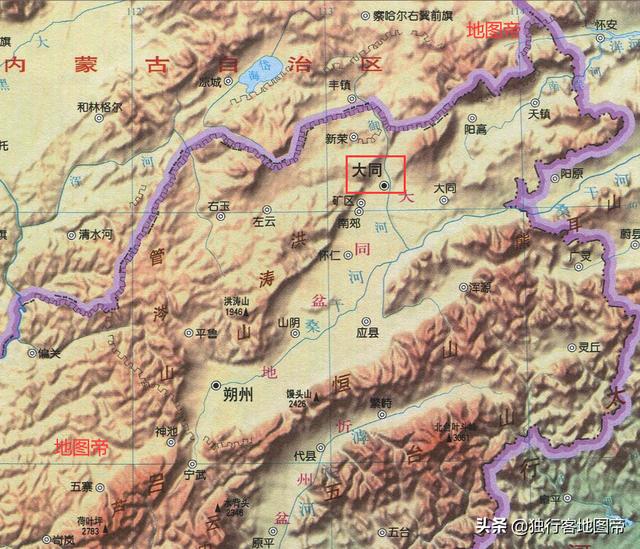
Shanxi Province is long north-south and narrow east-west, and Datong is located in the northernmost part of Shanxi Province, separated by the Great Wall from Inner Mongolia. Datong's terrain is complex: to the north is the Great Wall, to the west is Hongshuoshan Mountain, to the south is the Hunsan Mountain Range (one of the Five Great Mountains), and to the east is the Xiong’er Mountain. Amidst these mountains, the Sanggan River flows quietly, forming a Datong basin extending northeast to southwest.
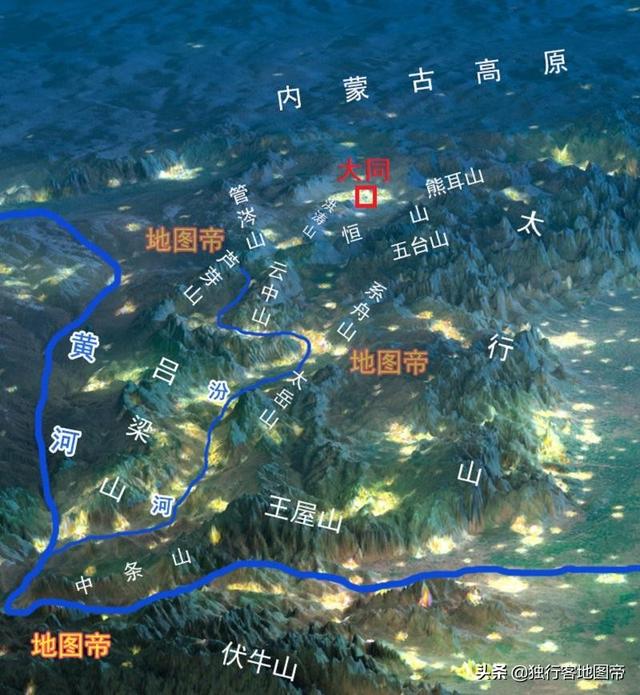
Considering Datong's strategic location in northern China, its importance becomes even more pronounced. To the north of Datong is the Mongolian Plateau, to the east, crossing the Taihang Mountains, is the North China Plain, and it is very close to the capital. To the south is the hinterland of Shanxi Province, and not far to the west is the Yellow River’s Hao River Plain. Historically, many large dynasties that ruled northern China, including unified dynasties and northern large dynasties, often marked the boundary between the nomadic tribes and the Chinese territory. Qin, Han, Wei, Eastern Jin, Western Jin, Sui, Tang, and Ming Dynasties all had their presence here, and Datong was located at the intersection of the Chinese and nomadic areas. Controlling Datong would effectively prevent the southward movement of nomadic tribes while also providing a springboard for expansion. If nomadic tribes controlled Datong, they would have the key to entering the Chinese territory. A famous example is the White Dragon Hill Incident. During the Warring States period, the Xiongnu exploited the chaos and rose to prominence as a major threat to the Chinese. After the collapse of the Qin Dynasty, there was the Chu-Han conflict, which further weakened the Xiongnu. Liu Bang unified China and realized that it would be difficult to defeat the Xiongnu with the strength of the newly unified China. Moreover, the advice of Lou Jing (not the famous Han Xin) and the Xiongnu were mutually cooperative, and there was a desire to invade China. To avoid causing trouble for future generations, Liu Bang decided to launch a campaign against Liu Bing and the Xiongnu. In the early stages of the war, the Han army repeatedly defeated the Xiongnu, and the Han army pursued and attacked the Xiongnu. Liu Bang disregarded the advice of his advisors and recklessly pursued the Xiongnu, and when they arrived at Pingcheng (present-day Datong, Shanxi), they were ambushed by the Xiongnu. The Xiongnu chieftain Modun led forty thousand cavalry to besiege Liu Bang at White Dragon Hill, almost trapping Liu Bang in a desperate situation. Fortunately, the strategist Chen Ping used a beauty trick and bought time with money to persuade the Xiongnu (equivalent to the queen), otherwise Liu Bang would have starved to death at White Dragon Hill. What about Pingcheng? That’s Datong today, White Dragon Hill is northeast of Pingcheng.
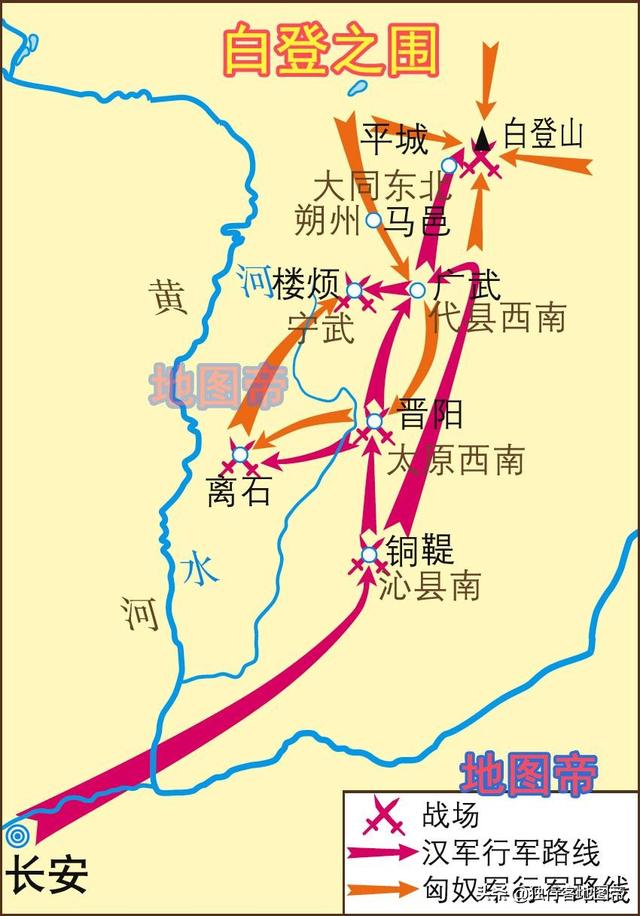
If the Xiongnu had captured Liu Bang, the emperor, at White Dragon Hill, the course of history would have been irrevocably altered. As a gateway for the nomadic tribes to enter China, this gate was opened. After this gate was opened, the Xiongnu could enter the North China Plain through the Taihang Mountains, and the Xiongnu had a significant advantage in cavalry. Even if the Xiongnu did not enter the North China Plain, controlling Datong could pose a major threat to Taiyuan, Lishe, and Shangdu (long-term control of Changzhi).
Similar examples abound during the Five Dynasties and Liao, Song, and Jin periods, when Datong remained a first-line strategic military stronghold and the western capital of the Liao and Jin Dynasties, its strategic importance needs no further explanation.
For more historical geography articles, please follow the WeChat public account: Map Emperor