Jinan City Tianxia Di Yi Quan Scenic Area
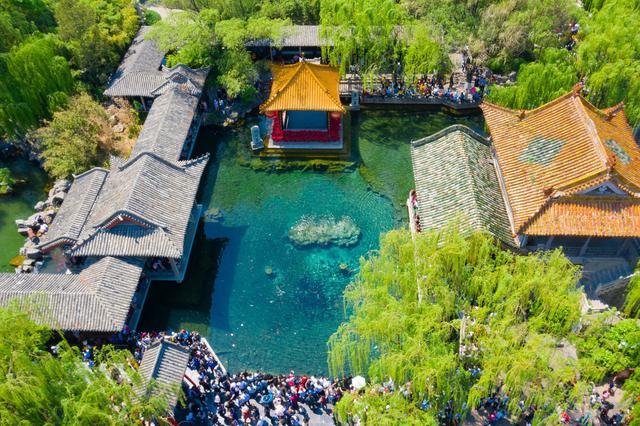
Located in the central city of Jinan, the capital of Shandong Province, with superior location and convenient transportation, Tianxia Di Yi Quan Scenic Area is composed of 'one river (city moat), one lake (Daming Lake), three springs (Baotu Spring, Black Tiger Spring, Wulongtan three major spring groups), and four gardens (Baotu Spring Park, Ring City Park, Wulongtan Park, Daming Lake Scenic Area). It is a high-quality tourism scenic area integrating unique natural mountain scenery and profound historical and cultural heritage. The total area is 3.1 square kilometers. It is a national key park, a national advanced unit for spiritual civilization construction, and a provincial scenic and historic interest area.
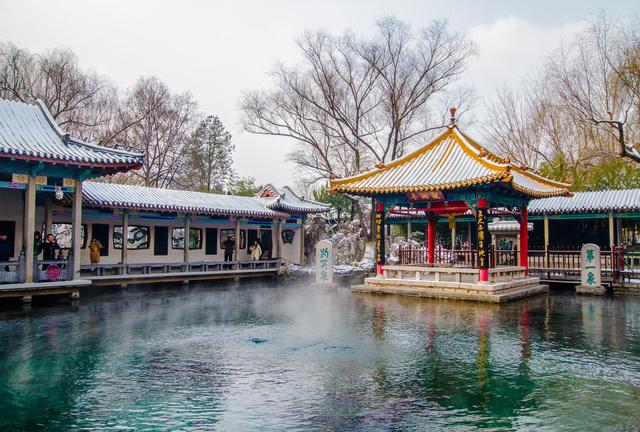
The scenic area has a long history. Baotu Spring, formerly known as 'Lv', recorded in the 'Chronicles of the Spring and Autumn' states that 'the Marquis Huan of Lu convened the Marquis of Qi at Lv' in the 18th year of Huan Gong (around 694 BC). Song Ts'eng Yin named it Baotu Spring in the 19th century due to its jumping and rushing characteristics. The city moat, dating back to the Han Dynasty, took shape in the Yuan Dynasty, completely connected in the Ming Dynasty. 'Lv County Chronicle' records 'In the fourth year of Hongwu in the Ming Dynasty, the city moat circled the city once, with a wide pool of 50 feet and a water depth of three feet.' It is a city river that connects the spring and the spring city, which is connected to the city's historical and cultural civilization. Wulongtan, formerly known as Lishi, Lotus Lake, West Lake, was recorded in the Northern Wei Dynasty's 'Water Records' as 'Lv River flows north and becomes Daming Lake'. Yuan Hao-wen called it Daming Lake in his 'Jinan Record' in the Jin Dynasty.
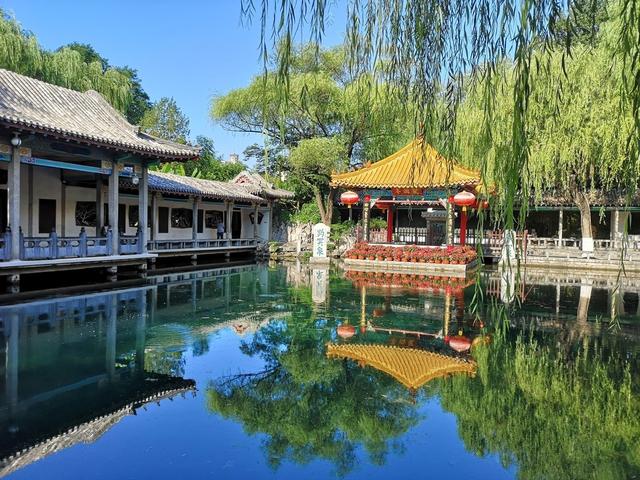
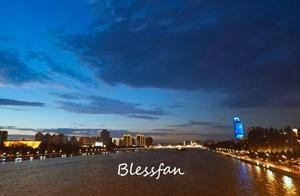
The scenic area focuses on Baotu Spring, the 'First Spring in the World,' where spring flows into a river, then merges into a lake, and is intertwined with the ancient city. The three major spring groups—Baotu Spring, Black Tiger Spring, and Wulongtan—are all located within the area. The large number, beautiful forms, excellent water quality, profound historical and cultural heritage, and scientific research value of these 71 springs are unparalleled in the world. Daming Lake is a natural lake formed by the convergence of many springs. Spring water flows in from the south bank into the lake, and when the water is full, it flows out of the north bank through the north gate built in the Song Dynasty. The lake bottom is made of impermeable volcanic rock. Due to constant rain and prolonged drought, it neither swells nor shrinks. It is said that 'many springs converge and peacefully swallow Jin and Lv'. It is known as 'the Pearl of the Spring City' and 'half the city's mountains and half the city's lake' is its best portrayal. The city moat, formed by the convergence of springs, encircles the ancient city like a jade belt and links the sights in a necklace. The 6.9-kilometer waterway is 'one river connects one hundred scenic spots'. Taking a 'drawing boat' along the city moat can view over 310 scenic spots such as Black Tiger Roaring the Moon, Baotu Spring Spouting, Lv Yuan Wind, Wulongtan Fish Viewing, Moon Viewing Flying Waterfall, Quehua Misty Rain, Hui Bo Evening Glow, Autumn Willow Haze, Supernatural Height and Distance, and Zengdi Surrounded by Water. This creates a unique resource, beautiful scenery, profound culture, complete preservation, and a unique spring tourism landscape that is unparalleled throughout the country, allowing visitors to 'gain mountain scenery and pleasure without leaving the city walls, and enjoy the tranquility of mountains and forests while staying in the bustling city.'