Rare Qing Dynasty Palace Temple in Zhejiang Province, Costing 100,000 Silver Taels to Build, Nicknamed ‘Jiangnan Forbidden City’
Located in Haining, which is administered by the municipal government of Jiaxing City, Zhejiang, Haining is a city with a long history, dating back to the Tang and Song Dynasties when it rose to prominence due to 'The Tidal Wave of the River Qiantang'. The Haining Tidal Wave was one of the 'Ten Sceneries of Haining'. Besides the Haining Tidal Wave, the 'Haining Sea God Temple' is also one of the 'Ten Sceneries of Haining', renowned for 'Temple and Palace Maze', attracting numerous tourists.
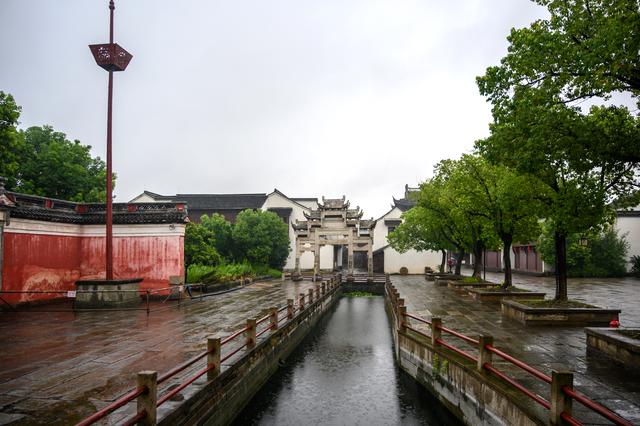
The Haining Sea God Temple is located at No. 1, Guyu Road, Salt Ganjie Town, Haining City (within the Haining Tidal Wave Scenic Area). The Haining Sea God Temple is a 'Temple and Palace', built during the Eighth Year of the Yongzheng Reign of the Qing Dynasty, with a history of nearly 300 years. During that period, it was not allowed to build royal-style buildings in the south, but the Haining Sea God Temple was a special case, as the tidal waves frequently damaged the riverbanks and fields, so Yongzheng repeatedly dispatched senior officials and governors to repair the dykes, during which time he issued edicts and allocated funds to build this temple. It is said that the construction cost 100,000 silver taels.
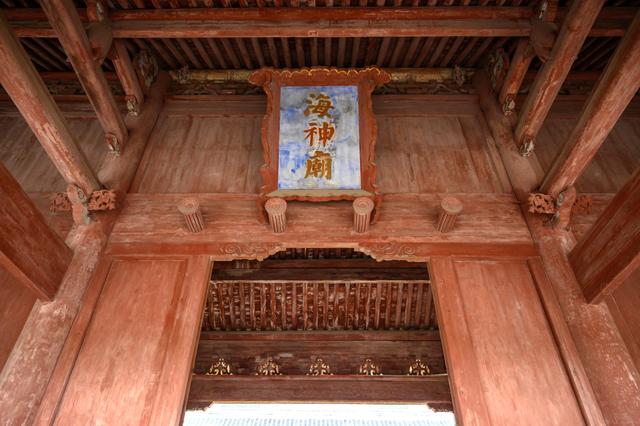
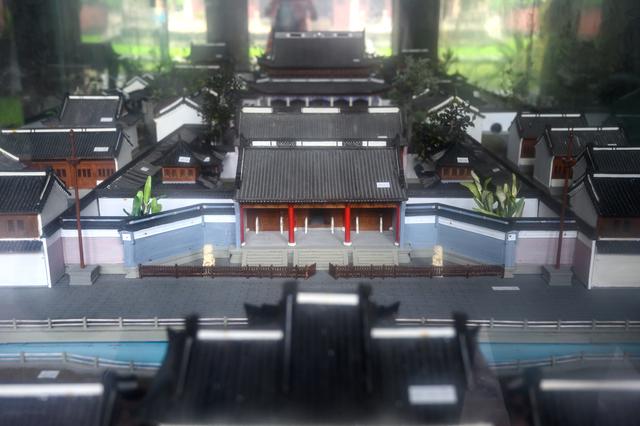
The Haining Sea God Temple is a temple and palace closely related to the Qing Dynasty, and it is a building constructed in the style of Qing Dynasty palace buildings. However, most of the buildings in it were destroyed by fire during the reign of the Emperor Xianfeng. Until the Tenth Year of the Reign of the Emperor Guangxu, it was rebuilt, and when you enter the Haining Sea God Temple, you can see the model diagram of the temple at that time, which is very large, covering an area of 40 acres.
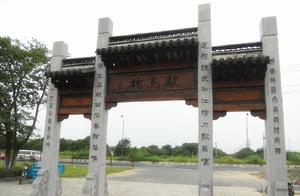
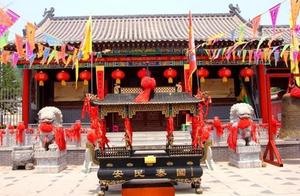
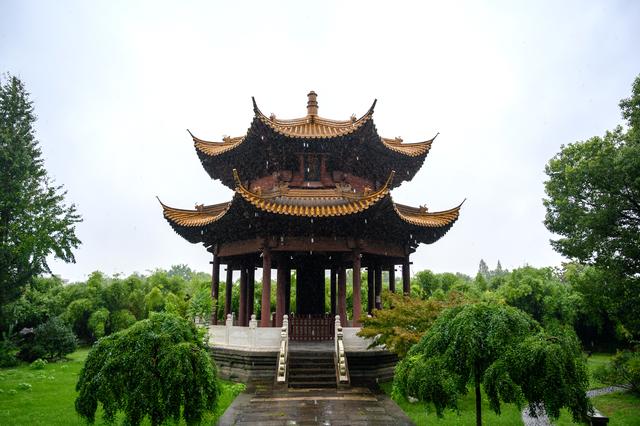
Today, the main buildings of the Haining Sea God Temple include the Han white jade stone pavilion, stone lions, Qichengtuo Bridge, Yimen, Zhaodian and Yibeting. Other buildings are post-reconstruction, but when you are inside, you can still see the atmosphere of the temple and palace built by the royal decree. It is very rare for such a temple and palace with royal charm to be found in Zhejiang, and it is estimated that there is only one of them. In 2001, it was listed as a national key cultural relic protection unit.
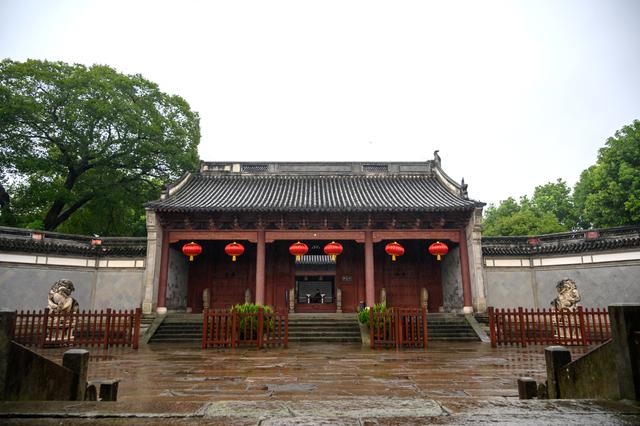
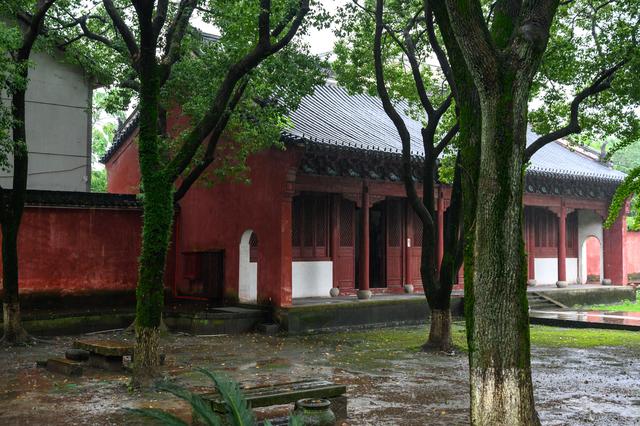
There are nine courtyards in the Haining Sea God Temple, and all the buildings are in the style of the Qing Dynasty palace buildings. This is very rare in the Jiangnan region. However, few people know about this place, and the tourists who come here are very few. When we went, except for our group, we basically didn't see other tourists. Not far from the Haining Sea God Temple, the tourists who visited Golden Pheasant School are also very few.
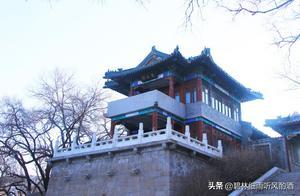
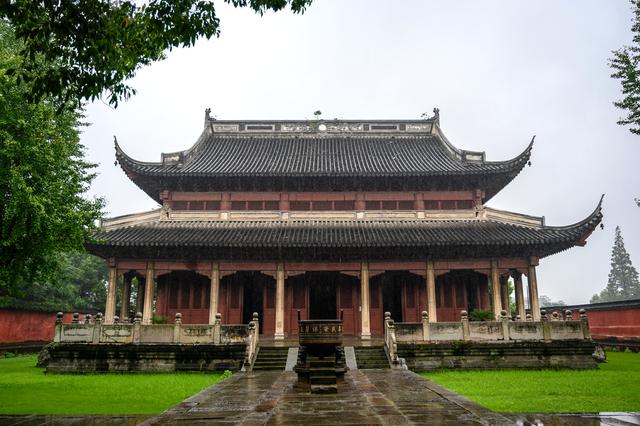
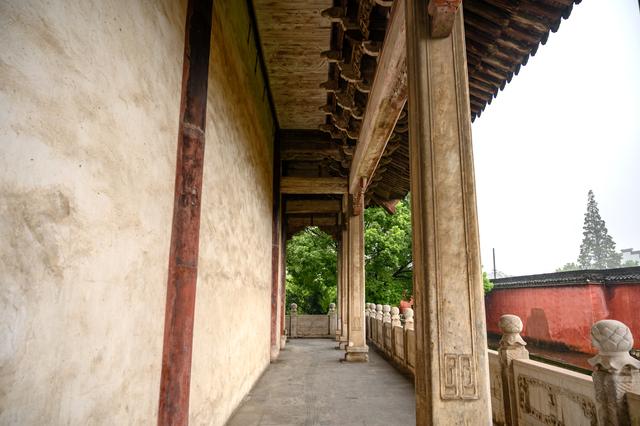
The most magnificent building in the Haining Sea God Temple is the Zhaodian. If you have been to Beijing's Forbidden City before, you will find that this hall is very similar to the Hall of Supreme Harmony. This hall was built in the form of the Hall of Supreme Harmony and Golden Throne, and it is a multi-gabled palace building. Therefore, it is known as 'Silver Dragon Hall' and 'Jiangnan Forbidden City'. The fact that the Qing Dynasty invested a lot of money to build this temple and palace shows its high status. The height of the hall is more than 20 meters, and the columns and steps in the corridor are all made of Han white jade, and the carvings on them include exquisite patterns of clouds, water, flowers and birds, dragons and lions. The fact that it cost 100,000 silver taels shows that it is true materials. It is absolutely impossible to find another one in Zhejiang.
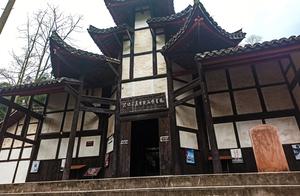
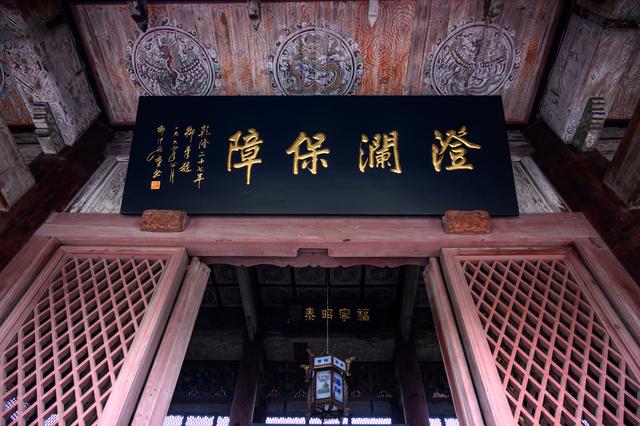
There is a plaque with the words 'Protecting the Tide' hanging on the Zhaodian, which was written by Qianlong during the Twenty-Seventh Year of his Reign. Qianlong stayed here four times, and writing this plaque means to hope to clear the turbid water of the Qiantang River and make it clear. In the Zhaodian, 'The God of the Sea of Zhejiang' is now enshrined, originally it enshrined Wang Simao and Wu Zixu, and they are now located on the left and right sides of the God of the Sea of Zhejiang.
After passing through the Zhaodian, you can see a hexagonal eight-cornered octagonal-domed pavilion, which is the Yibeting. The Yibeting has a height of about 5 meters, and it is made of Han white jade. The upper surface of the stele is engraved with the 'Sea God Temple Inscription' of the Emperor Yongzheng, and the lower surface is engraved with the 'Record of Observing the Tide' of the Emperor Qianlong. Behind the Yibeting is not far from the flowing Qiantang River.
Do you have ever been to or heard of the Haining Sea God Temple, a Qing Dynasty palace-style temple and palace? What impression do you have about it? Welcome to leave a comment.
“”